

How to Draw Anime
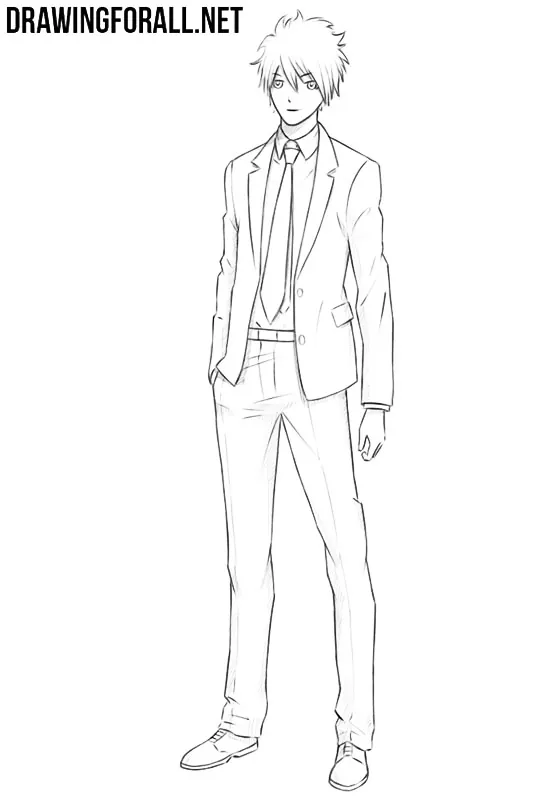
If you want to learn how to draw anime, this step-by-step tutorial is made especially for you. This basic anime drawing guide will give you important knowledge and show you some useful tips for drawing different anime figures.
First, follow the steps below and try to repeat the figure from our example. Then use what you have learned to draw other characters and practice these principles.
How to draw anime step by step
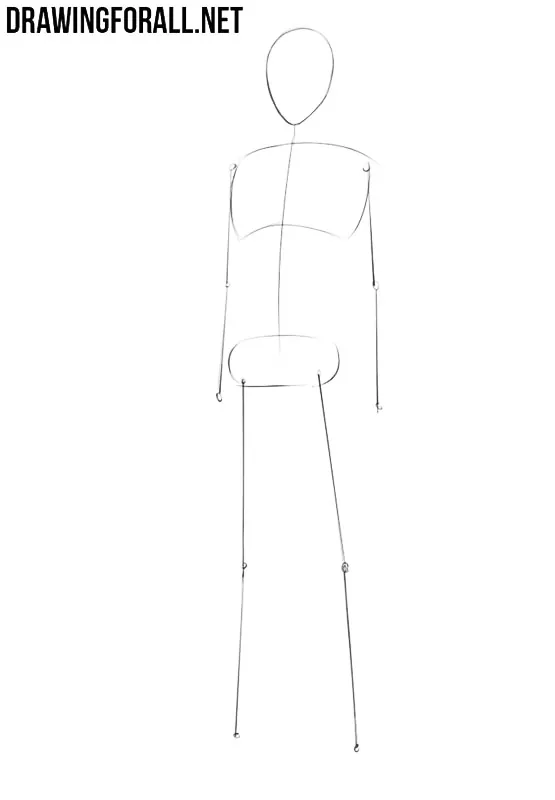
Step 1: Sketch the anime figure’s framework
To draw anime-style people correctly, first sketch the basic framework of the figure. Start by drawing the anime head, outlining it as an oval or an egg-like shape. Next, draw the line of the spine and add the rib cage and pelvis. Sketch the limbs with simple lines and mark the joints with very small circles. Anime figures are based on human anatomy, but their body proportions are often slightly modified.
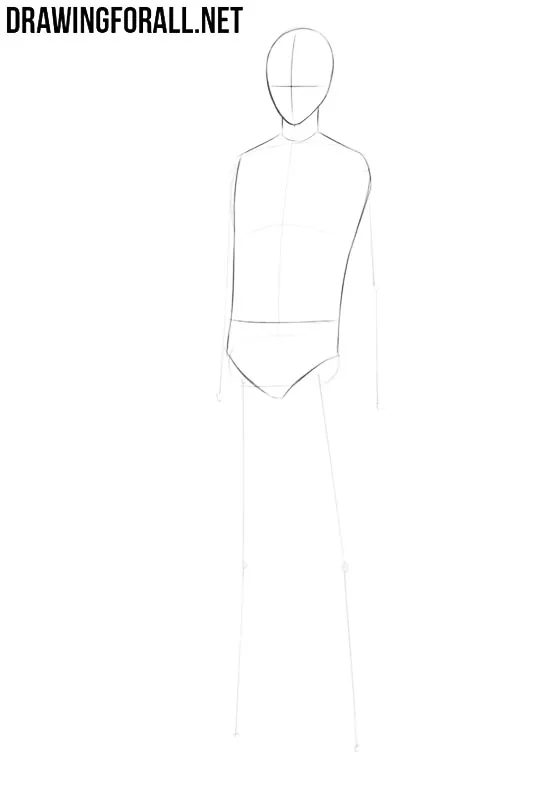
Step 2: Add facial guidelines and torso volume
To draw the anime face correctly, add two facial guidelines. These lines should intersect in the center of the face, near the bridge of the nose. Next, draw the neck as a short cylinder. Move lower and sketch the torso and triangular pelvis. Concentrate on the main masses and the overall shape of the figure at this stage.
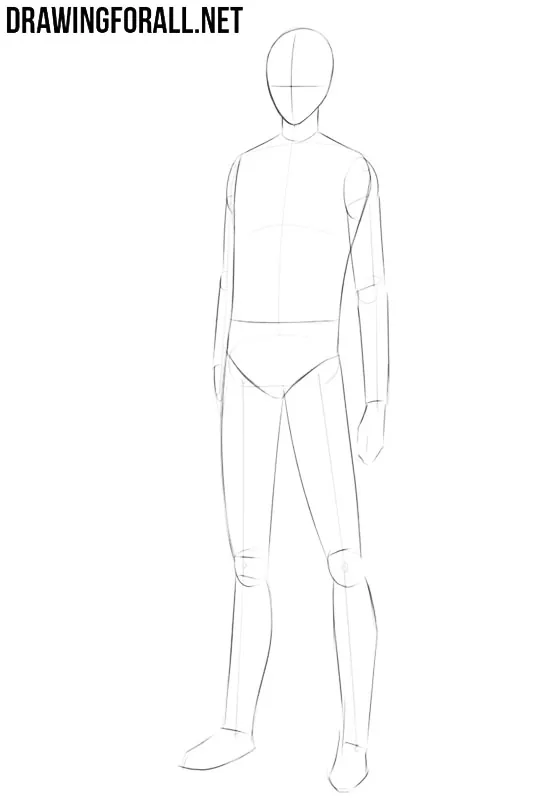
Step 3: Add volume to the limbs
Sketch the arms and legs as simple cylinders and the joints as spheres. Sketch the anime hands and feet with very simple geometric shapes as well. You can draw anime figures with different builds by making these forms thicker, thinner, longer, or shorter. In many anime styles, the limbs are drawn relatively slender and the anatomical transitions are simplified.
Step 4: Sketch the anime face and hair
Using the facial guidelines, outline the anime eyes, nose, and mouth. Next, sketch the hair with a large number of light lines. Anime figure can have very different hairstyles and facial features, so experiment with these traits to create a unique character. Compared with a realistic face, anime eyes are usually larger, and the nose and mouth are considerably simplified.
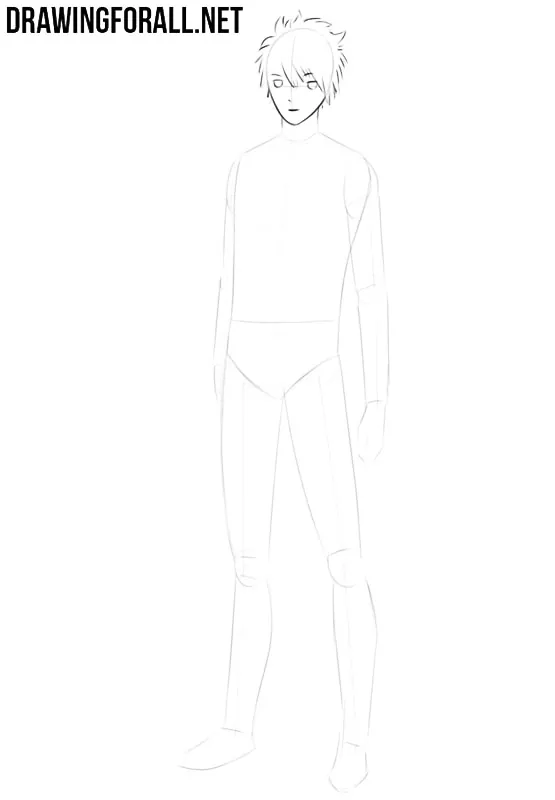
Step 5: Sketch the upper clothing
To draw the anime body, first add the main details of the body and clothing. In this step, we will work on the upper part. Sketch the outlines of the jacket, shirt collar, and narrow tie. We are drawing an anime boy in a classic suit, but you can dress him in a T-shirt, polo shirt, or other clothes. Anime clothing is commonly simplified compared with realistic clothing, but it still follows the form underneath.
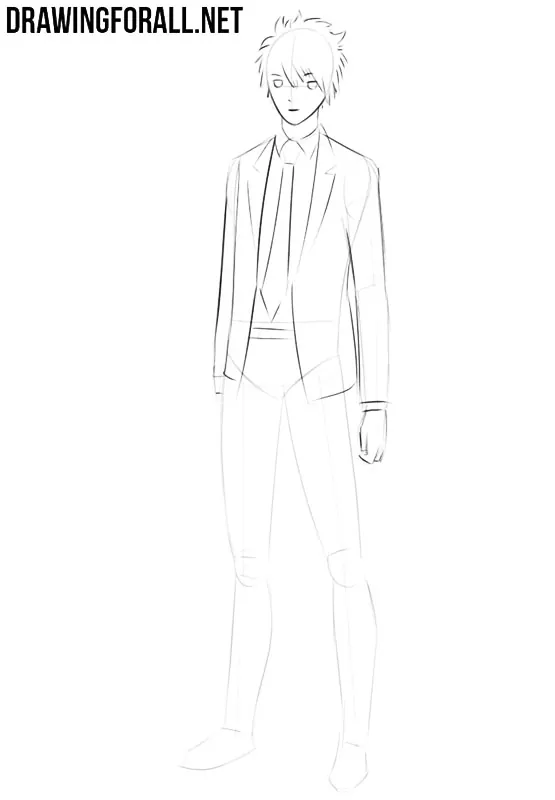
Step 6: Draw the pants and shoes
Now mark the details of the anime figure’s lower body. Using long, smooth lines, sketch the pants and shoes. Do not forget to add folds around the knees and at the bottom of the pants. We are drawing an anime boy in classic pants, but you can give him shorts or samurai-style pants. Long legs are common in many anime figure designs, especially for teenage and adult characters.
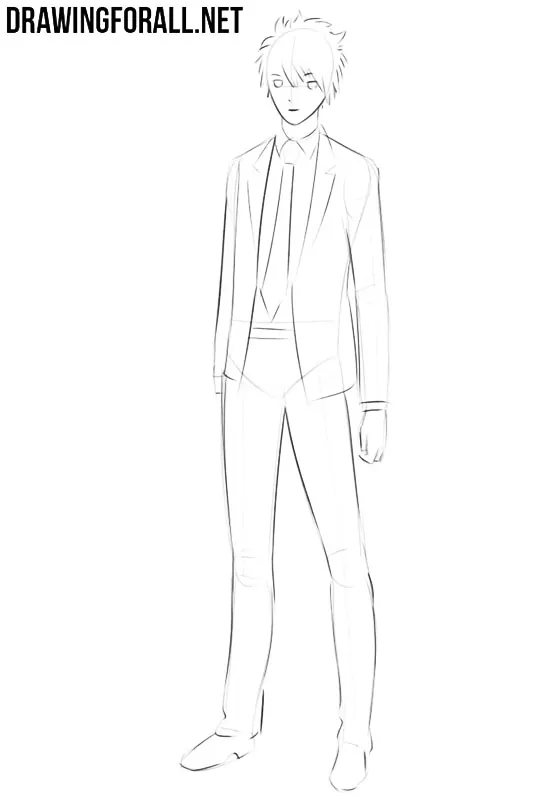
Step 7: Draw the face and hair
In the previous step, we completed the initial sketch of the anime figure. Starting here, draw the final details with clear lines. Outline the face, eyes, nose, and mouth, then draw the anime hair. Draw the hair in distinct groups and use individual strands. Erase all unnecessary guidelines from the head. Pay particular attention to the eyes because their shape has a strong effect on the appearance and expression.
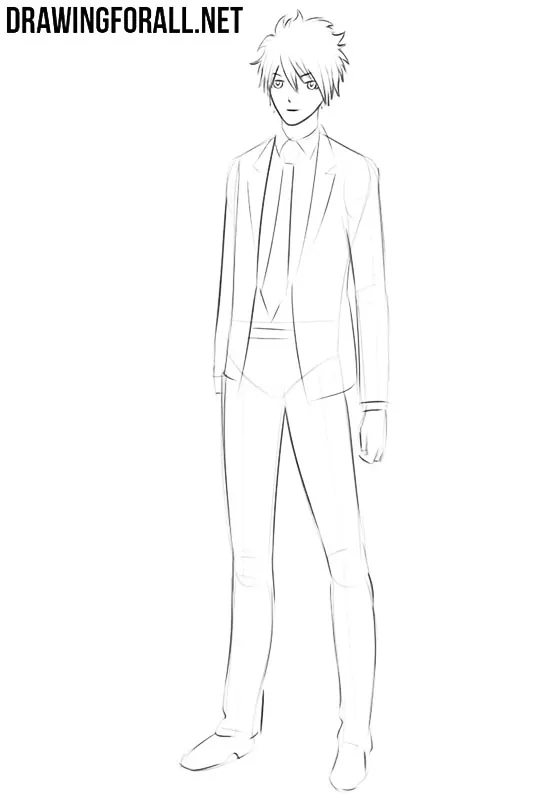
Step 8: Draw the jacket and shirt
Now draw the anime figure’s torso. Use clear, dark lines to outline the shirt, jacket, and tie. Do not forget to draw the buttons, pocket, and folds in the areas where the fabric bends and gathers. As in the previous step, take an eraser and remove the unnecessary guidelines from the torso. In anime drawings, clothing folds are often shown with fewer lines than in realistic figure drawing.
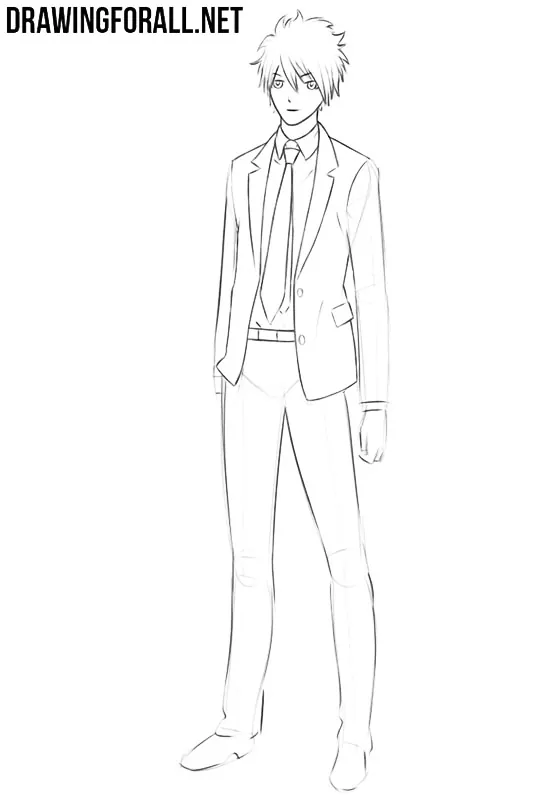
Step 9: Draw the arms and hands
Use clear, dark lines to outline the sleeves, and add the folds as shown in our example. Finish the arms by drawing the hands. Again, take the eraser and remove the remaining guidelines from the upper body. Hands in anime are usually based on normal human anatomy even when their shapes are simplified.
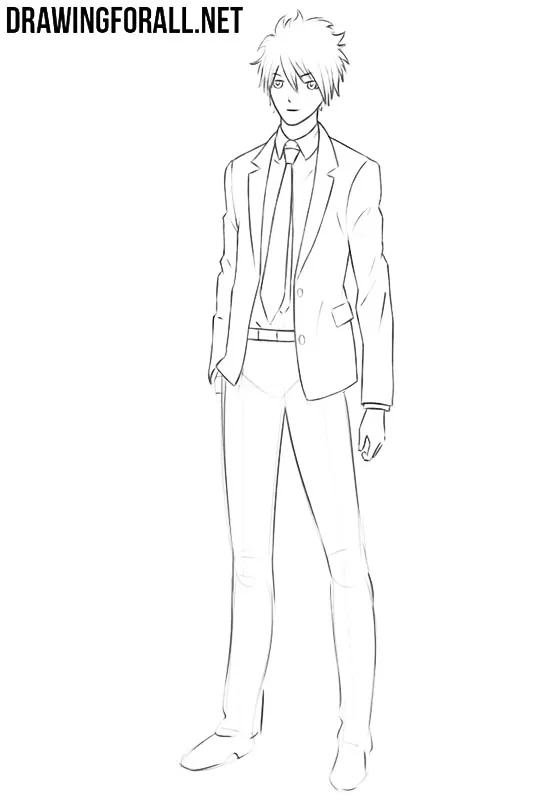
Step 10: Finish the pants and shoes
Carefully draw the outlines of the pants and add the folds and seams. In the same step, finish drawing the shoes. To make your anime drawing look clean and neat, remove all the remaining guidelines. Clean linework is especially characteristic of anime and manga drawings, where the silhouette and major interior contours describe much of the form.
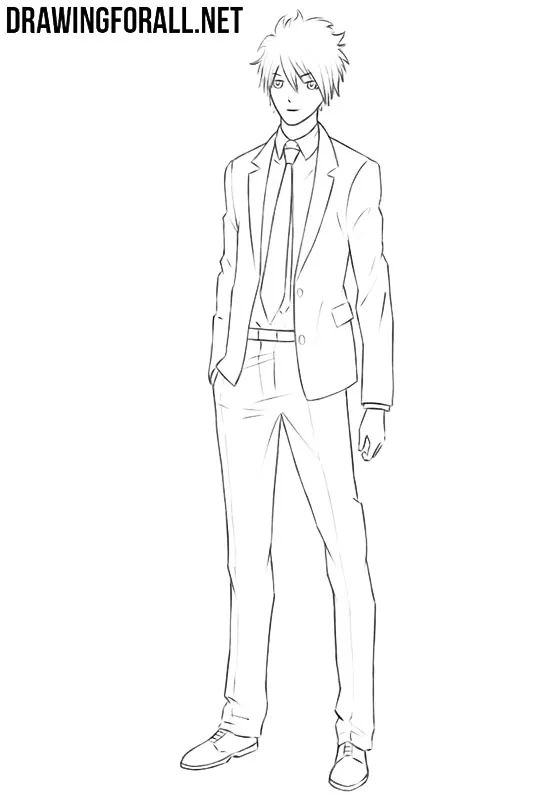
Step 11: Add shadows to the anime figure
To give the anime drawing more volume, add shadows. First, determine the light source, and then place the shadows accordingly. Make the darker areas with additional layers of hatching. Anime artwork often uses relatively simple, clearly separated shadow shapes, especially in cel-shaded styles.
Basic principles of drawing anime
One of the main principles of anime drawing is simplification. This does not mean simply removing details. The most important forms and features are emphasized, and less important information is reduced or omitted. This principle can be seen not only in anime characters, but also in clothing, objects, buildings, and backgrounds.
Most importantly, this principle comes from the basics of drawing, where artists also simplify forms and details, although it is used somewhat differently in anime drawing.
Try to determine which details are important for the subject before drawing everything you see. For example, a complicated object can often be represented with a simple outer contour, several major interior lines, and a few characteristic details
Clear linework is especially important in anime and manga. The outer contour usually separates the main form from the surrounding space. You can also vary the line weight. Make some contours slightly thicker in shadowed areas or where one form overlaps another, and use thinner lines for smaller interior details.
Exaggeration is another characteristic principle of anime drawing. You can enlarge, reduce, lengthen, shorten, or simplify different forms to make a particular feature more noticeable.
Another important point is consistency. If you draw one part in a highly simplified anime style and another with a large amount of realistic detail, they may look as if they belong to different drawings.
After learning the basic principles of drawing anime in this tutorial, you can draw an anime character. In that guide, we will focus on character design and show you how to make your own anime hero or villain look charismatic and interesting.


LOVE YOU
it was not that easy but ended up awesome
I agree
yeah that is true after i did mine it turned out amazing
This is cool! I love Anime
I love this, keep GOING!
This awsome