

How to Draw a Flying Dragon
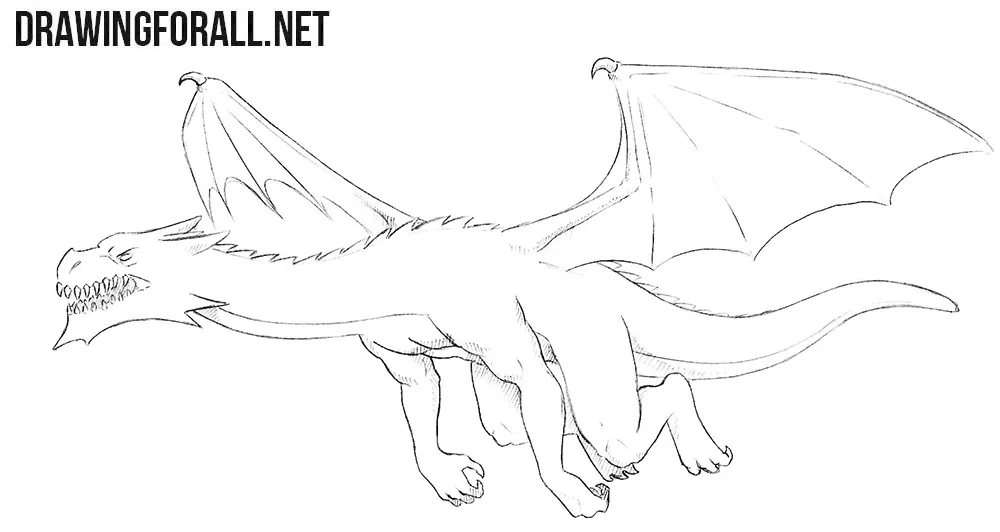
To be able to draw a dragon properly, you need to know how to depict it in different poses and from different angles. Here we will show you how to draw a flying dragon based on the classic European appearance of this creature, viewed from the side with its wings raised.
You do not have to reproduce every detail exactly as in our illustration. Small differences will simply make your drawing more unique.
How to draw a flying dragon step by step
Step 1: Sketch the dragon’s basic guidelines
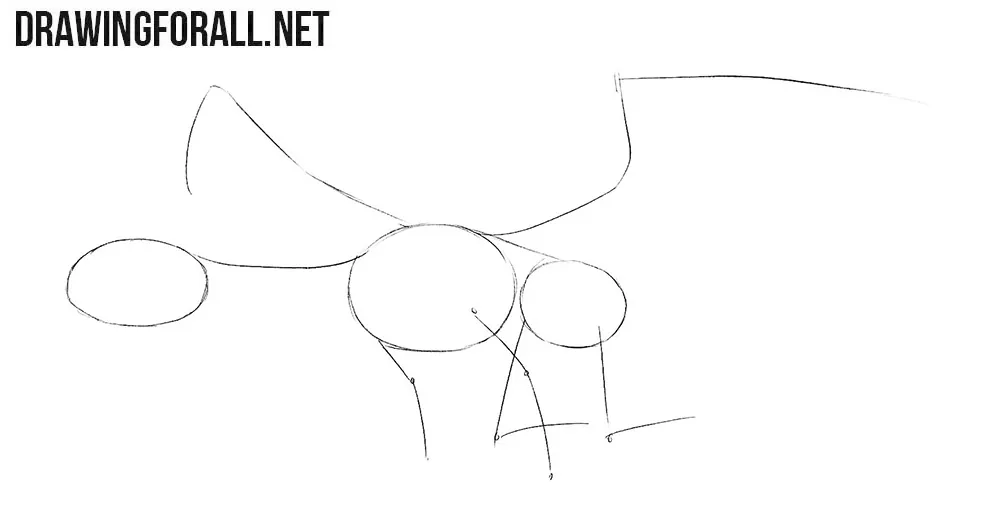
Begin the flying dragon drawing with a simple skeleton. First, outline the dragon’s head as an oval. After that, draw a long, slightly curved line for the spine, extending from the head through the body and toward the tail. Sketch the chest and pelvis along this line. Mark the positions of the wings, arms, and legs with light lines.
Step 2: Build the dragon’s body forms
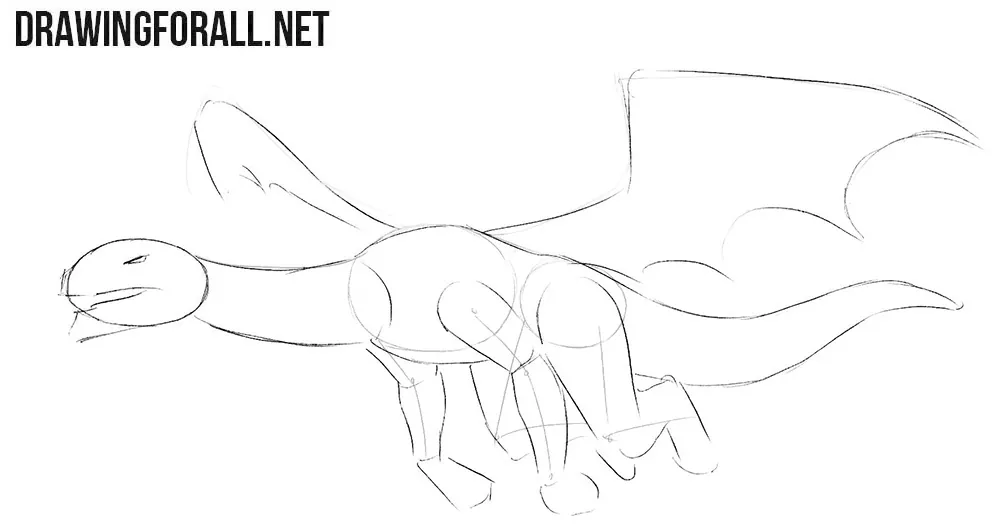
Now give the dragon’s body more volume. First, mark the positions of the eye and mouth on the head. Next, outline the long neck, which gradually widens toward the torso. Outline the arms and legs using circles for the joints and cylinders for the main sections of the limbs. Give the large wings their basic shapes.
Step 3: Add spikes and wing details
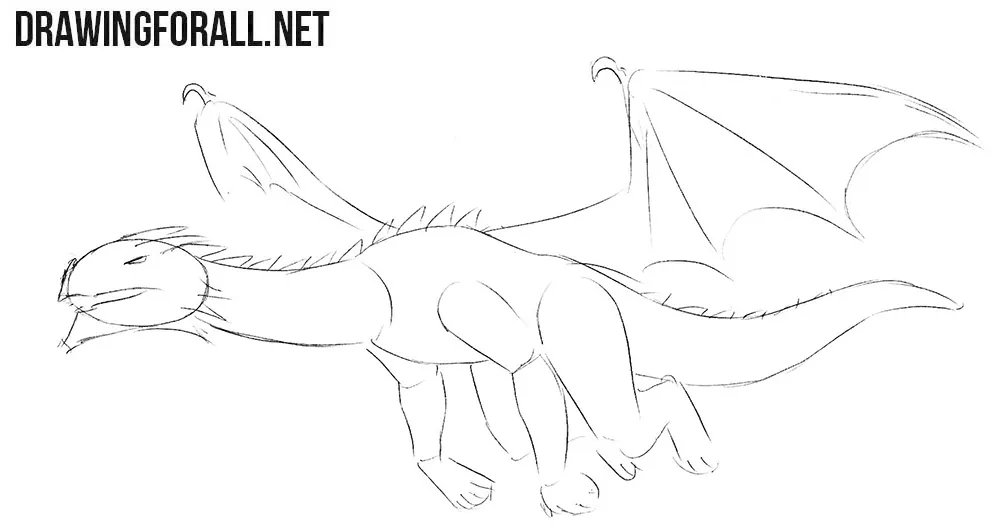
The basic figure of the dragon is ready, so begin adding details. Use very light, almost invisible lines at this stage. Draw the spikes along the head, neck, back, and tail. Next, sketch the long supporting bones of the wings and the sharp claws at their ends. Check the placement of these details before moving on to the final outlines.
Step 4: Draw the dragon’s head
Use darker, clearer lines to carefully draw the dragon’s eyes, muzzle, and sharp teeth. Pay attention to the elongated shape of the muzzle and the position of the open jaws. Draw the teeth along the edges of the mouth, changing their size and direction. Next, refine the contours of the head and erase the guidelines from the head.
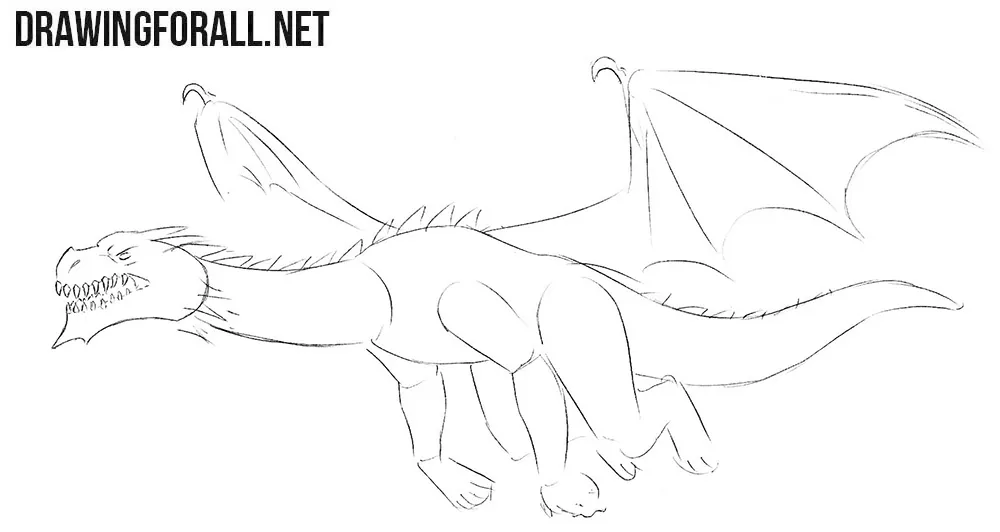
Step 5: Refine the neck and spikes
Using clear lines, carefully draw the spikes on the head and neck. Next, refine the long neck itself, paying attention to how its thickness changes between the head and torso. Draw the folds and other details along the neck. Finally, erase the unnecessary guidelines from the previous steps.
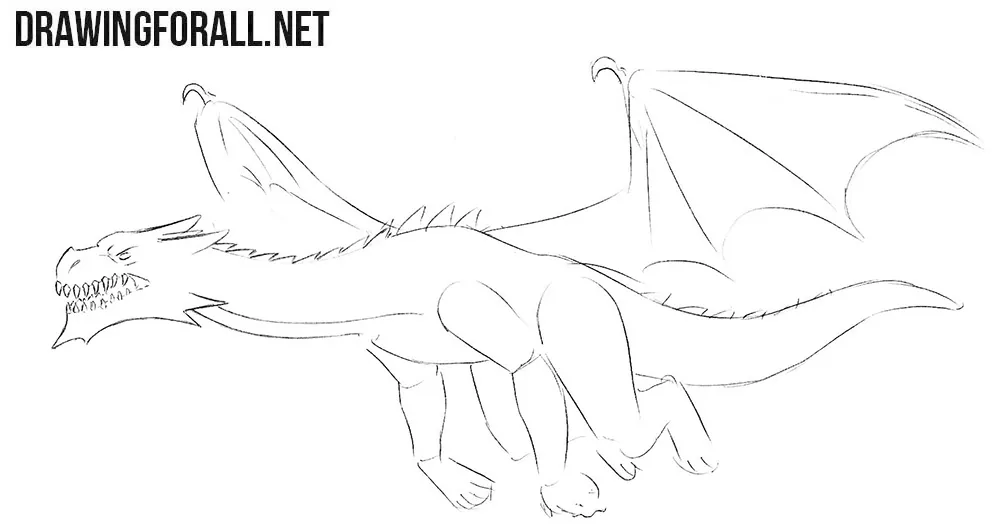
Step 6: Draw the muscular arms
Move slightly lower and draw the dragon’s arms. Use clear, smooth lines to outline their powerful muscles, following the basic cylindrical forms from the earlier steps. Notice that the dragon has fairly humanlike arms, so apply the same principles used when drawing human arms. Carefully draw the hands and claws, then erase the remaining guidelines from the arms.
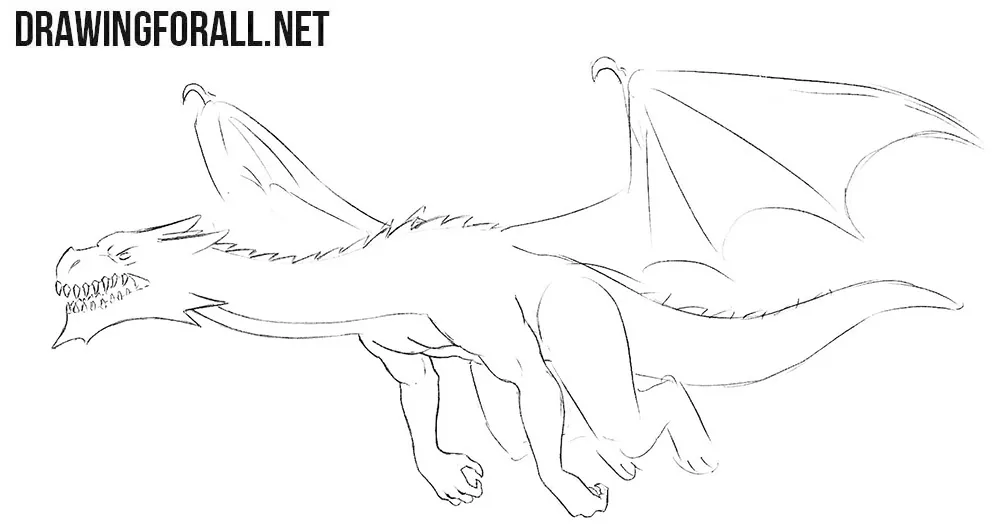
Step 7: Detail the legs and tail
Continue toward the rear of the flying dragon and carefully draw its powerful, muscular legs. Detail the main forms of the thighs and lower legs. The legs are also somewhat similar to human legs, but their shapes are more exaggerated and end in clawed feet. Draw the toes and sharp claws with clear lines. In the same step, refine the long tail, gradually narrowing its contours toward the tip.
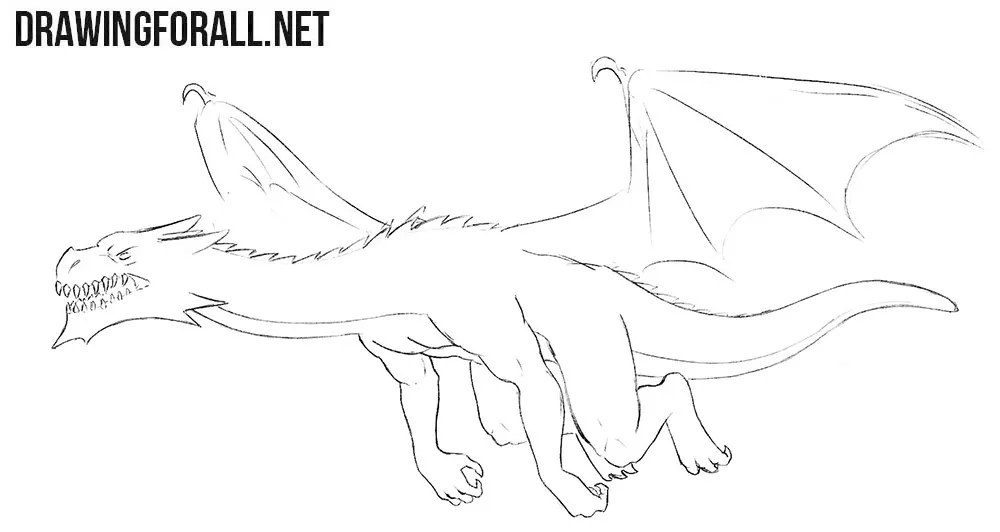
Step 8: Refine the dragon’s large wings
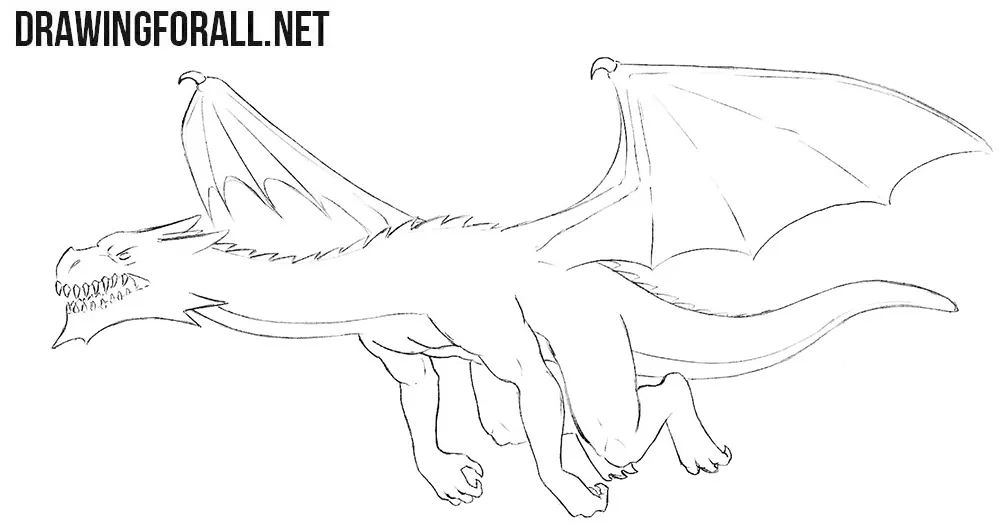
Refine the supporting bones with darker, smoother lines. Draw the wing membranes between them, using curved contours. Pay attention to the different angles of the two wings, since they extend in different directions in this flying pose. Remove all remaining unnecessary guidelines from the drawing.
Step 9: Add shadows with hatching
Finally, add shadows to the flying dragon. First, determine the direction of the light source, then identify the areas of the body that receive less light. Use dense hatching to shade the underside of the neck, the torso, and the muscular limbs. Follow the curved forms of the body with your strokes.
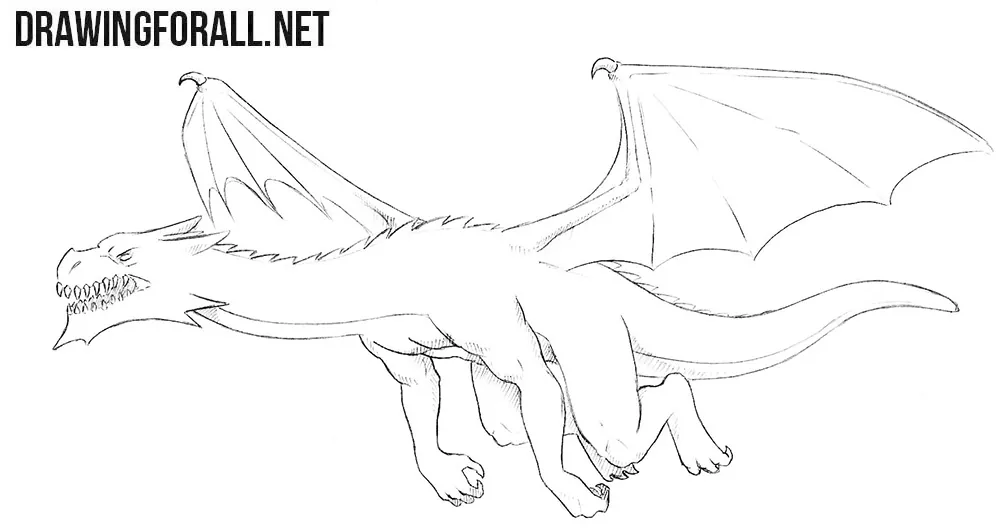
Here we showed you how to draw a dragon in flight, using the European variety as our example. These monsters from myths and legends have a huge number of differences and variations.
You can now choose whichever version you want to depict and draw the mythical creature in flight using the sequence of steps from this tutorial.
By following our separate tutorial, you can draw a dragon from the side in a standing position. Or you can draw a medieval castle in the background of your flying dragon, creating a complex, detailed composition.


AWSOME!!!!! i just finished the eragon book and this is so cool.
It’s amazing! And the finished artwork is so cool as well!
amazing drawing
personally, as the most dragon-ish nerd out there, I think this is awesome. however, you could step it up a bit by adding muscle and/or fat structure, to add a touch of realism. A point where its neck meets the head, emphasis on arms and legs. you could narrow the tail-tip more (add an end such as a spike, flame, or stinger) and make the wings a bit bigger and wider. All of these will accumulate to just in general improve this already great drawing. I love how you positioned the legs, without making it overly-weighted on one side or disproportionate.
Thanks for listening to my ramblings, and please know that this is constructive criticism, I’m not trying to offend or degrade. Awesome dragon all-in-all though!
Many thanks. I have another dragon drawing tutorials, and they look different. You can check them too.
it was hard but it come at good. thanks