

How to Draw a Lemon
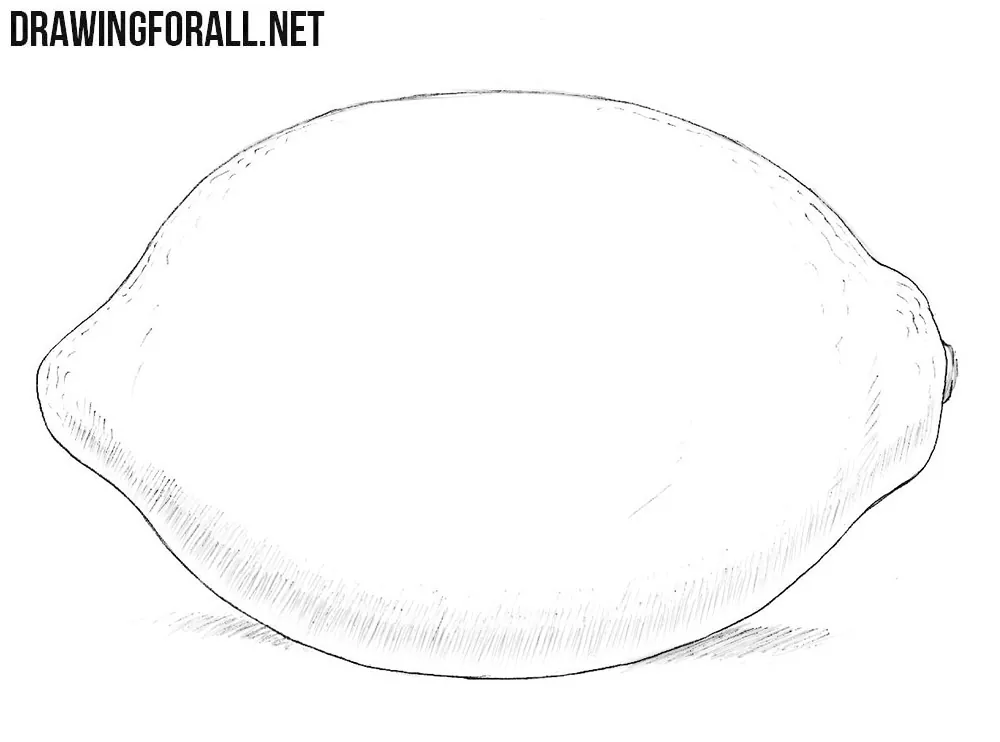
A lemon looks like a very simple fruit, and it is just as easy to draw. Its shape and texture are uncomplicated, with no small or difficult details to deal with. In this tutorial, we will show you how to draw a lemon, depict its characteristic texture, and give the fruit realistic volume in just a few steps.
How to draw a lemon step by step
Step 1: Sketch the basic fruit shape
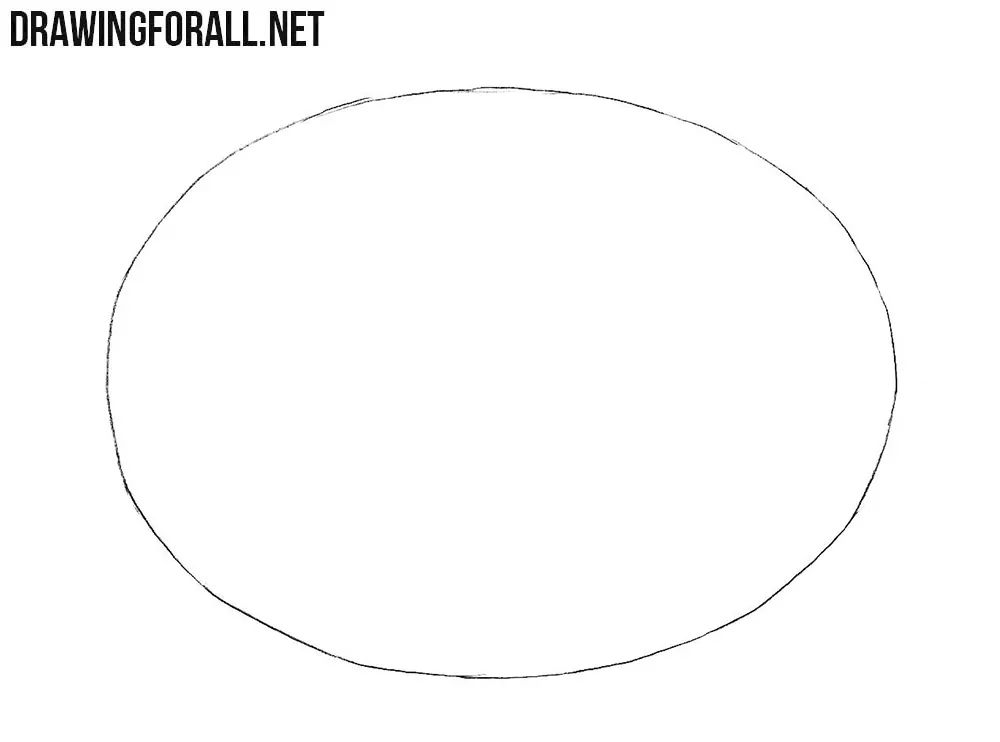
First, draw a simple oval near the center of the paper. Do not try to make it perfectly symmetrical. Although you begin with a flat oval, consider it as the outline of a three-dimensional form. This will make it easier to shape the lemon and add volume in the following steps.
Step 2: Shape the lemon
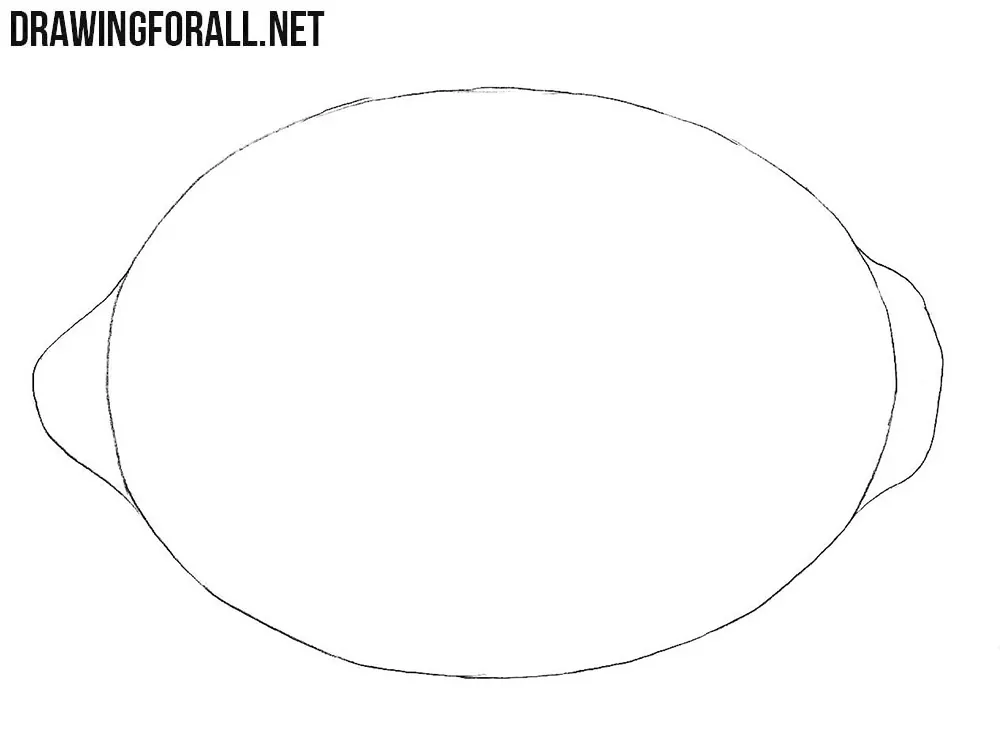
Now turn this oval into the characteristic shape of a lemon. Draw a pointed tip on one end and a flatter, rounded tip on the other. Keep the overall shape relatively short. This citrus fruit should not look too elongated.
Step 3: Clean up the sketch and mark the stem
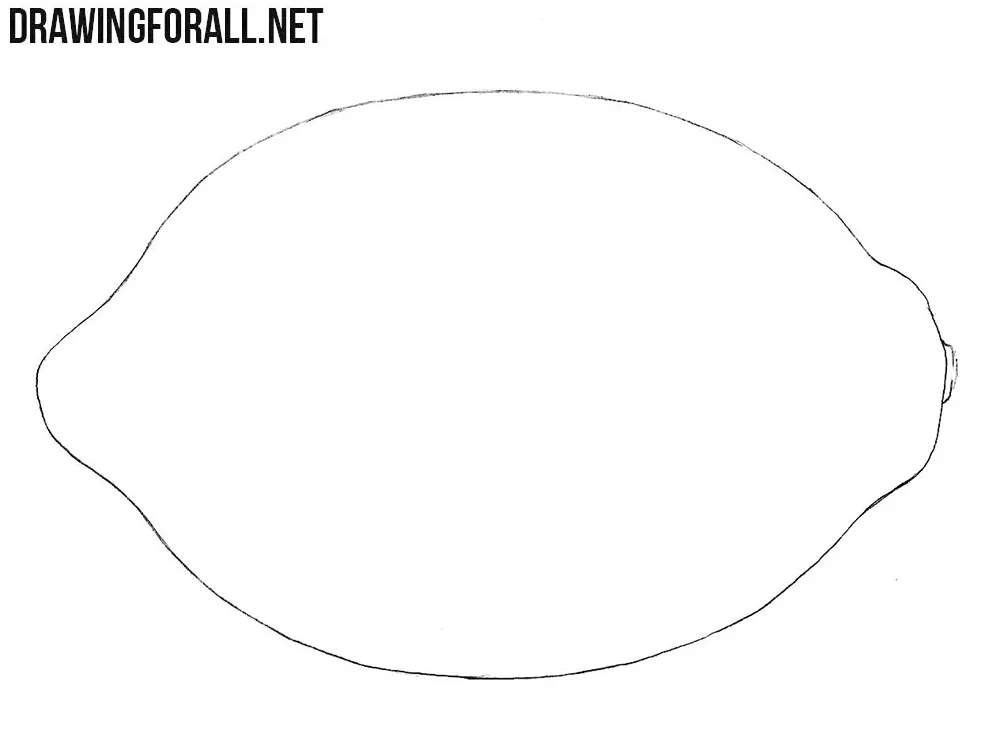
Erase the unnecessary guidelines from the previous steps and refine the outer contour of the lemon. Then draw a small, flat stem at the rounded end of the fruit.
Step 4: Add the citrus texture and shadows
In the upper part of the fruit, draw a series of short, irregular lines to convey its bumpy texture. Use light hatching along the lower part of the fruit, then draw the cast shadow on the surface beneath it. Let the hatching follow the three-dimensional form of the lemon and gradually change in density as the surface turns away from the light.
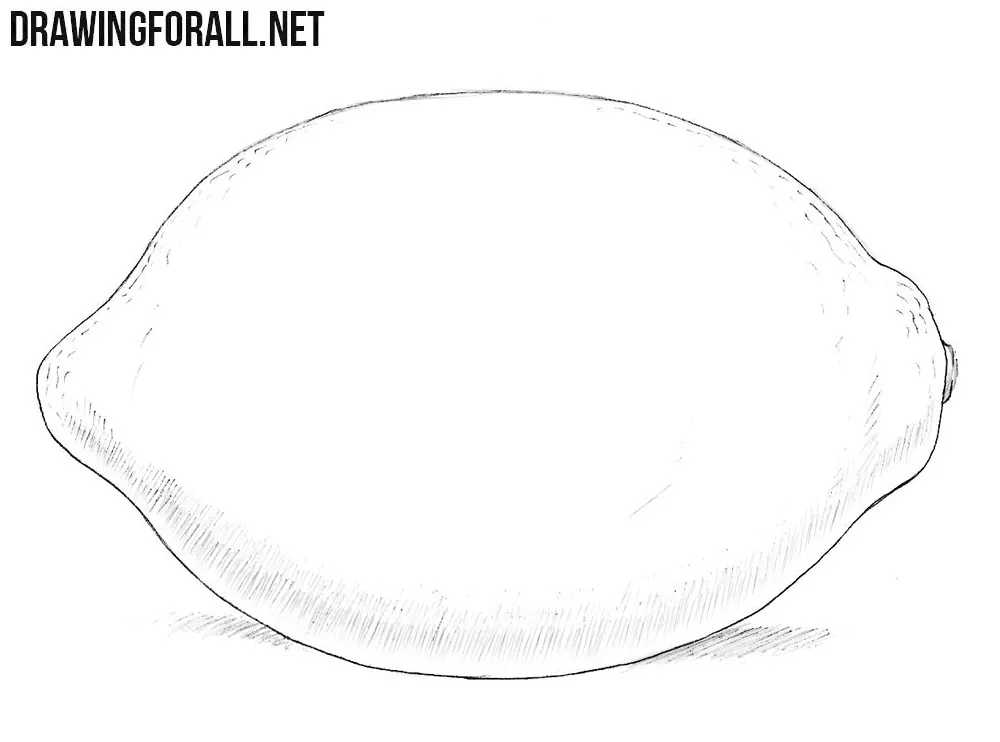
This tutorial is part of our series of drawing tutorials about fruits and vegetables. Simple subjects like this are also useful for practicing still life drawing.
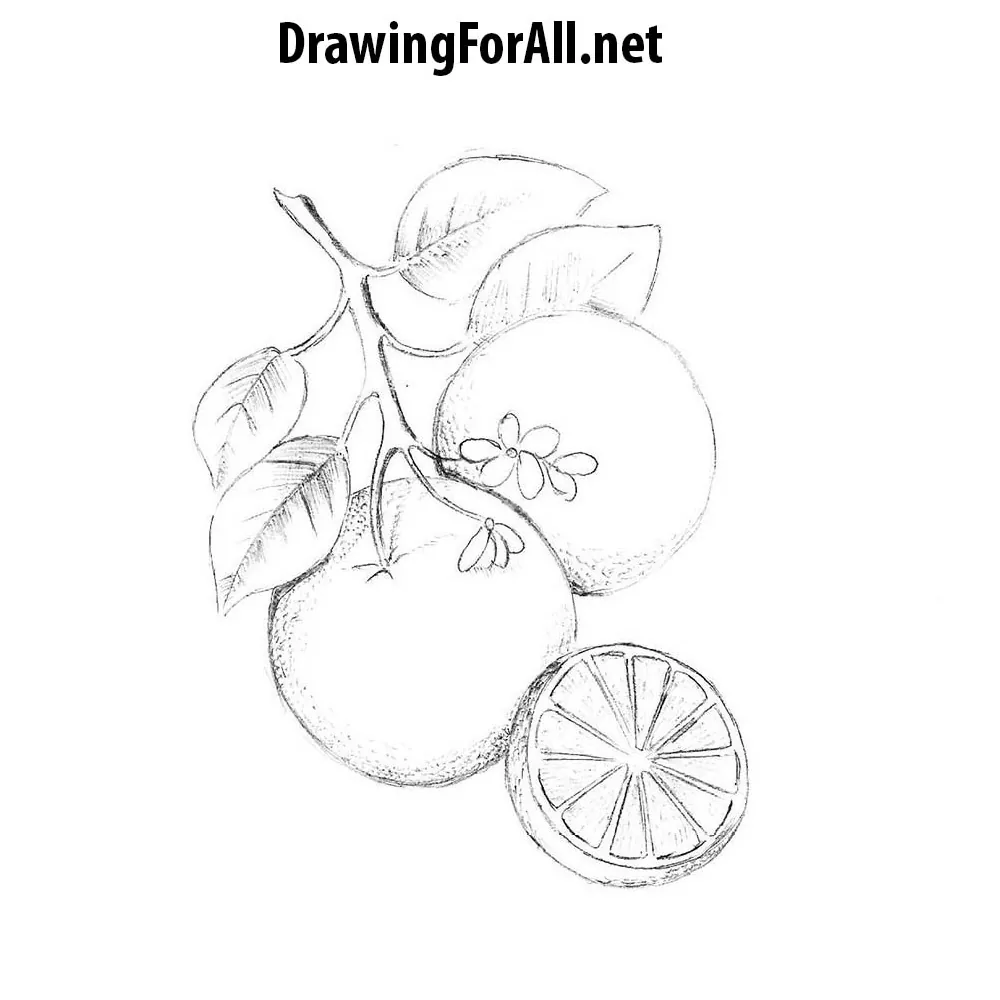
The process of drawing a lemon is similar in many ways to drawing other citrus fruits. Learn how to draw a mandarin orange and how to draw an orange.
Then use these skills to combine them into a single citrus composition. When arranging the objects, pay attention to their relative size, position, and overlap.
You can also use a single light source to connect the objects through a common system of light and shadow.





nice