How to Draw Batman
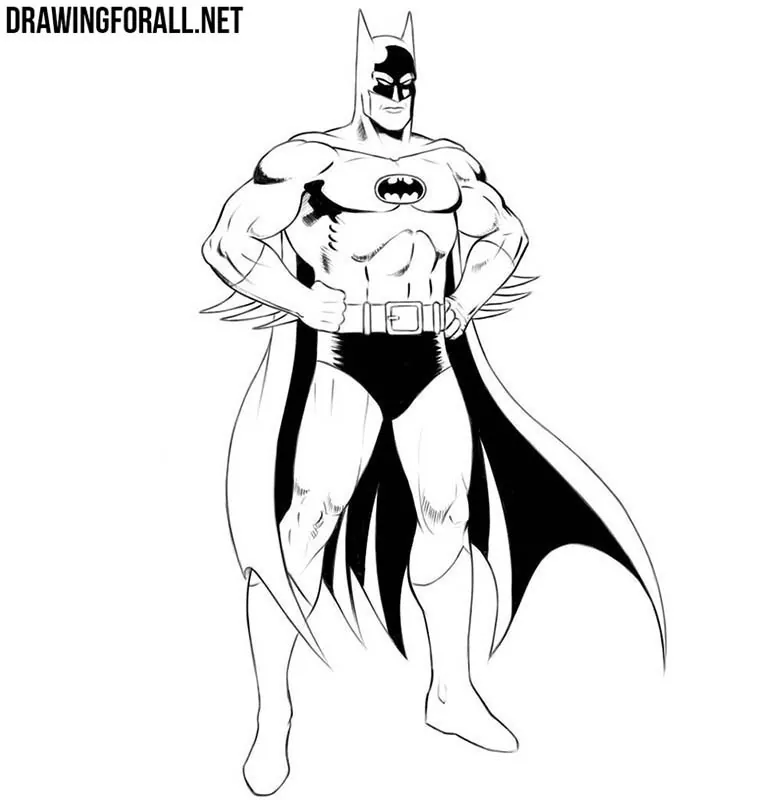
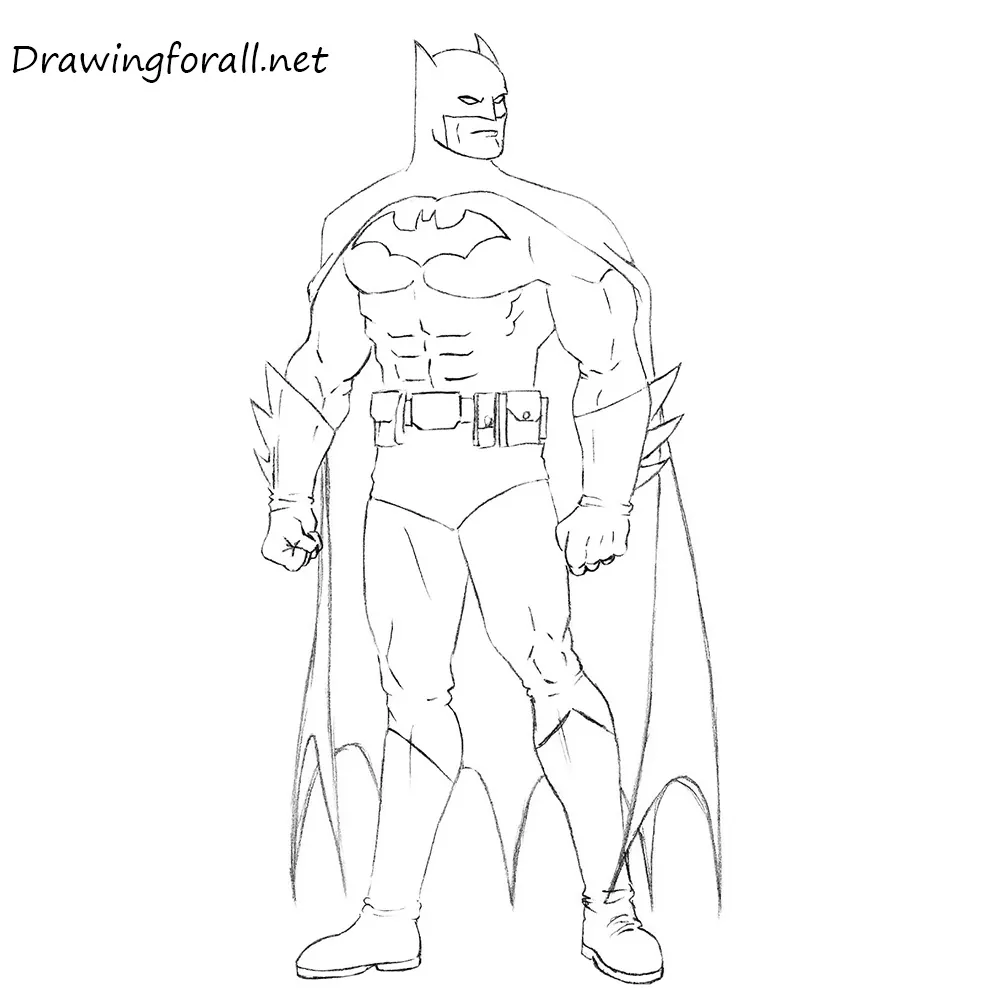
Batman has changed his appearance many times over the decades, and almost every comic-book artist has drawn the Dark Knight a little differently. Here we decided to show you how to draw Batman in his most recognizable look.
The tutorial is based on the classical principles of drawing the human figure, with the addition of Batman’s characteristic costume elements and greater muscle mass than an ordinary person.
How to draw Batman step by step
Step 1: Sketch Batman’s basic framework
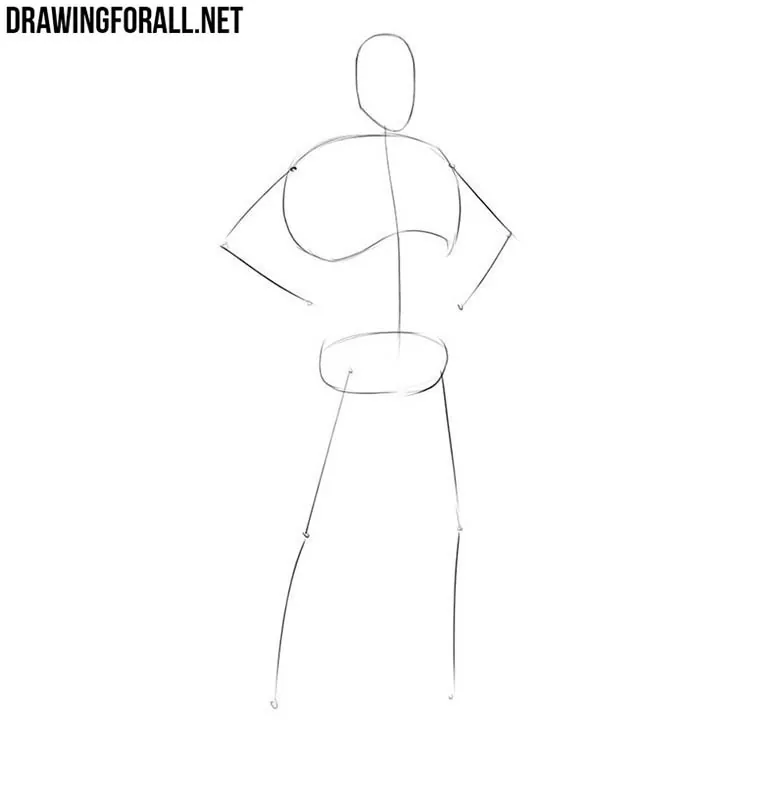
In order to properly draw Batman, we first need to sketch the basic framework of his figure. Begin with the head in the form of a simple oval, similar to an upside-down egg. Just below, mark the spine and place the rib cage and pelvis along it. Next, sketch the arms and legs using simple lines and mark the main joints with small circles. This rough framework is the foundation of the future Batman drawing, so use very light lines that can easily be erased later.
Step 2: Build Batman’s powerful torso
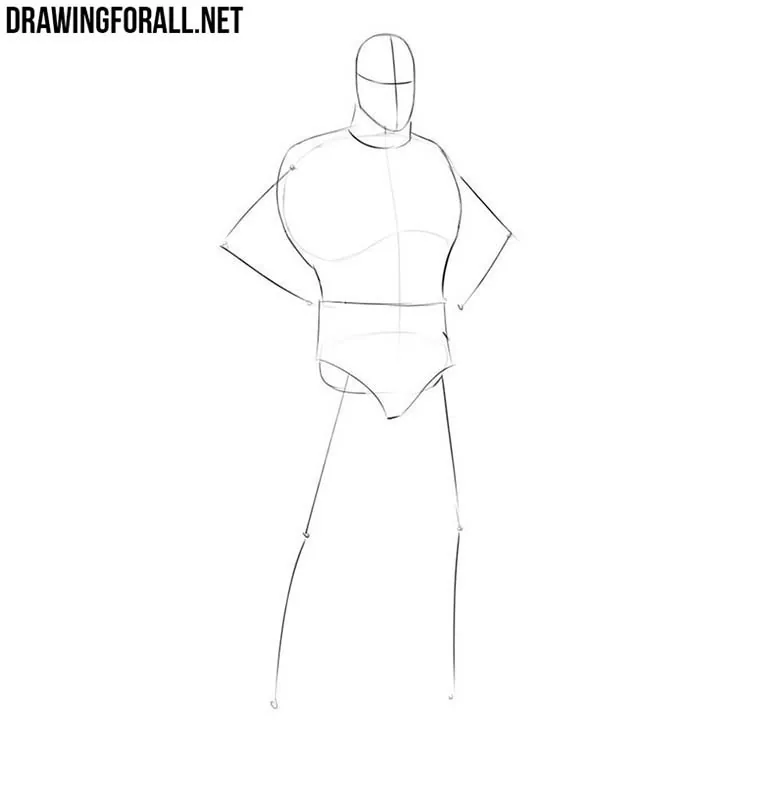
To properly draw Batman’s face, first sketch the facial symmetry guidelines. Draw a vertical line through the center of the face and cross it with a horizontal line at approximately the bridge of the nose. Next, draw the neck as a short cylinder and add the torso. Batman is traditionally depicted with a broad, powerful upper body, so make the shoulders wide and gradually narrow the torso toward the waist.
Step 3: Add volume to the Dark Knight
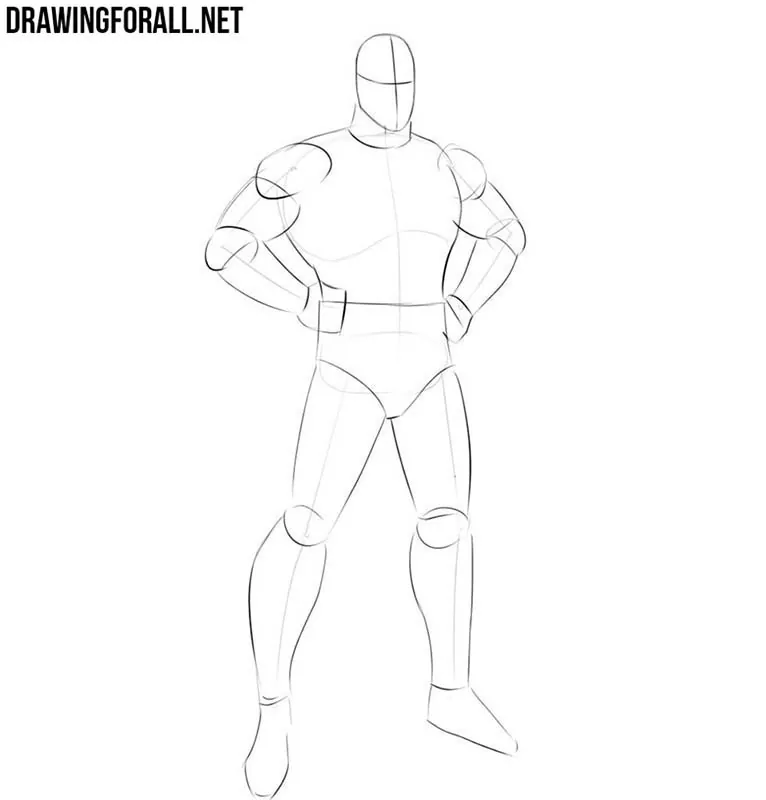
Now let’s add volume and “flesh” to the skeletal framework of the Dark Knight. Draw the arms and legs as slightly modified cylinders, already taking the general shape of the muscles into account. Sketch the shoulders, elbows, and knees with simple spherical forms. At the ends of the arms, outline the fists resting against the sides of the body, and then sketch the feet. At this stage, Batman should already look massive and powerful even though the figure is still constructed from very simple forms.
Step 4: Add the recognizable Batman details
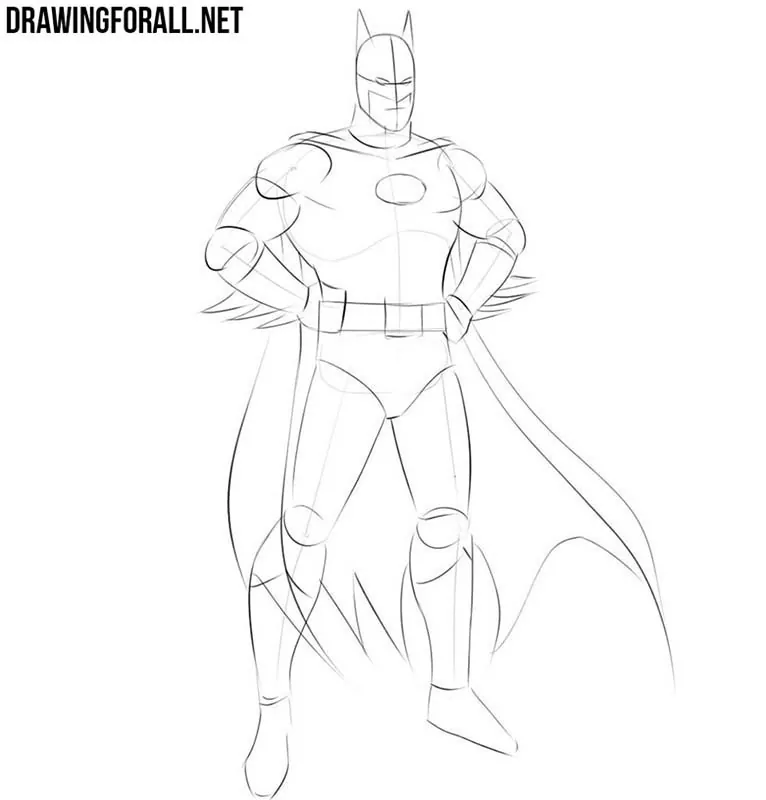
Now add the most basic and recognizable details to the Batman drawing. Sketch the frowning eyes along the horizontal guideline, then mark the mouth and the opening of the cowl around the lower part of the face. At the top, draw the characteristic pointed ears. Next, outline the upper part of the cape and the oval Batman emblem on the chest. Finish this stage by sketching the gloves, boots, and the lower part of the long bat-like cape.
Step 5: Draw the Dark Knight’s face
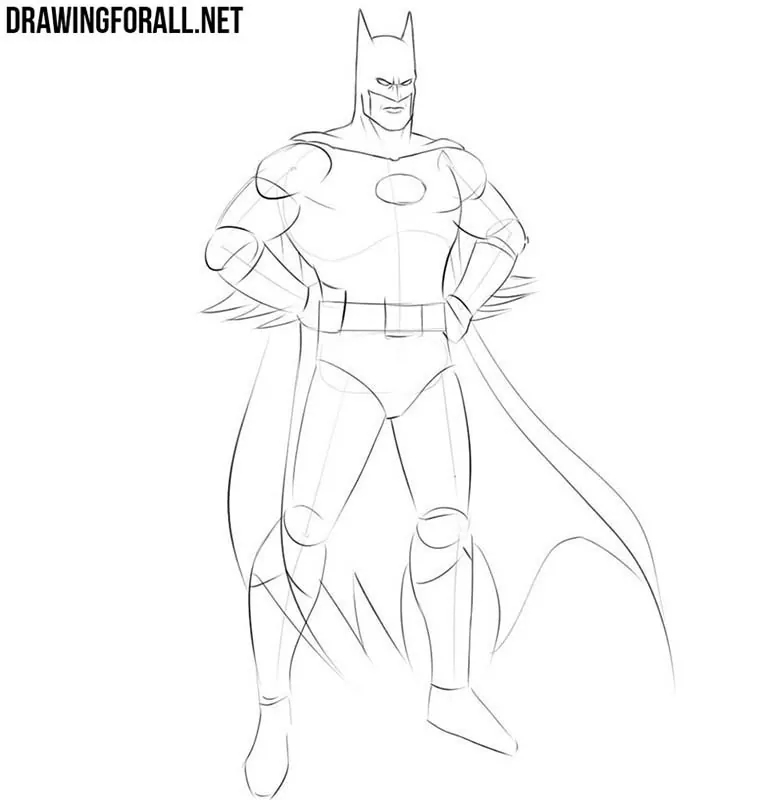
Starting with this step, gradually replace the light construction lines with clear, finished contours. Carefully draw Batman’s narrowed eyes and add the characteristic wrinkles around them to make the expression more severe. Next, draw the mouth and the powerful jaw. Make it more angular and wider at the sides. Trace the contours of the cowl and its long pointed ears. Finish the head by erasing the unnecessary auxiliary lines.
Step 6: Draw Batman’s powerful torso
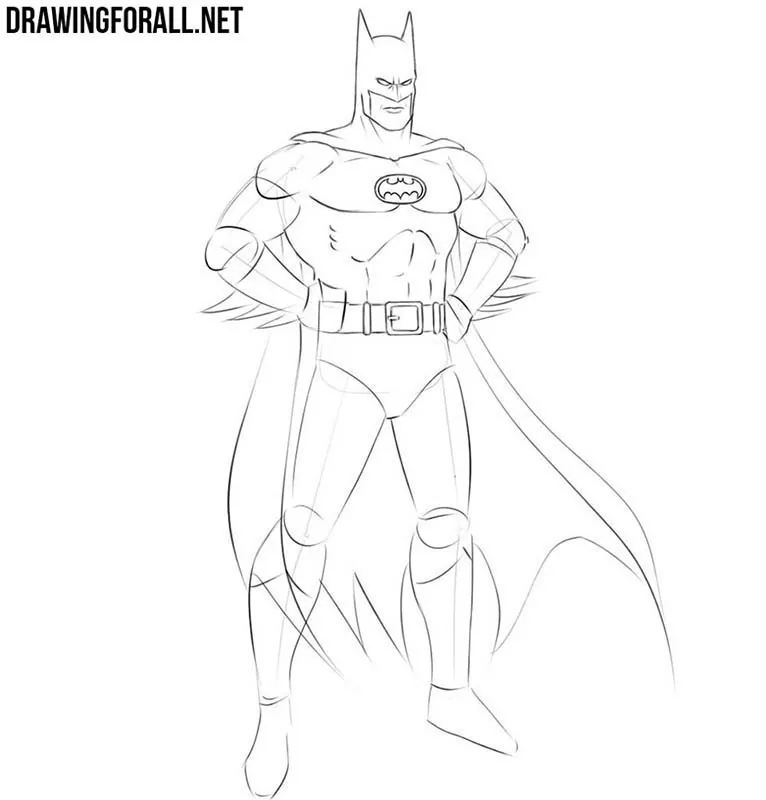
Now give Batman’s torso a more finished comic-book appearance. First, draw the large pectoral muscles and the outlines of the abdominal muscles. The torso should resemble a broad inverted triangle, with massive shoulders and a noticeably narrower waist. This makes the Dark Knight looks powerful and impressive. Next, draw the Batman emblem in detail. Remove the remaining rough construction lines from the torso.
Step 7: Draw Bruce Wayne’s powerful arms
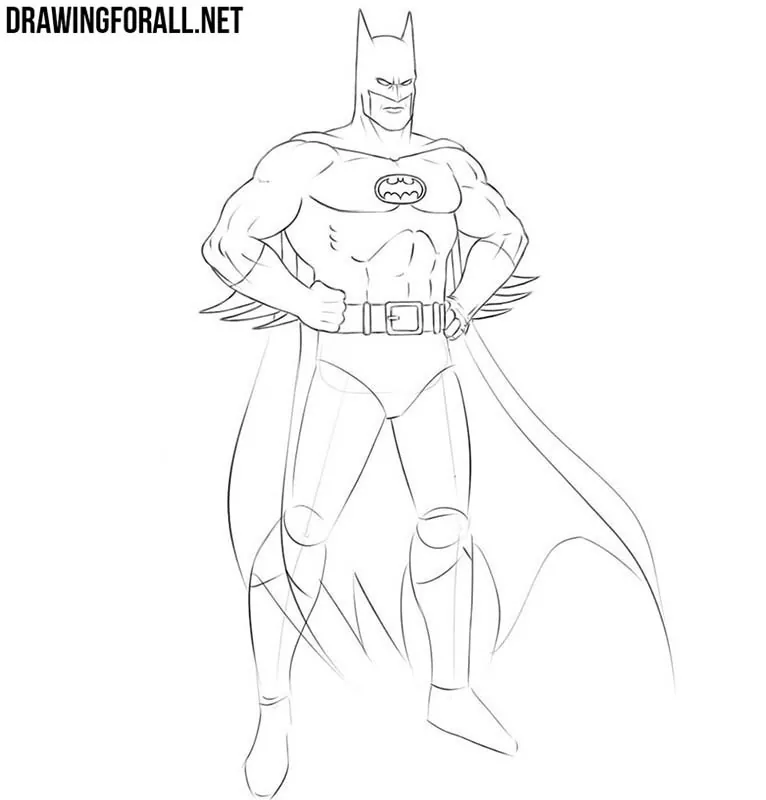
Begin at the shoulders and separate the large deltoid muscles, then draw the biceps and triceps. Continue downward and define the forearm muscles with smooth, confident lines. Different comic-book artists give Batman different degrees of muscularity, so these forms can be made somewhat heavier or leaner depending on the version of the Dark Knight you want to depict. When drawing the hands, carefully outline the clenched fists and indicate the visible knuckles.
Step 8: Draw Batman’s long cape
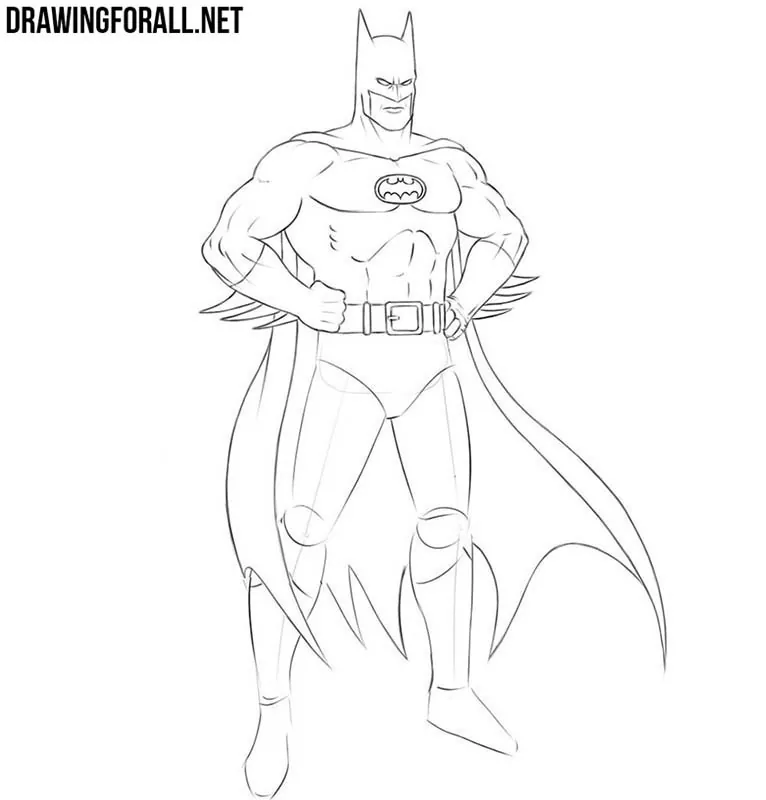
To draw the cape in more detail, use the lines drawn earlier as guides and make the contours smoother, cleaner, and more confident. Pay attention to the lower edge with its characteristic pointed sections, which give the cape its bat-like appearance. Finish the step by erasing the remaining auxiliary lines.
Step 9: Detail the Dark Knight’s legs
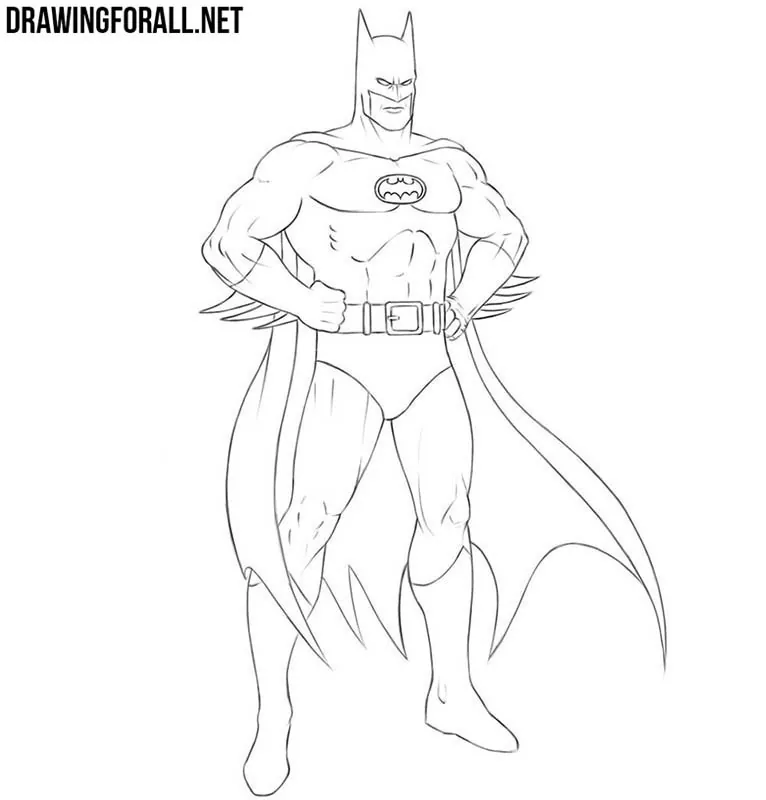
Carefully draw the muscles of Batman’s legs and define the forms around the knees. Replace the remaining construction lines with crisp, dark contours. Do not make every leg muscle equally pronounced; the larger forms of the thighs and calves should dominate. When drawing the lower legs and feet, pay attention to the bends around the ankles and to the shape of the boots.
Step 10: Add classic comic-book shadows
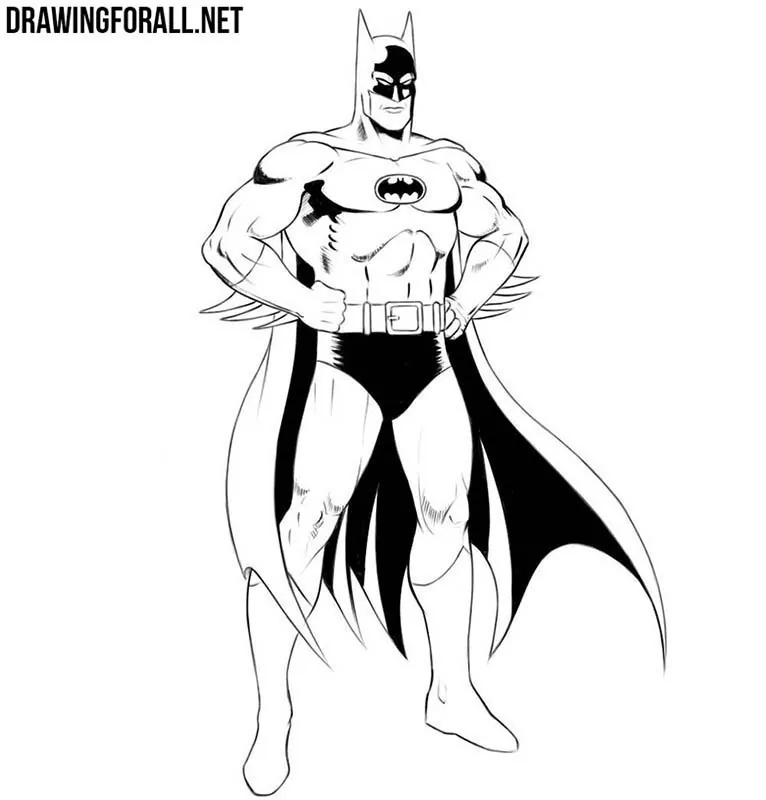
To make your Batman drawing look like the work of a classic comic-book artist, add strong, high-contrast shadows. First, design the main shadow shapes according to the forms of the body. Fill the deepest areas with solid black, and use hatching for lighter shadows and transitions. Do not be afraid of large black shapes Batman’s dark costume and massive cape are especially well suited to this kind of dramatic comic-book lighting.
Drawing Batman in different comic-book styles
In this guide, we tried to show you how to draw Batman, probably one of the most recognizable comic book superheroes.
Do not forget that it is important to be able to draw a person in any pose and from any angle. Therefore, find suitable reference images, and try to draw Batman in various poses and from different angles, using the steps above as a guide.
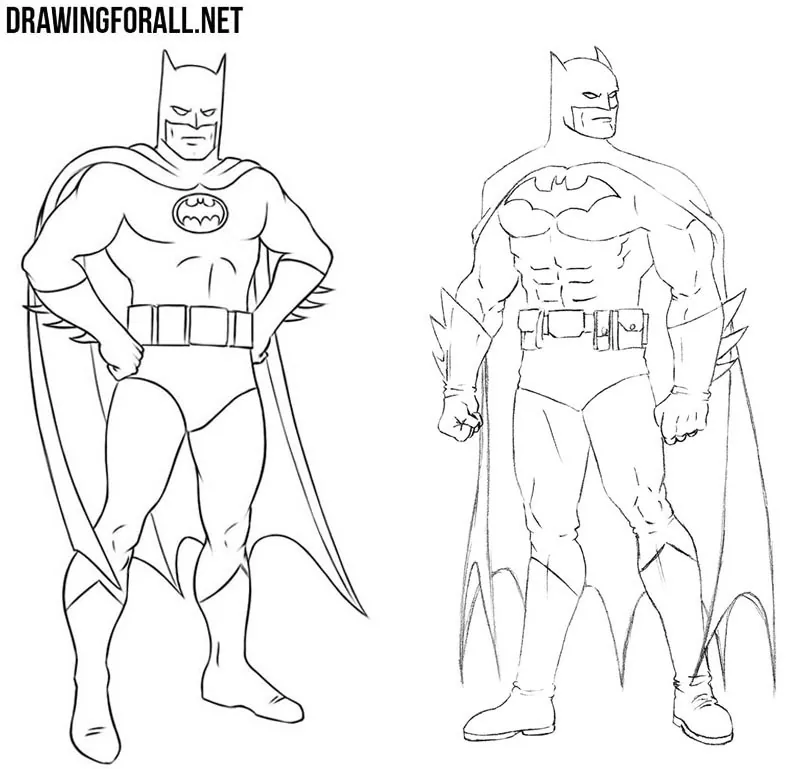
Next, try to draw Batman in different costumes. You can also try drawing the superhero in the styles of different comic book artists, such as Bob Kane, one of Batman’s creators; Dick Sprang, whose work helped define Batman’s classic mid-20th-century appearance; and Frank Miller, who created The Dark Knight Returns and Batman: Year One.
Below, for example, we drew Bruce Wayne in the classic old suit that appeared in Detective Comics in the 1950s, as well as a more modern variation of the suit.
And probably the most important thing is to find your own unique style in drawing. Why is it important?
You have probably noticed that the best artists have their own styles, and we are talking about both comic book artists and the great masters of the Italian Renaissance.
When an artist first starts drawing, they inevitably imitate the styles of others, but over the years and with each new drawing, they gradually develop a unique style of their own.