How to Draw Themis
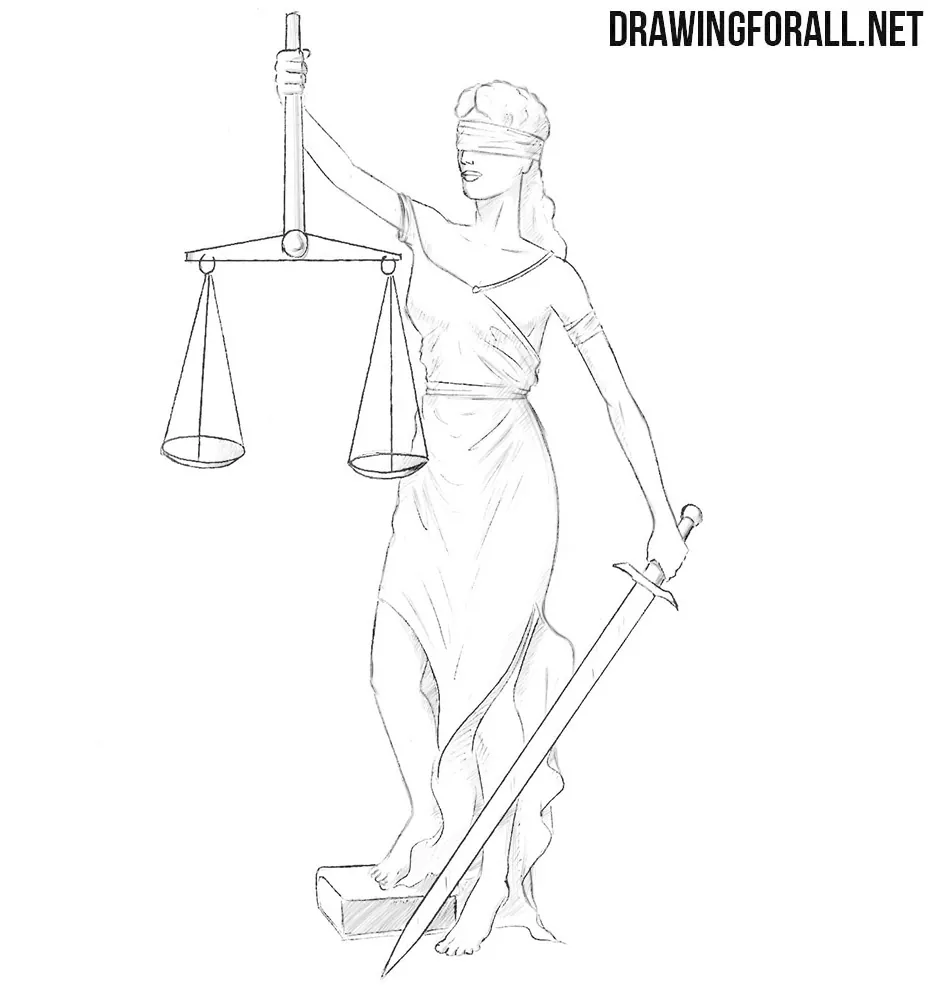
We love the myths of ancient Greece and Rome, and on Drawingforall.net there are many different tutorials on this fascinating theme. Continuing the theme of ancient mythology, we will show you how to draw Themis. In ancient Greek mythology, she is the goddess of justice, a Titaness, and the second wife of Zeus.
How to draw Themis step by step
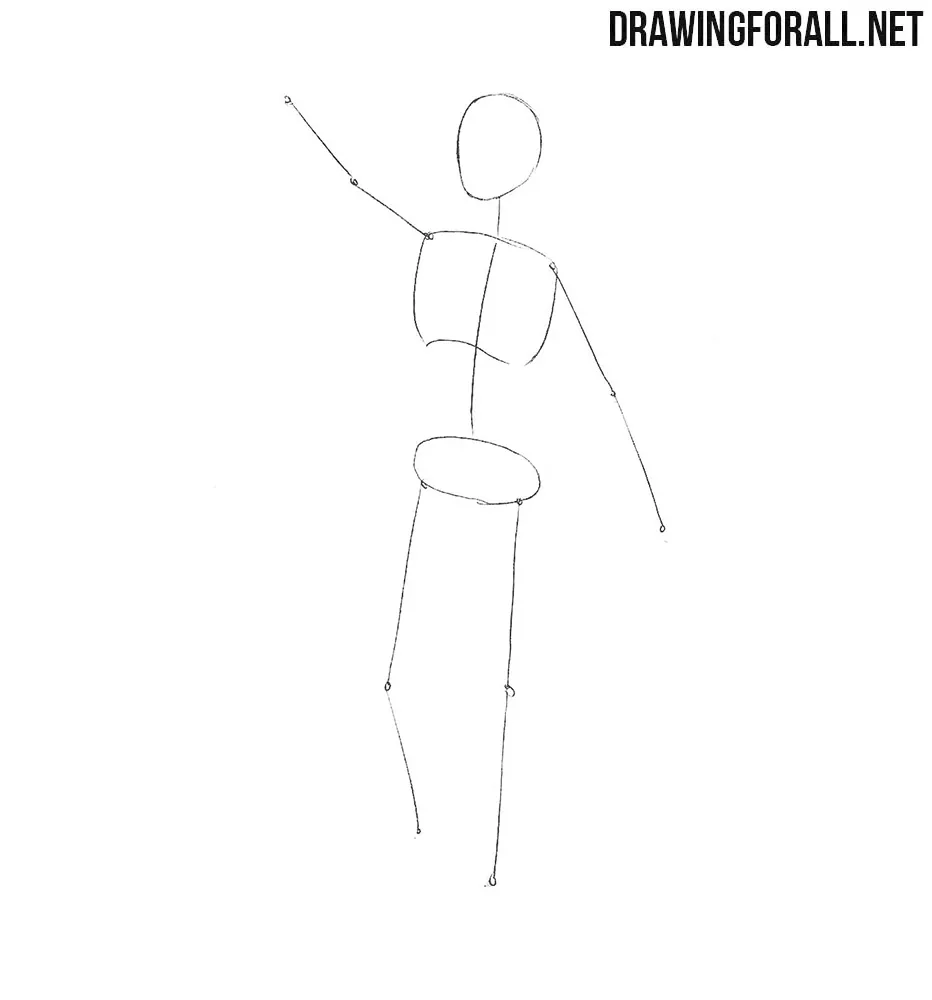
Step 1: Sketch the figure of Themis
First, draw a basic female figure for Themis. The height of the goddess can be equal to about six or seven head lengths. Another important feature is the ratio between the shoulders and hips. Mark the shoulder and pelvic lines and set the necessary angle. Raise one arm of Themis diagonally and lower the other arm toward the side. Indicate the legs with long lines, placing one slightly forward so the figure does not look completely symmetrical.
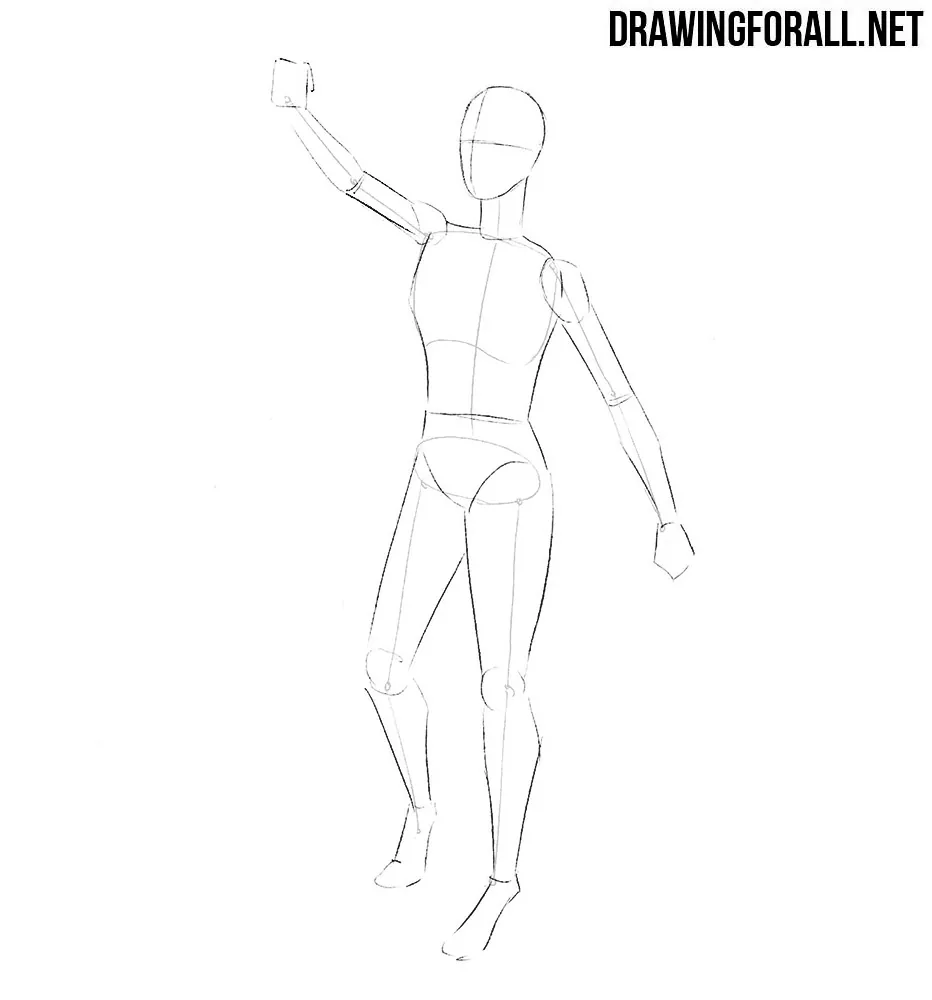
Step 2: Add volume to the figure of Themis
Start this step by drawing two intersecting lines inside the outline of Themis’s face. They will help us draw the facial features. Next, sketch the goddess’s neck in the form of a rather long cylinder. After that, block in the torso, which narrows at the waist and widens at the hips. Using very simple geometric shapes, sketch the outlines of the legs and arms of Themis. Think of the limbs as three-dimensional forms rather than flat outlines. The arms and legs can be based on cylinders that change in thickness and direction at the joints. Indicate the hands as simple masses.
Step 3: Sketch the attributes of Themis
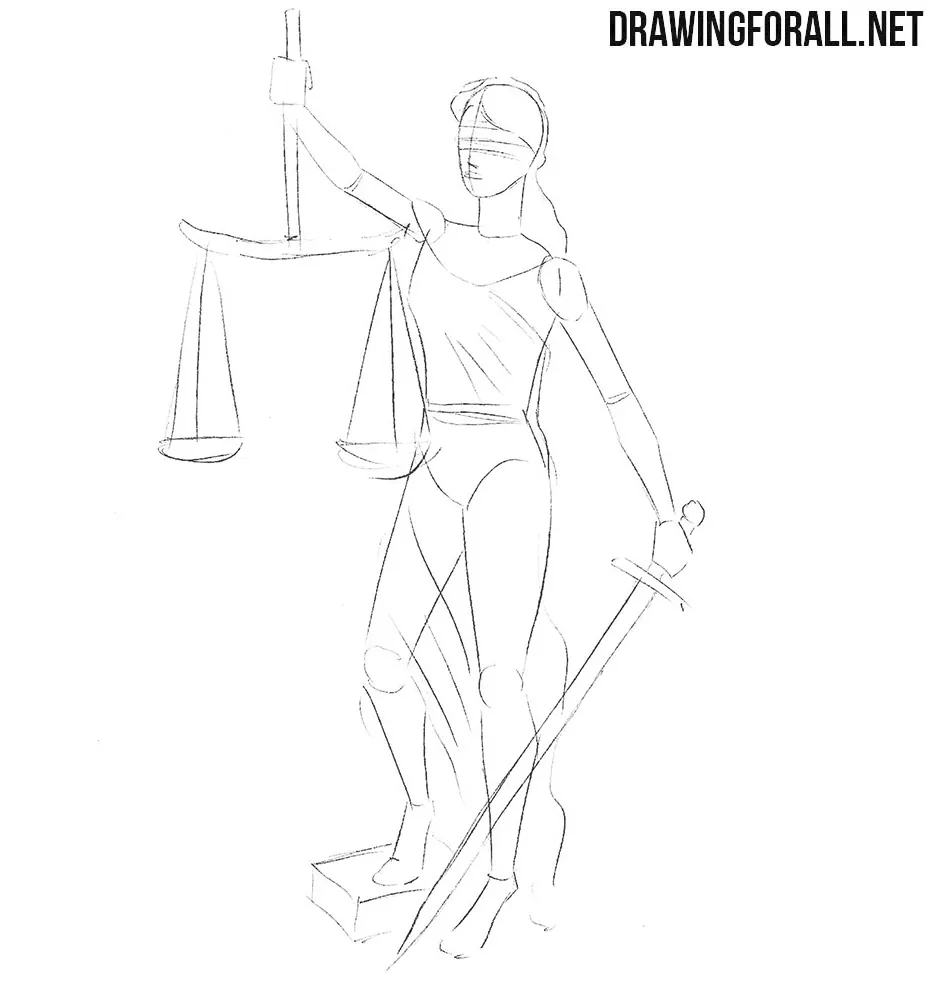
We have drawn the silhouette of Themis, and now let’s give the Greek goddess her characteristic features. First, sketch the facial features, blindfold, and long hair. Next, move to the body and sketch the sword, scales of justice, and outlines of the clothing. Place the upper edge of the drapery across the shoulders and indicate the main folds running diagonally across the torso. By the way, remember that in the first three steps of this tutorial we used very light lines, but starting with the next step, we will use darker lines.
Step 4: Draw the head of Themis
Now we can begin drawing the final details of Themis using dark, contrasting lines. Start by drawing the face of the goddess. First, carefully draw her characteristic blindfold, nose, and lips. Remember that the blindfold wraps around the spherical form of the head. After that, draw the contours of Themis’s face. Using wavy lines, draw her long, voluminous hairstyle. At the end of the step, remove all unnecessary guidelines from the face and head.
Step 5: Draw the torso and Greek drapery
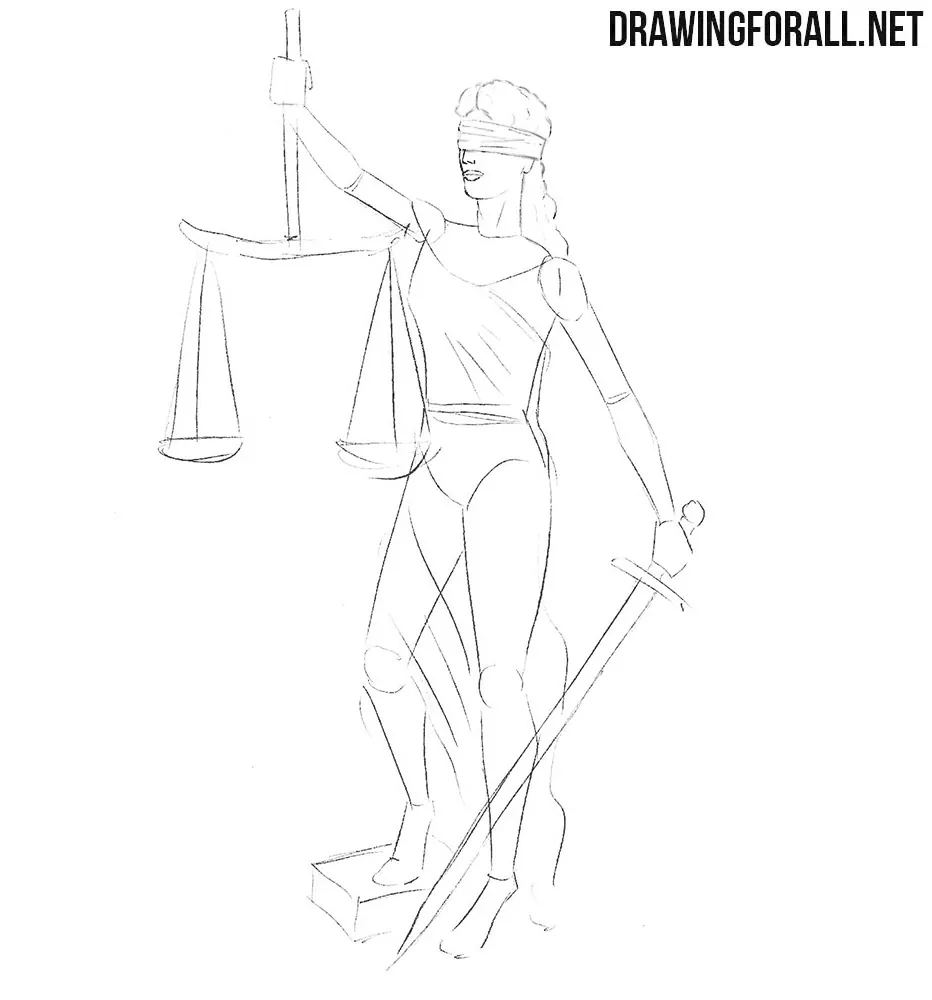
Using curved lines, carefully trace the contours of the lower chest and the folds of fabric around the abdomen. The draped clothing lies over the volume of the goddess’s torso, so the direction of the folds should correspond to the form of the chest, waist, and abdomen. Draw the drapery and main folds from the points where the fabric is pulled or compressed. Erase all unnecessary guidelines from the torso of the mythical character.
Step 6: Draw the sword and scales of Themis
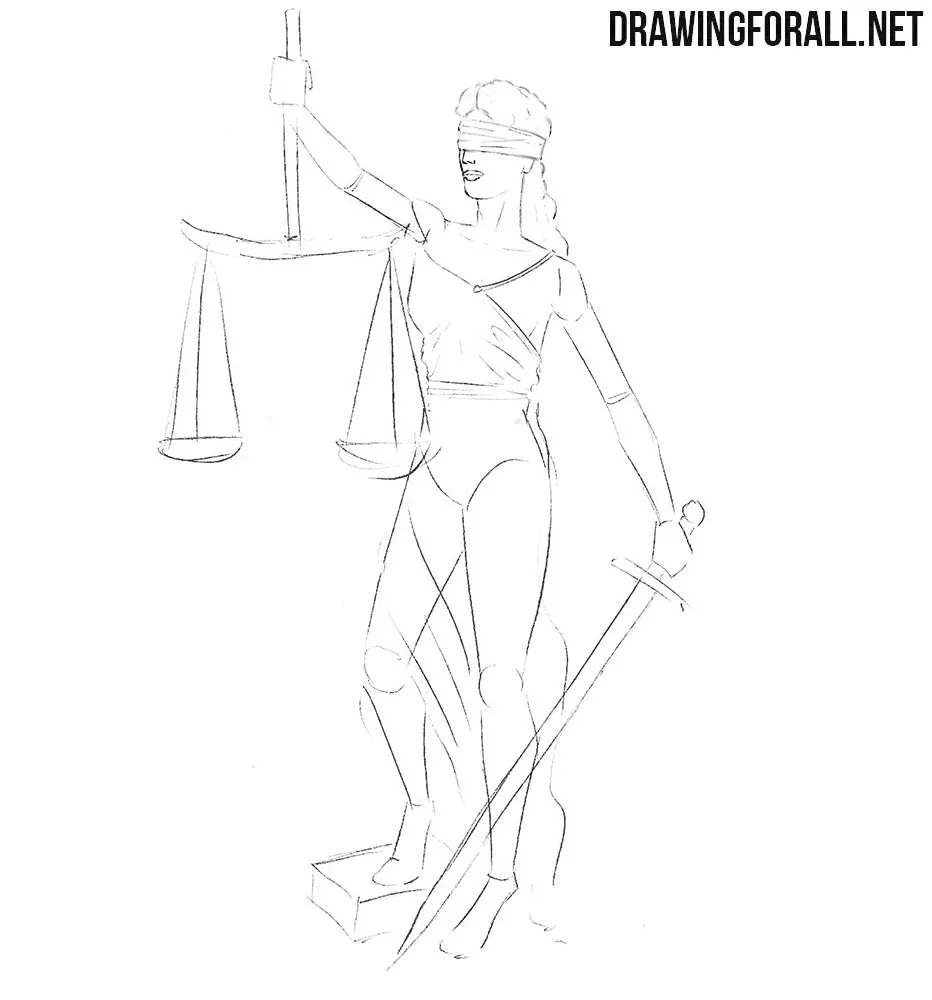
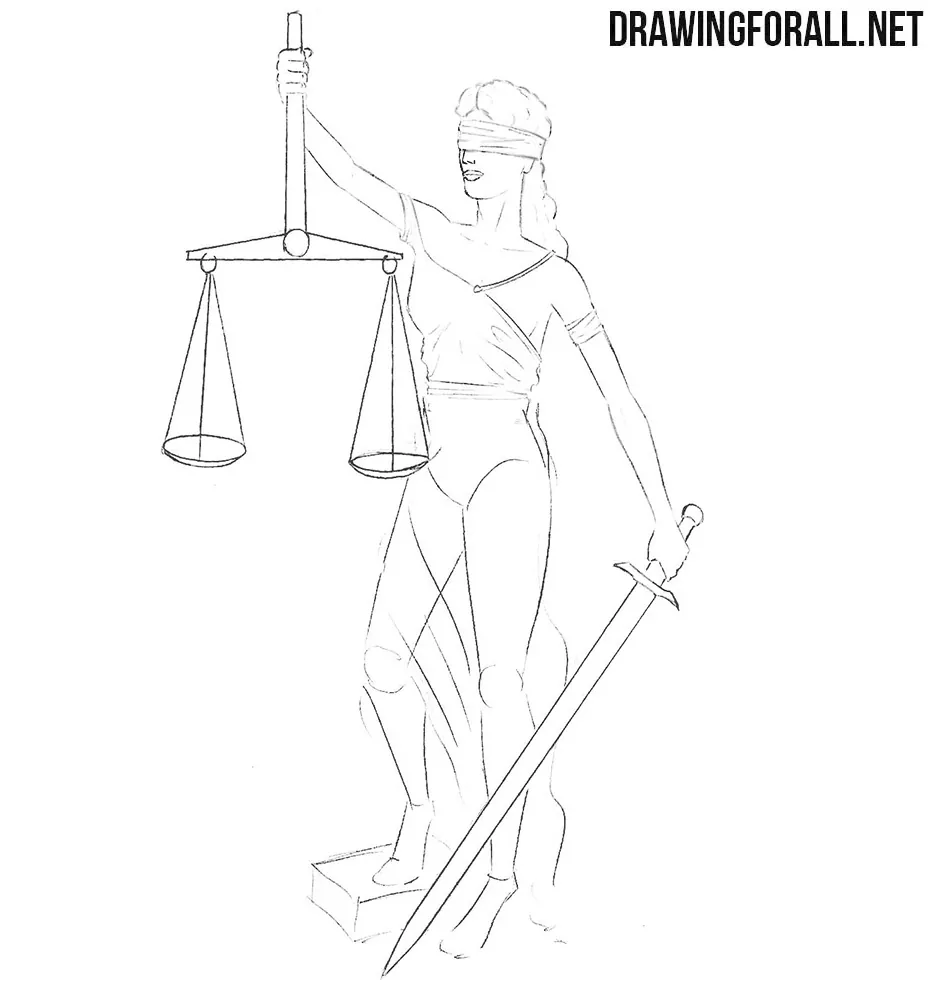
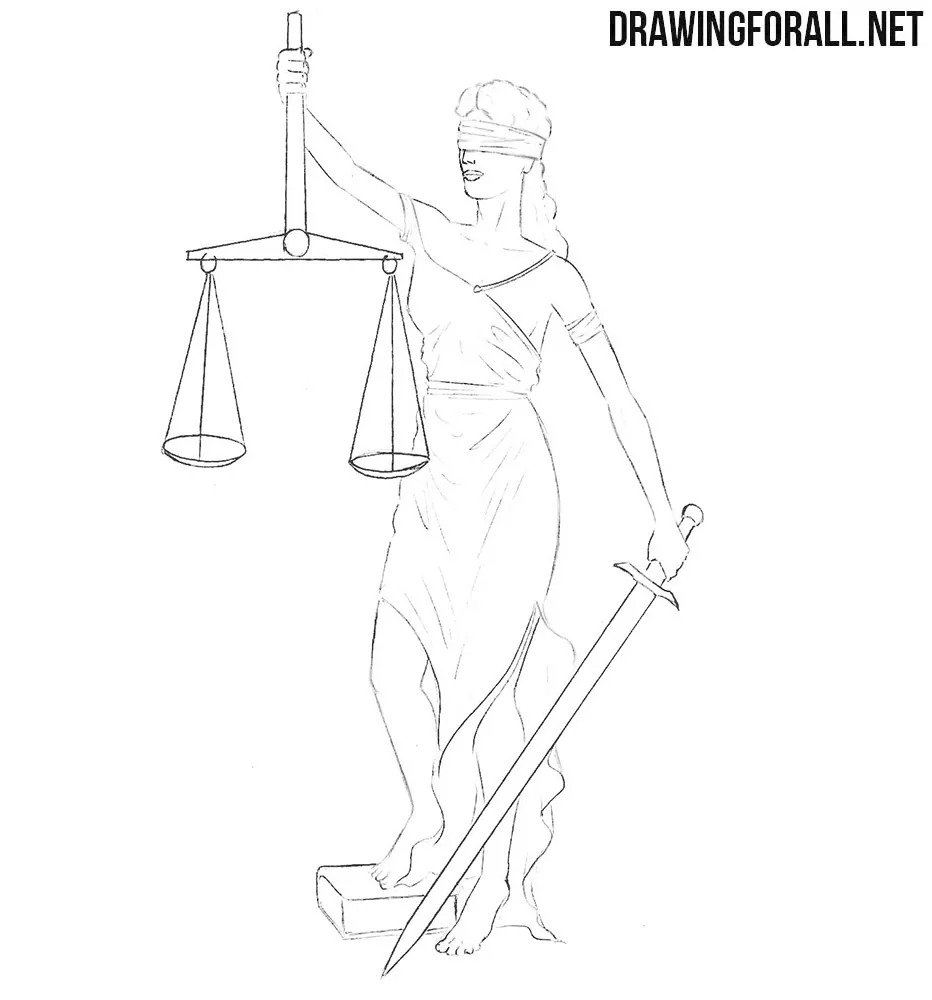
Before drawing the hands and fingers of Themis in detail, sketch the overall form and position of each hand around the symbolic objects it holds. Wrap the fingers of the raised hand around the vertical handle of the scales of justice and draw the lower hand gripping the sword hilt. Use straight lines to draw the short sword and scales. Make the beam of the scales level, then draw the two pans as shallow elliptical forms suspended below it.
Step 7: Draw the legs and feet of Themis
Refine the contours of the calves and ankles, then construct each foot as a three-dimensional form rather than a flat continuation of the leg. Draw the toes on the visible front edges and show how the goddess’s foot on the left rests on the low block while the other stands on the ground. Continue the classical drapery downward and draw the folds where the fabric hangs beside the legs. Also, remove the unnecessary guidelines from these parts of the figure.
Step 8: Add shadows to Themis
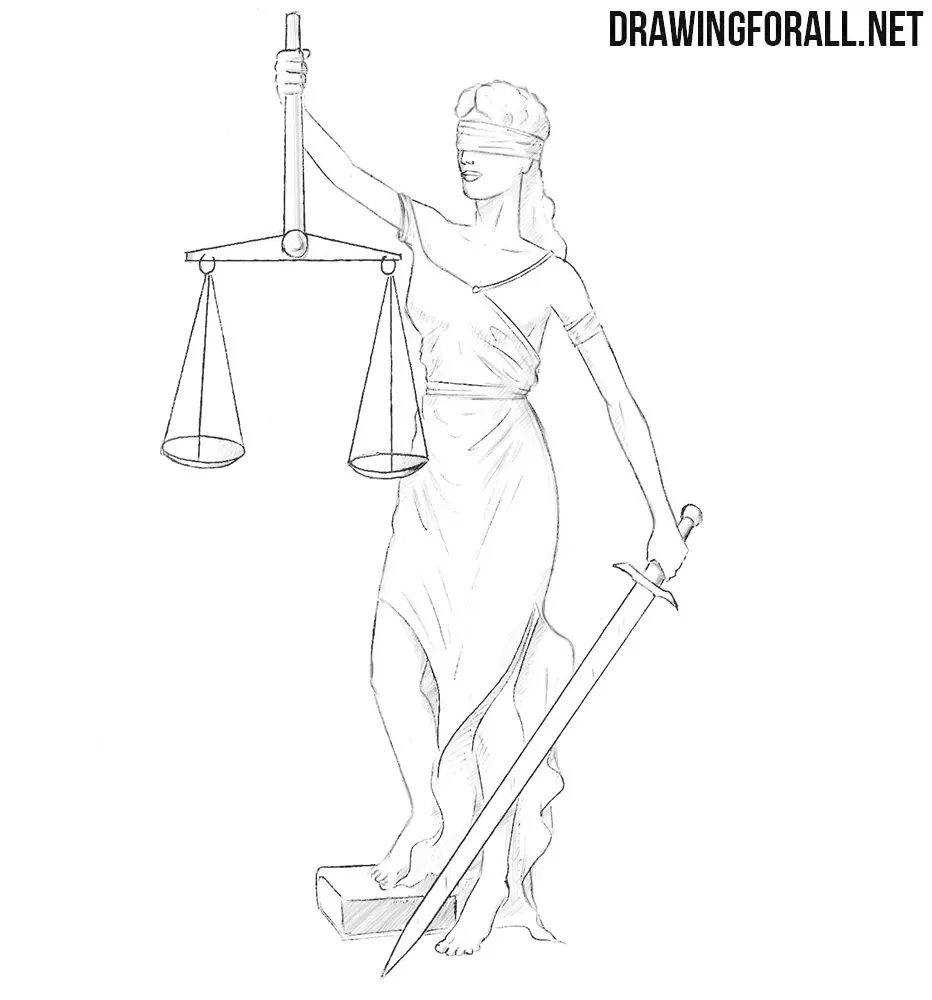
Themis is almost complete, and we just need to make the figure look more three-dimensional and realistic. To do this, add shadows using classic hatching. As you can see, the hatching is concentrated in the least illuminated areas of the Greek goddess’s figure, where the light does not fall. Keep in mind the volume of the figure when applying the hatching and let the strokes follow the forms of the body and drapery. Make the shadows deeper in the folds of the clothing and in the areas where one form blocks the light from another.
We hope that you share our love for ancient art. We believe that antiquity and the Renaissance are among the most important periods in the history of art and had an enormous influence on the world we live in today.
The figure of Themis can help practice some of the principles that appear throughout classical art. Try drawing the Greek goddess again with more attention to the underlying volumes of the body and the way the drapery follows these forms.
You can also make the light and shadow on your Themis drawing more detailed by adding halftones and creating a wider tonal range.