How to Draw the Phantom

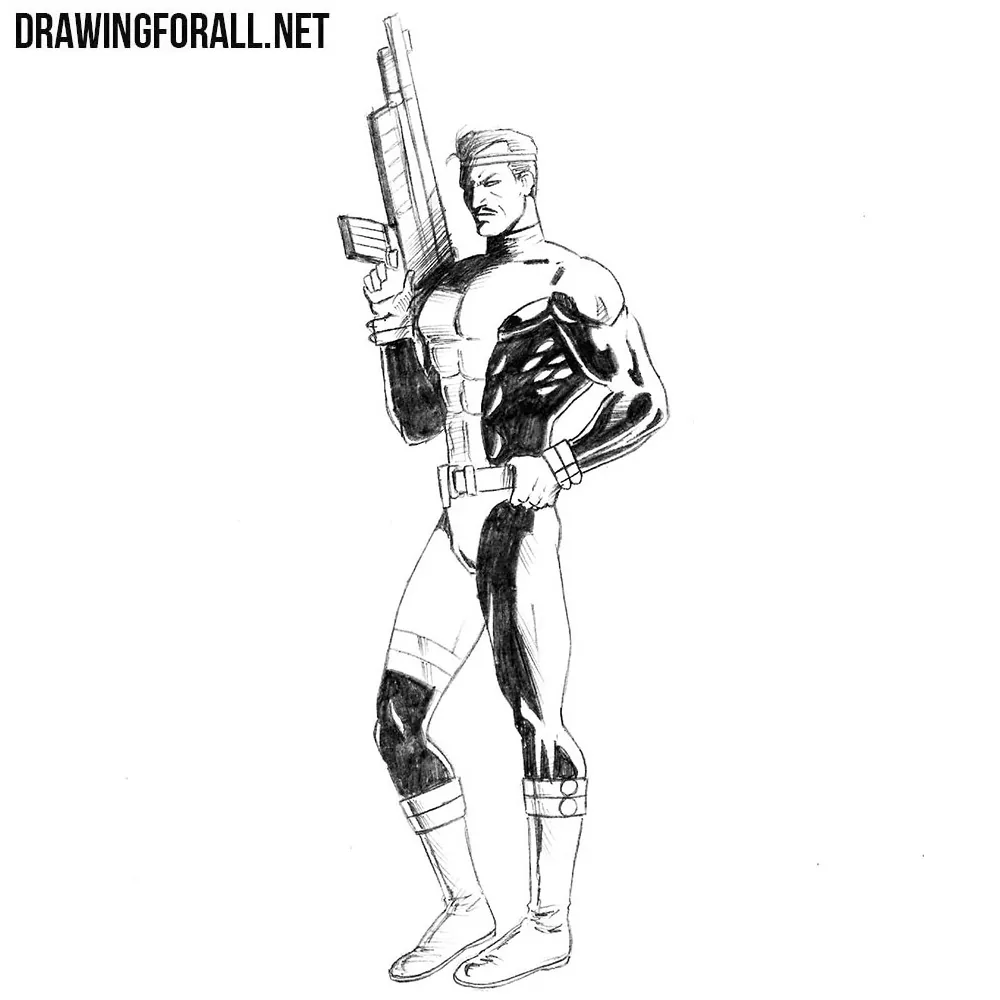
The Phantom is one of those characters whose costume and overall appearance are very different from those of many other comic-book characters. Here we will show you how to draw the Phantom in his characteristic costume and mask, in the style of the original comics.
This character has also appeared in an animated series and a movie adaptation, and the steps in this tutorial will show you how to depict any of these versions, since his costume and overall appearance have been carefully preserved in all of them, remaining close to the original comics.
How to draw the Phantom step by step
Step 1: Sketch the Phantom’s figure
Begin with a simple stick figure of our character. Sketch the head as an oval. After that, draw the line of the spine and mark the chest and pelvis with simple rounded shapes. Use straight and slightly curved lines to indicate the arms and legs.

Step 2: Add volume to the body
Draw the intersecting facial guidelines to establish the direction of the head. Outline the neck and torso, which narrows toward the pelvis. After that, build the powerful arms using simple geometric shapes, with rounded forms for the shoulders and cylinders for the upper arms and forearms. Move down and give the pelvis and legs volume in the same way.

Step 3: Outline the mask and costume
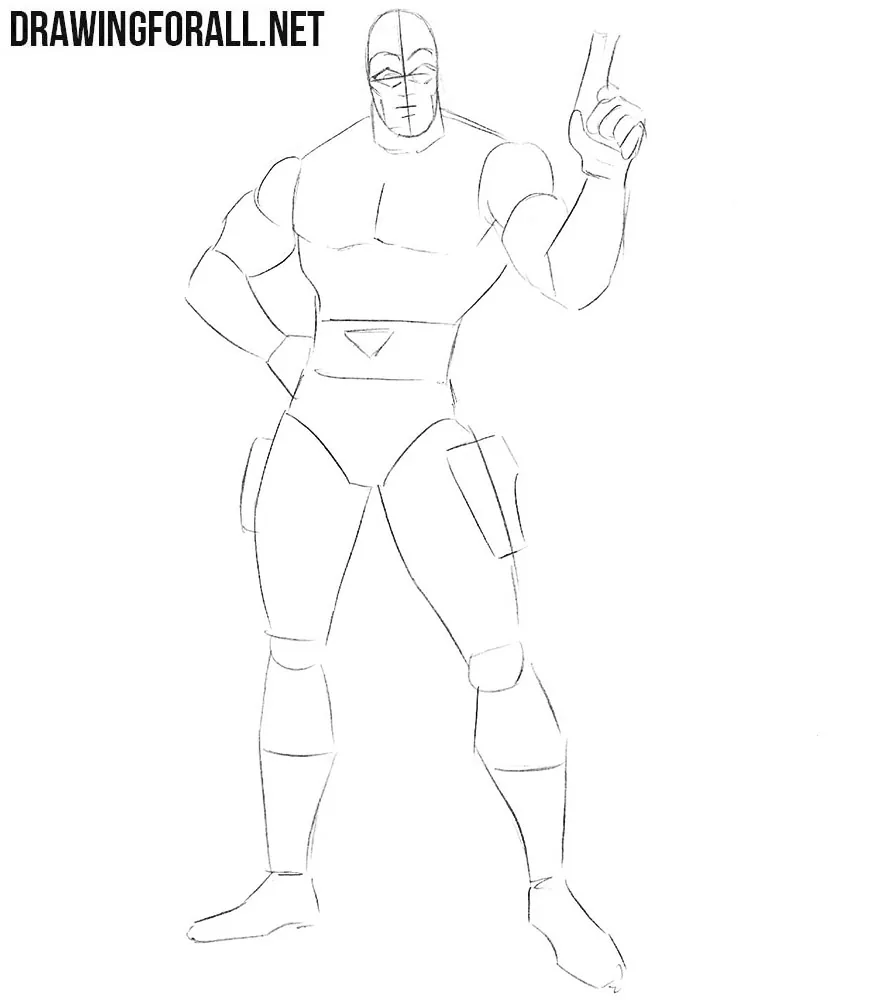
At this stage, outline only its general shape without adding the small details. Use the intersecting facial guidelines to position the mask correctly on the head. In the same step, sketch the main lines of the costume and sketch the gun in the character’s hand. Keep these outlines light.
Step 4: Detail the Phantom’s face
Carefully define the eyes within the mask, then draw the nose and mouth. Pay attention to the strong jaw and the shadows around the eyes. Starting with this step, use clear, dark lines to create the final contours of the drawing.

Step 5: Draw the torso muscles
Refine the torso of the Phantom using clear, dark lines. Draw the contours of the chest and abdominal muscles. Define the large pectoral muscles, the outlines of the rib cage, and the rectus abdominis. Keep the torso wide at the shoulders and narrow at the waist. After that, erase all unnecessary construction lines from the torso.

Step 6: Refine the arms and gun
Define the large deltoid muscles, then refine the biceps, triceps, and forearm muscles. Follow the underlying cylindrical forms of the arms while drawing the muscle contours. Carefully draw the hand holding the gun and refine the weapon itself.
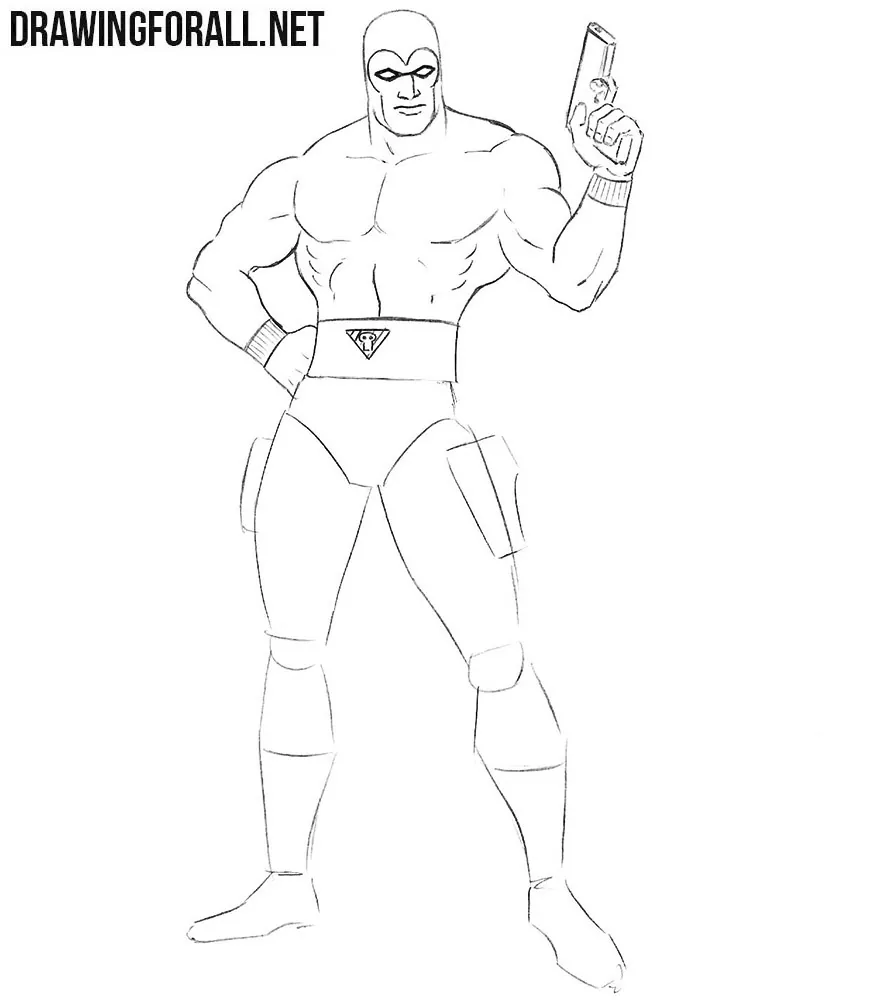
Step 7: Finish the legs and costume
Refine the contours of the pants and add the costume details around the legs. When drawing the lower limbs, take into account the shapes of the leg muscles beneath the fabric, especially around the thighs and knees. Add the necessary seams and folds, then complete the outlines of the boots.

Step 8: Add black areas and shadows
Now finish the drawing by filling in the dark areas of the Phantom’s costume and adding shadows. Use solid black for the darkest parts and keep their contours sharp. For lighter shadows, apply dense hatching, changing the direction of the strokes to follow the forms of the muscles and clothing.

The point we made at the very beginning about this tutorial being suitable for drawing all adaptations of the character is very important, since the appearance of comic-book characters is not always preserved exactly in animated series and especially in movies.
For example, Wolverine’s appearance from the classic comics was almost completely changed in the X-Men movies starring Hugh Jackman in the early 2000s.
In other words, to draw Wolverine from the comics and from the movies, you would need to depict two completely different costumes, although both figures would, of course, follow the basic principles of drawing the human body.
The costumes of characters such as Spider-Man were treated somewhat more faithfully in different adaptations, but even his costume had some differences.
In the case of the Phantom, however, his costume was adapted more faithfully, so when drawing this character in different versions, you will only need to change the drawing style while keeping almost all the costume elements the same, whether you are depicting the version from the comics, the animated series, or the movie.