How to Draw the Tick

The Tick is both a character and a parody of a character. The style in which he is drawn is also largely parodic. Here we will show you how to draw the Tick using that style, with exaggerated forms and an unusual costume.
In many ways, this tutorial follows the basics that we showed in our tutorial on drawing a classic superhero. As in any process of drawing a comic-book character, it is important to remember that the figure should be exaggerated and that there should not be too many details.
How to draw the Tick step by step
Step 1: Sketch the Tick’s basic guidelines
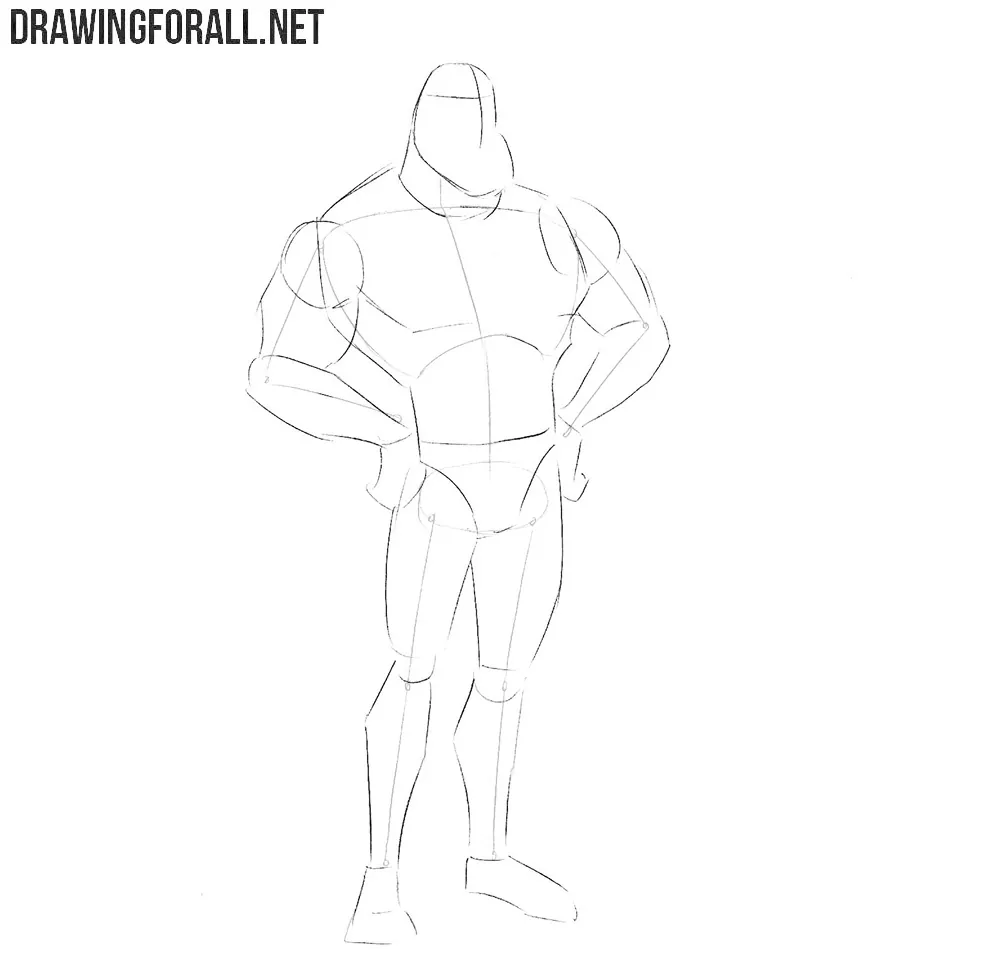
Let’s start with the Tick’s stick figure. First, sketch his unusually shaped head and the line of the spine. Outline the rounded top of the head and a large jaw that projects to the right. Along the spine, outline the very wide chest and small pelvis. Then use simple lines to sketch the arms and legs.

Step 2: Build up the exaggerated figure
Sketch two facial guidelines on the Tick’s head. Place the vertical guide toward the right side to mark the turn of his face. Next, outline the wide neck and torso with massive shoulders and a narrow waist. Use simple geometric shapes to build his exaggeratedly large arms and comparatively thin legs.
Step 3: Draw the Tick’s grinning face
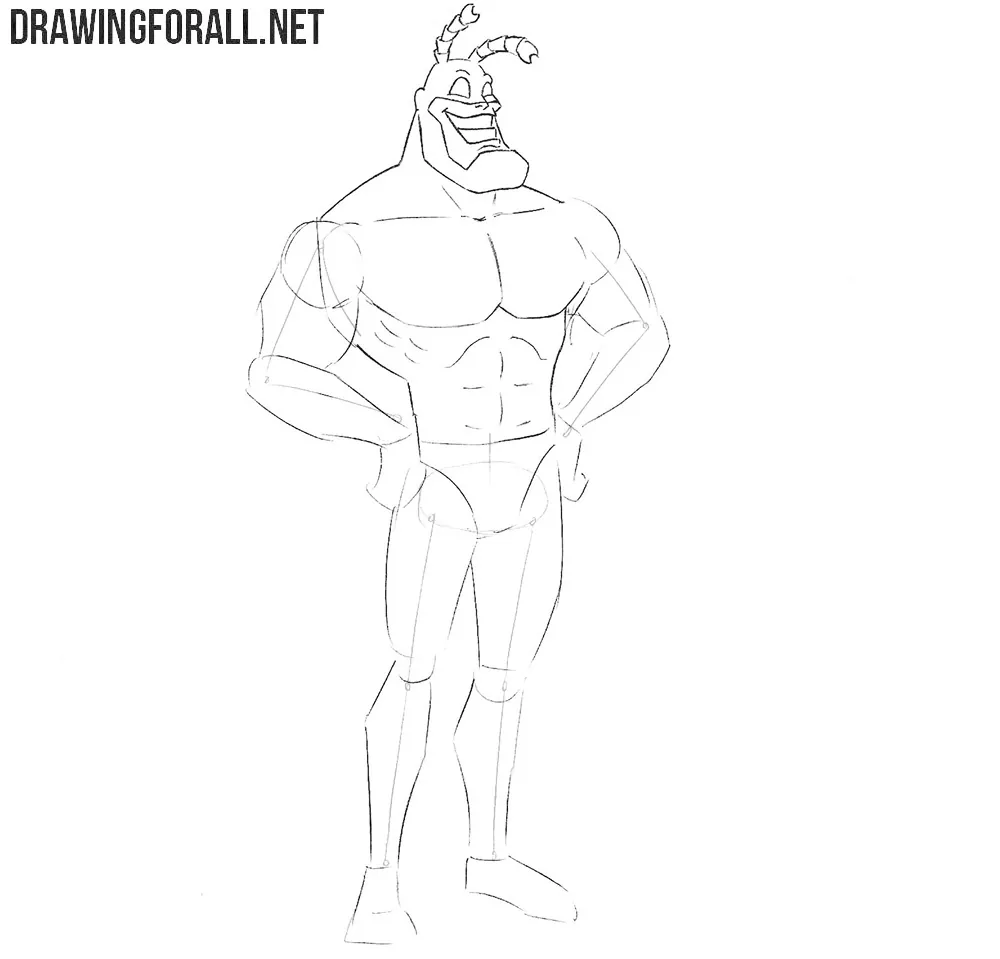
Now let’s work on our superhero’s facial details. First, carefully draw the Tick’s cartoon eyes. Outline them as tall arches with curved lower edges, and draw the farther eye narrower. Next, add his tiny nose and broad, open grin above the oversized jaw. Inside the mouth, mark the upper and lower rows of teeth as simple bands without separating individual teeth. Finish by outlining the mask opening.

Step 4: Outline the jaw and antennae
Carefully trace the contours of his huge, wide jaw. Draw the chin projecting beyond the mouth. Then refine the outline of the head and draw the two curved antennae at the top. Outline one antenna rising almost vertically and the other arching to the right.

Step 5: Define the oversized chest muscles
Draw the wide neck as it joins the large trapezius muscles. Next, outline the exaggerated pectoral muscles. Use a curved central division and long, rounded contours beneath the chest. The pectoral on the left occupies more space because of the torso’s slight turn. Draw the sides of the torso, which tapers sharply toward the waist. Add the abdominal muscle lines and erase the unnecessary guidelines.
Step 6: Refine the bulky arms and hands
Continue the trapezius contours into the large deltoid muscles, then outline the Tick’s massive arms. Draw the rounded upper arms meeting the forearms at the outward-pointing elbows. Add the muscle lines along the upper arms and forearms. Draw the hands and erase the remaining arm guidelines.

Step 7: Draw the Tick’s slender legs
Continue the torso contours down into the legs. Carefully trace their outlines and indicate the muscles and knee joints. The legs should look deliberately slender compared with the enormous upper body. Draw the thighs with shallow outward curves and use short angular marks around the kneecaps. Finish by erasing all unnecessary guidelines.

Step 8: Add shadows beneath the muscles
You can draw very high-contrast comic-book shadows or use a softer variation. Either way, first indicate the division between light and shadow with light outlines. Then, depending on the approach you choose, either fill the shaded areas with solid black or use light hatching.

So, at the beginning we said that the character’s figure should be exaggerated and that there should not be too many elements and details.
This is a very important point, because drawing comics has always involved a certain balance with realism, so as not to slip too far into cartooniness, while still keeping the forms simplified.
The figure should be simple enough to draw easily, but at the same time not so overloaded that excessive detail draws too much attention.
This style was also used in the animated series about the Tick. In the same style, you can draw Deadpool or any other superhero, keeping these basic principles in mind.