How to Draw an Onion
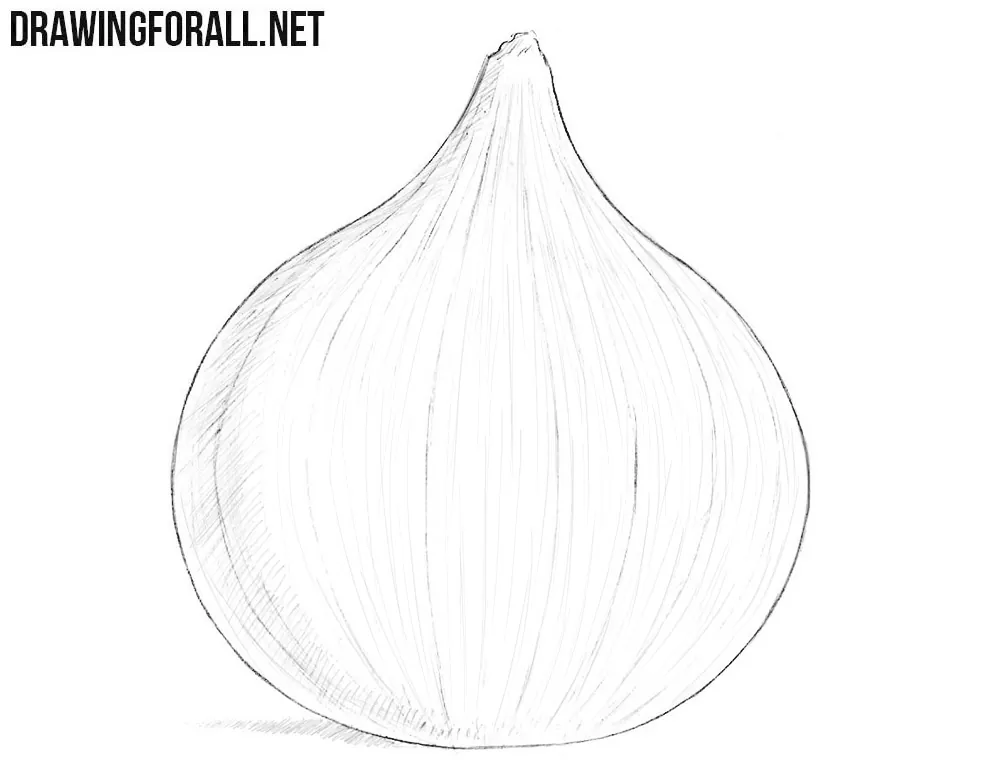
An onion has a very characteristic shape and texture, and conveying them correctly is very important when drawing it. In this step-by-step tutorial, we will show you how to draw an onion, depict its form narrowing toward the top, convey the texture with longitudinal lines, and add simple basic shadows.
How to draw an onion step by step
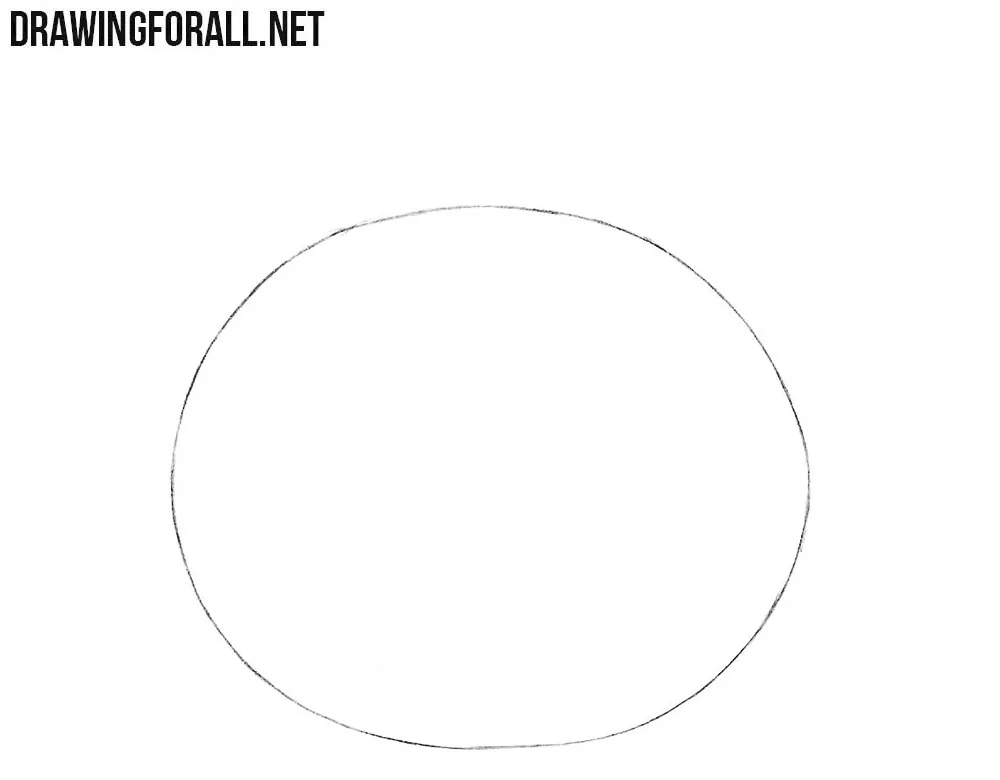
Step 1: Sketch the onion bulb
First, indicate the main shape of the onion as a circle or oval. Keep in mind that this is a spherical form rather than just a flat circle. This understanding will later help you draw the shadows and texture correctly.
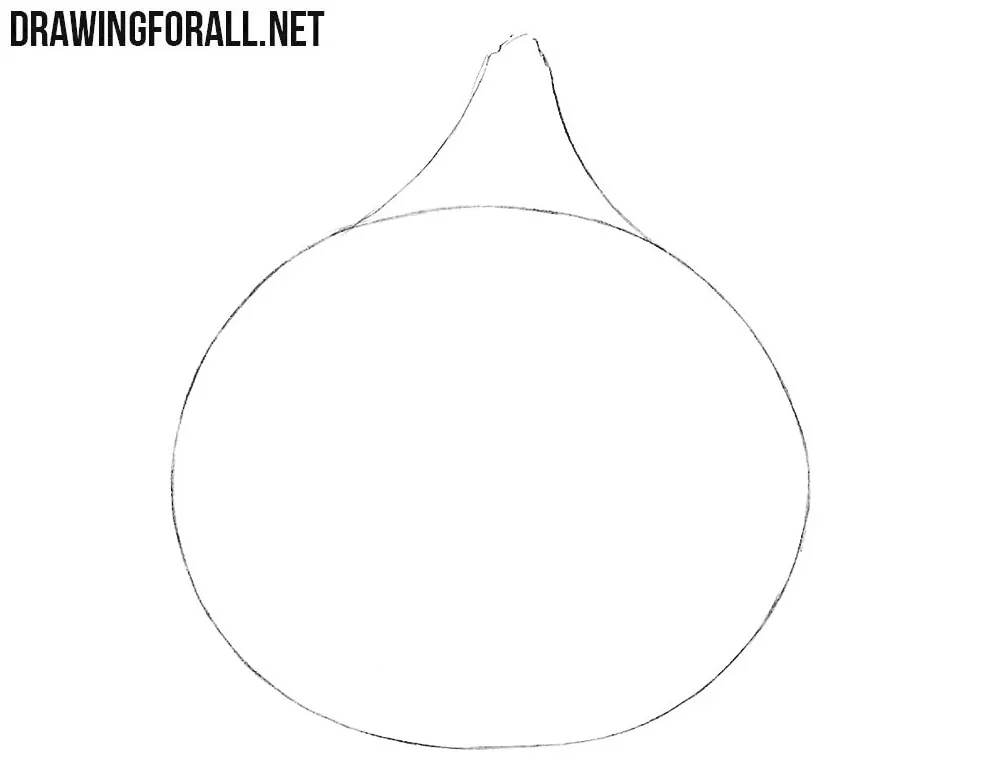
Step 2: Draw the neck and dry top
Now sketch the narrow neck of the onion with two slightly curved lines that converge at the top. Do not join these lines in a sharp point. Close the top with a short, irregular edge to show the dry end of the onion.
Step 3: Refine the bulb and neck
Take an eraser and remove all unnecessary guidelines. Next, using clear lines, carefully trace the outlines of the onion bulb and neck. In particular, erase the arc from the original oval where it crosses the upper part, so the narrow neck passes continuously into the bulb on both sides.
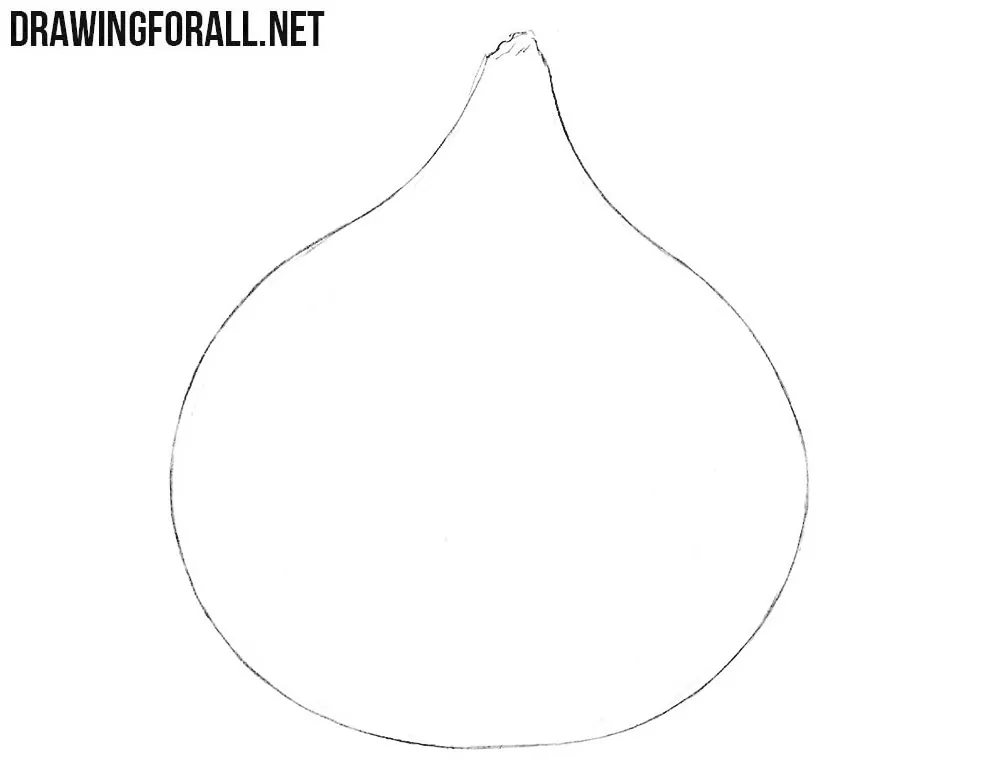
Step 4: Draw the vertical skin lines
Now draw the texture of the onion skin using slightly curved vertical lines. Make these lines slightly different from one another. Start them near the narrow neck and let them spread apart as they descend over the widest area of the bulb. Near the bottom, turn them inward again so they gather toward the base.
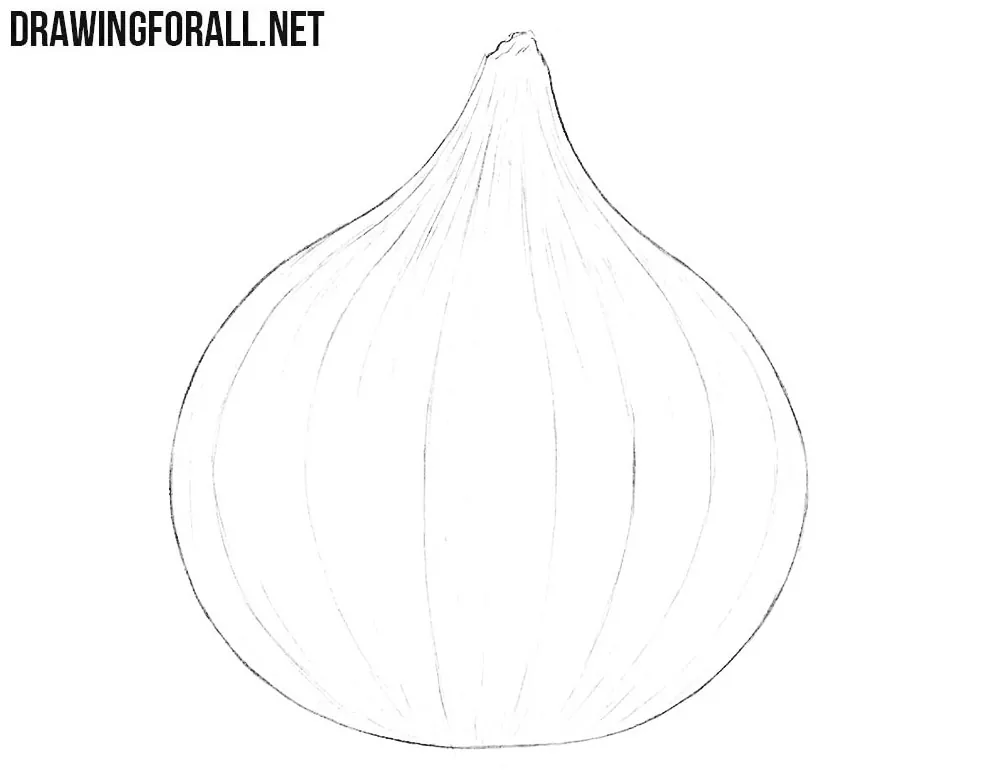
Step 5: Shade the onion bulb
Add shadows with hatching to the left and lower parts of the bulb, and draw the cast shadow on the surface beneath it. First, visually divide the overall form of the onion into lit and shadowed areas, temporarily ignoring the texture. Then use light hatching to depict the shadows, leaving a thin unshaded strip along the very edge of the form to convey reflected light.
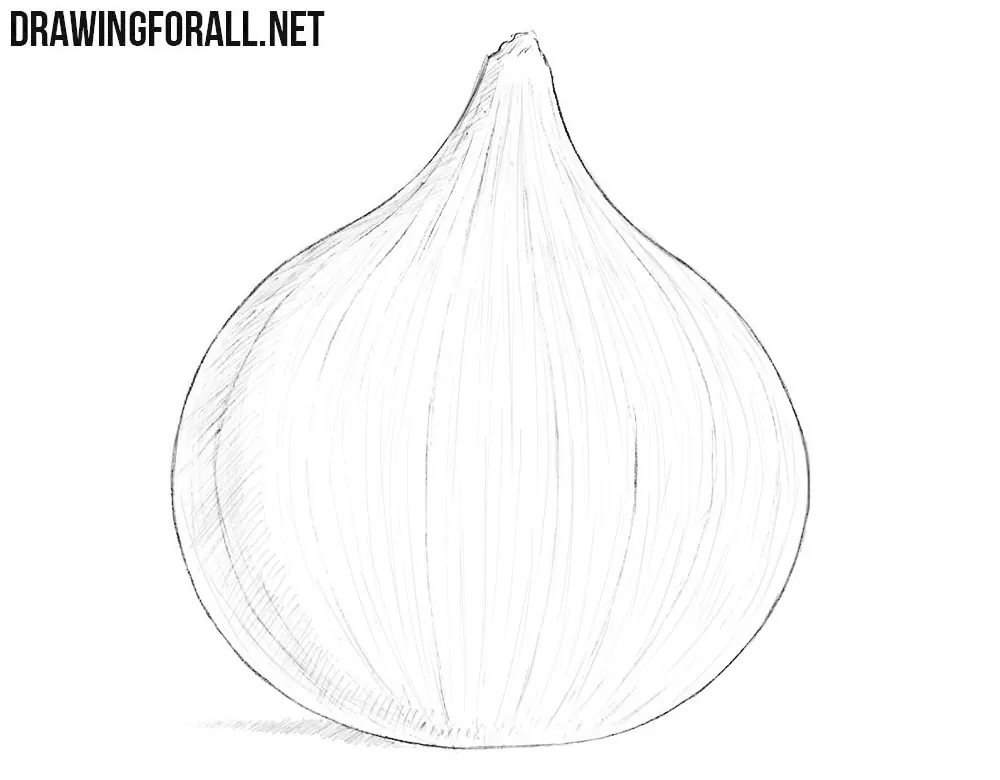
An onion does have a very characteristic form, and when drawing it, it is very important to convey both this form and its texture.
At the same time, it is extremely important not to make the onion look like garlic. Study how to draw garlic and note the main visual differences so that whenever you depict these two vegetables, you can clearly distinguish one from the other.
It is also extremely important to keep the three-dimensional form of the onion in mind. From the very beginning, remember that it is not simply a flat disk in an imaginary three-dimensional space, but a three-dimensional form.
The same thing, for example, should be kept in mind when you draw a potato or draw a cherry, even though these two objects ultimately have completely different shapes.
The main thing is the artistic vision of the object you are drawing as a three-dimensional form. Every additional element added to this form should emphasize it. In the case of the onion, this again means its striped texture and the shadows.