

How to Draw a Potato
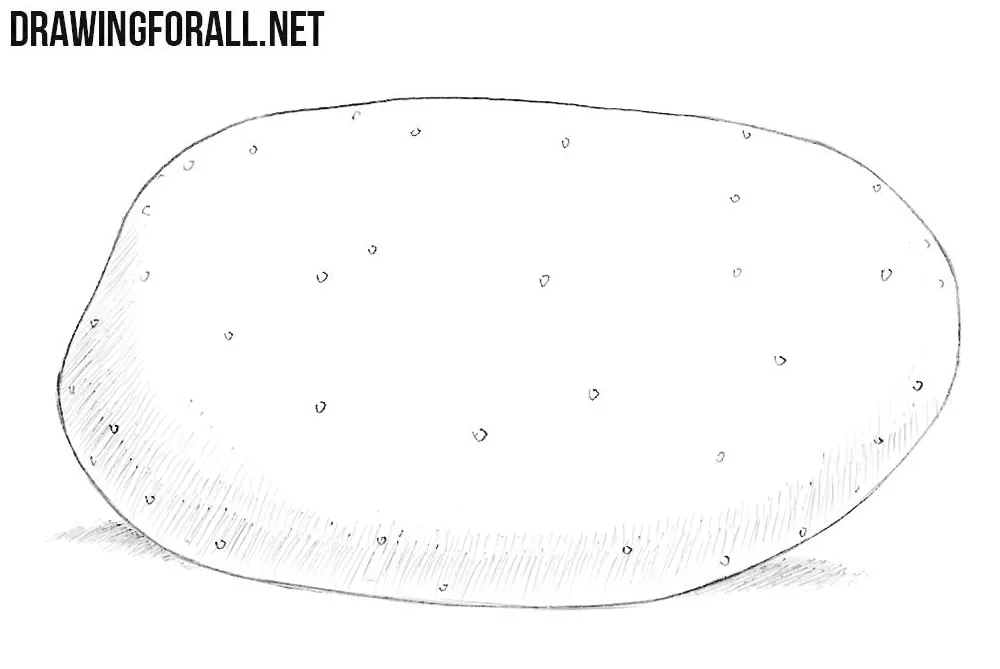
A potato is probably one of the simplest vegetables to draw. In this step-by-step tutorial, we will show you how to draw a potato, depict its irregular shape, add the eyes, and create volume with light hatching.
The very first and most important thing to remember when drawing a potato is that this vegetable should not have perfectly smooth and symmetrical contours or evenly placed eyes. The more irregular all of this is, the more convincing your potato drawing will look.
How to draw a potato step by step
Step 1: Sketch the potato tuber
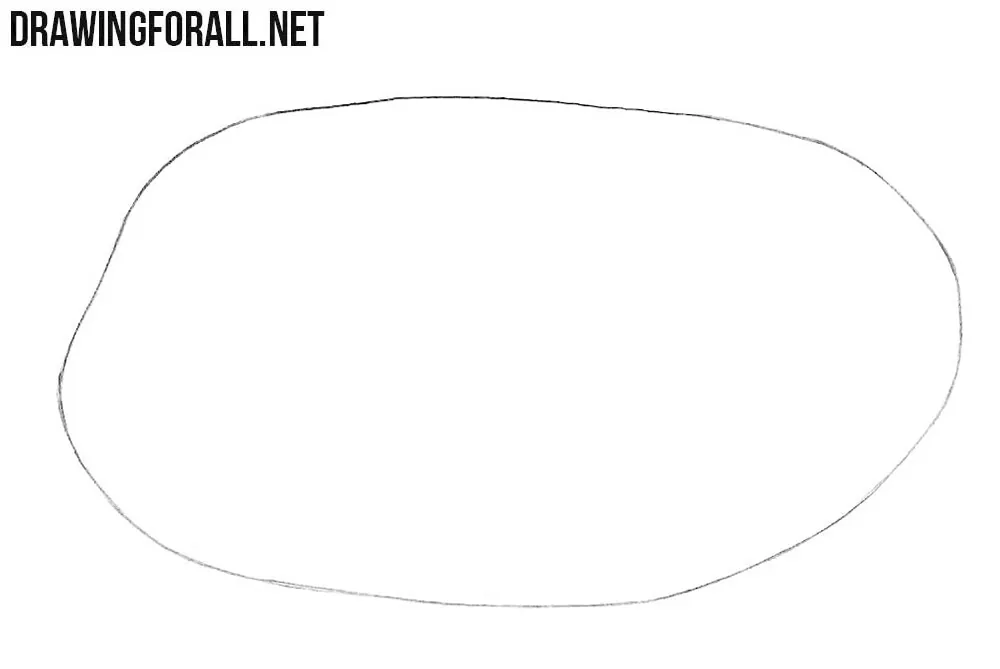
With a single continuous line, draw the outline of the potato tuber as a wide, uneven oval. Potato tubers can have very different shapes, so you do not need to copy the outline from our illustration exactly.
Step 2: Add the potato eyes
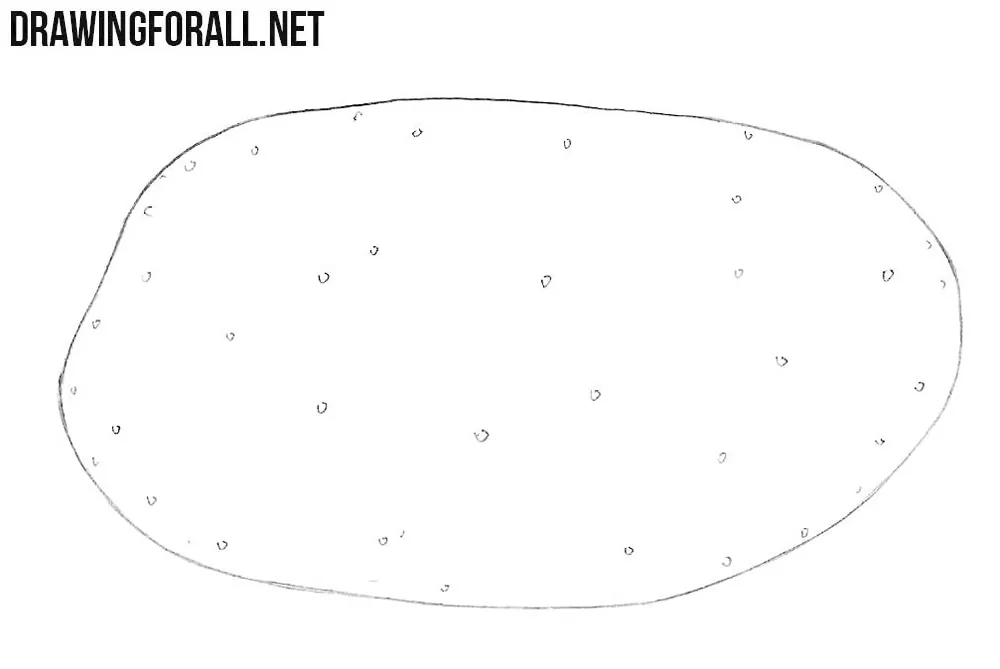
Now draw the potato eyes as small irregular marks scattered randomly across the surface of the tuber. Vary the marks themselves: draw some as tiny hooks and others as short crescent-shaped depressions. Avoid any noticeable rhythm in their size or placement.
Step 3: Shade the potato and cast shadow
Finish the potato drawing by adding hatching along the lower part of the tuber. Also draw the cast shadow on the surface beneath the potato. The shadow should emphasize the irregular form of the potato tuber, so you can make it slightly denser in some areas and lighter in others.
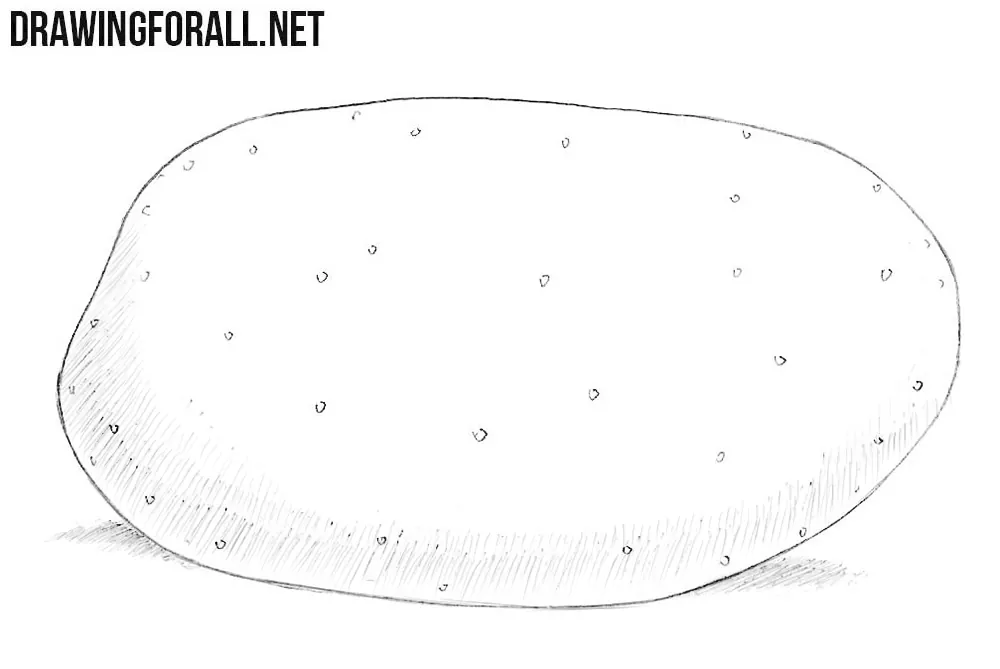
The three most important aspects of drawing a potato were covered in the three steps of this tutorial. Let’s reinforce them once again.
First, a potato has an irregular form with bulges in different areas. Second, the tuber is unevenly covered with eyes of different sizes. Third, the irregular form of the tuber should be emphasized with shadows.
If you remember these three aspects, you will be able to draw a potato each time without copying our example. Try placing one potato tuber or several of them in front of you and drawing them while recalling the steps from memory.
Then draw a plate and depict several potato tubers on it, trying to make sure that they all rest convincingly on the same plane and do not stand out from the composition in terms of tone or placement. This is the next exercise that will help reinforce the skill you have learned.


