

How to Draw a Carrot
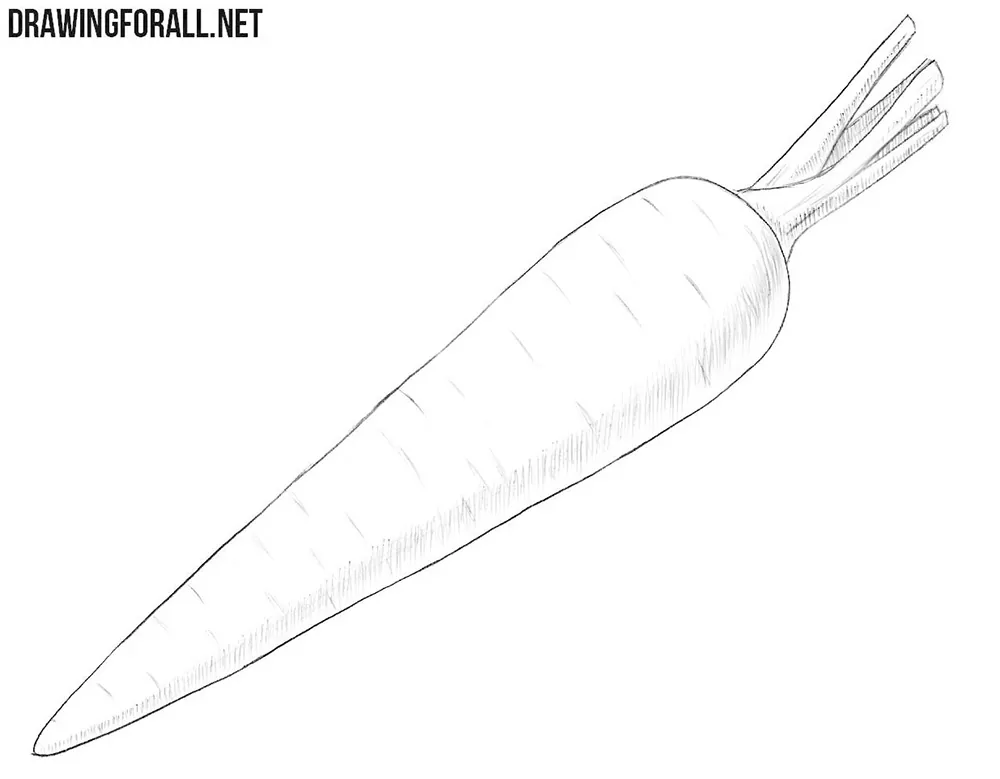
Drawing vegetables is one of the most basic ways to learn the fundamentals of art and to learn how to create still lifes. In this tutorial, we will show you how to draw a carrot, depict its characteristic elongated shape with a short cut stem, and add simple shadows that create volume.
The cylindrical form of the carrot, as well as the more modified but still cylindrical forms of the stems, are the most important things to keep in mind.
How to draw a carrot step by step
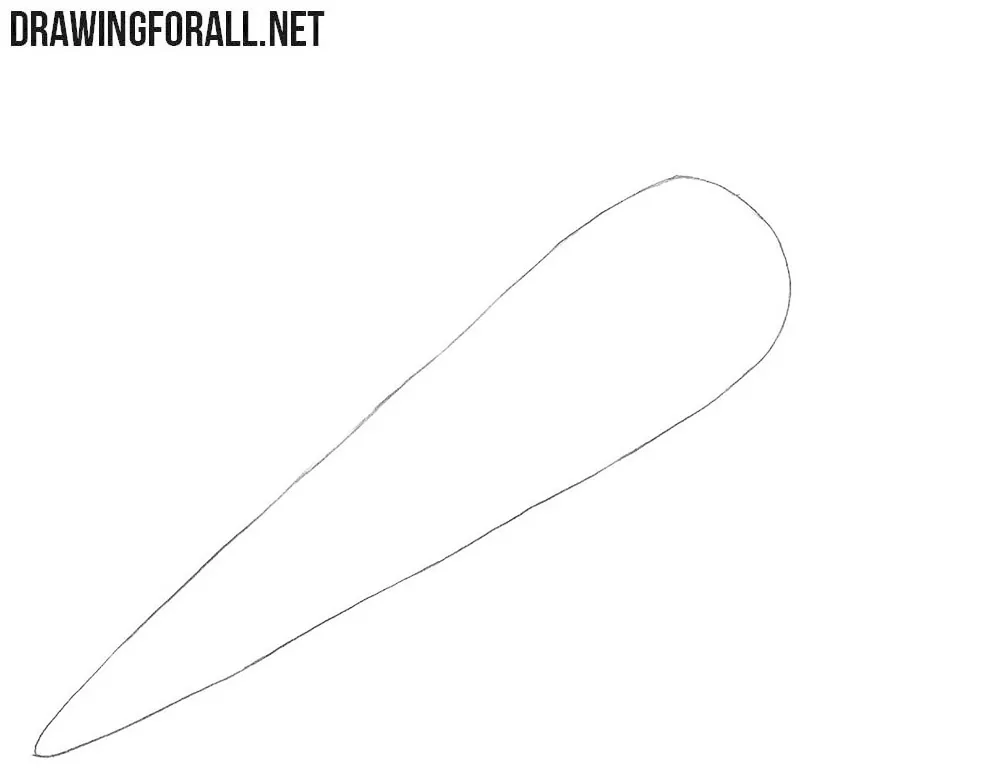
Step 1: Sketch the carrot root
First of all, sketch the outline of the carrot root, which should taper smoothly from its broad upper end to the pointed tip. The outline does not have to be perfectly smooth and even. Slight, barely noticeable curves in the lines will help make the carrot look more natural.
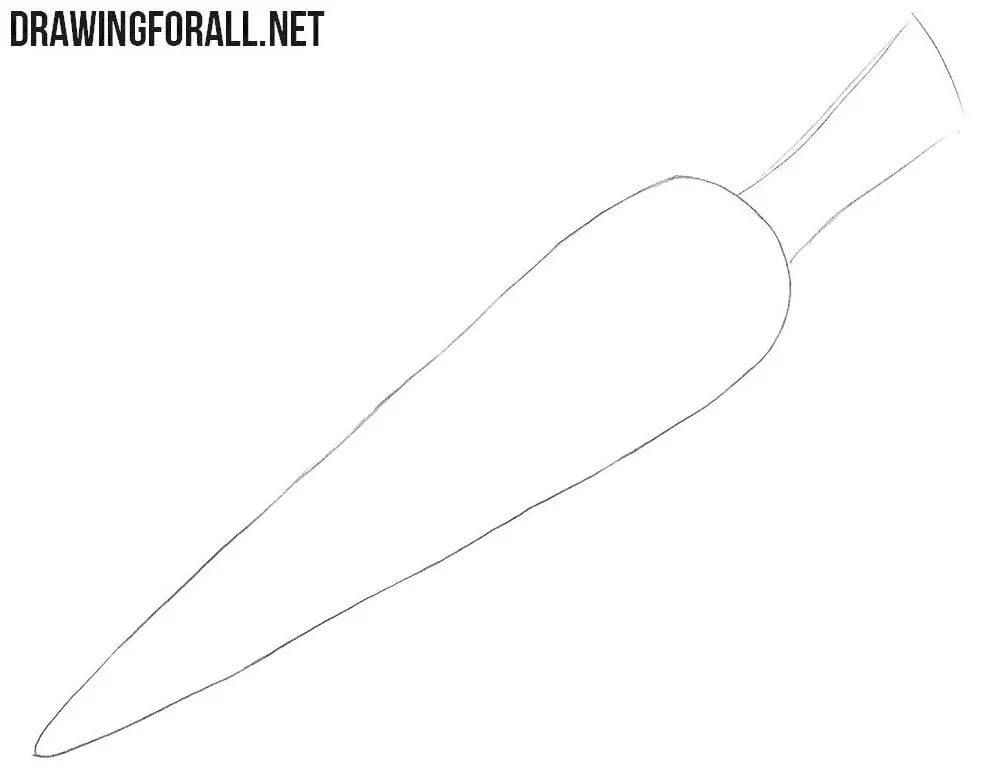
Step 2: Sketch the carrot tops
Now, in the thickened upper part of the carrot, indicate the overall form of the stem. Use light lines and sketch this mass so that it widens slightly upward. Later, we will divide it into smaller sections.
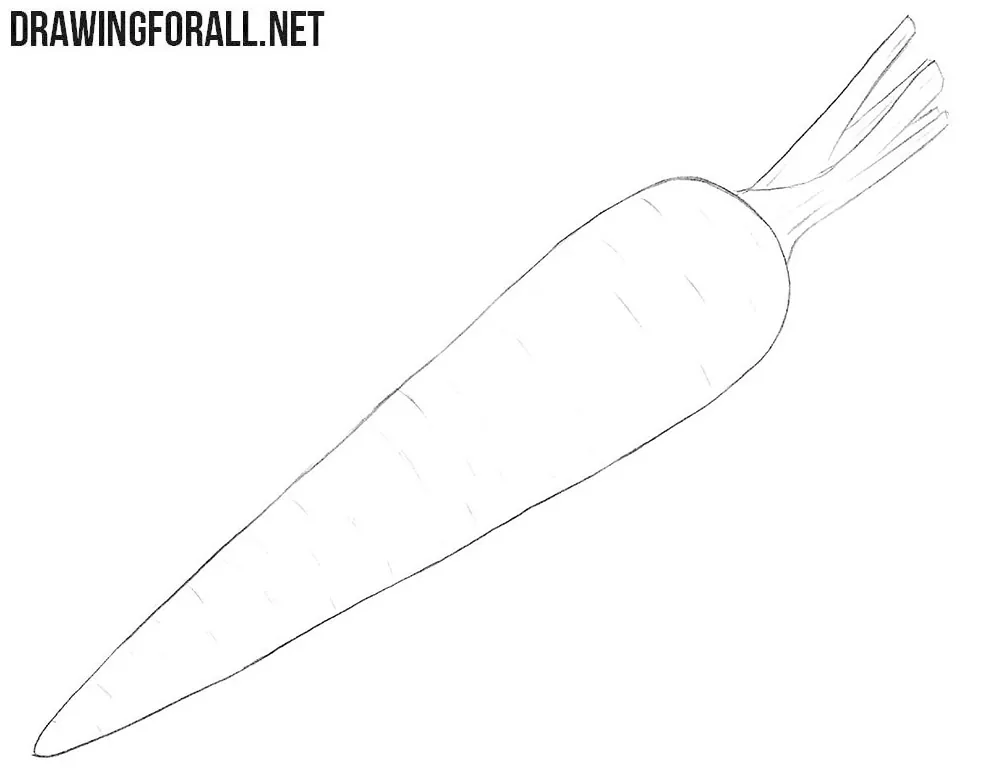
Step 3: Refine the tops and surface marks
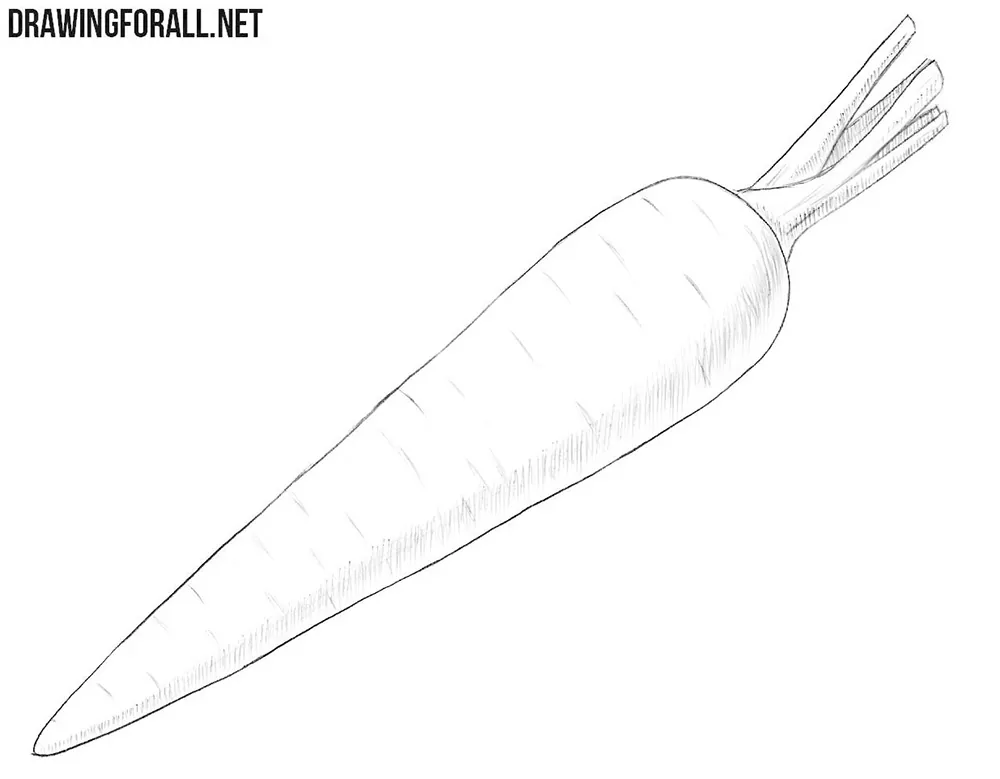
Now, using darker lines, divide the carrot tops into several parts. These thin stems should be slightly different in thickness. Let their lower ends meet at the same area at the top of the carrot root, then separate them as they extend upward. Add a few short transverse lines to the surface of the carrot. Curve these small marks slightly around the tapered root. Don’t make them look like straight parallel stripes.
Step 4: Shade the carrot root and tops
In the final step, use dense hatching to draw shadows along the lower side of the carrot root and on its tops. On the root, concentrate the hatching close to the lower contour. Shade one side of each thin top separately. Leave a small unshaded strip at the very bottom of the root and stems to convey reflected light.
As we said at the beginning, drawing vegetables is a very important basic skill for mastering the fundamentals of art.
The first stage is drawing cylinders, spheres, and other basic geometric forms, adding shadows and the surrounding environment.
Further development of these skills should include more complex forms while applying the same principles. Drawing eggplants or carrots while keeping their cylindrical form in mind is exactly one of the next stages.
After that comes a more in-depth and complex study of all these things, including drawing still lifes and more complex compositions.


