

How to Draw an Eggplant
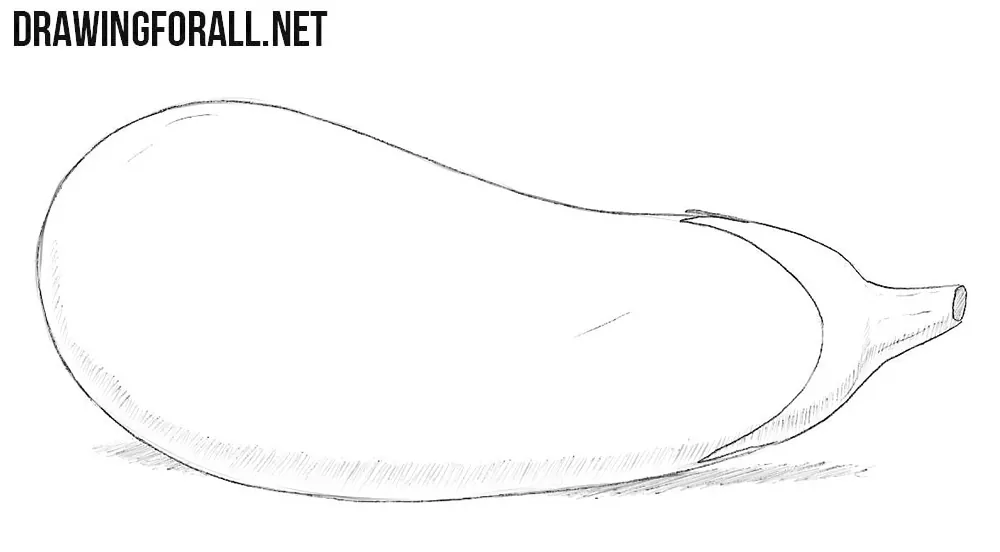
An eggplant visually consists of two main parts: the body of the fruit and the calyx with the stem. In this tutorial, we will show you how to draw an eggplant by depicting these parts and adding simple shadows and basic highlights.
How to draw an eggplant step by step
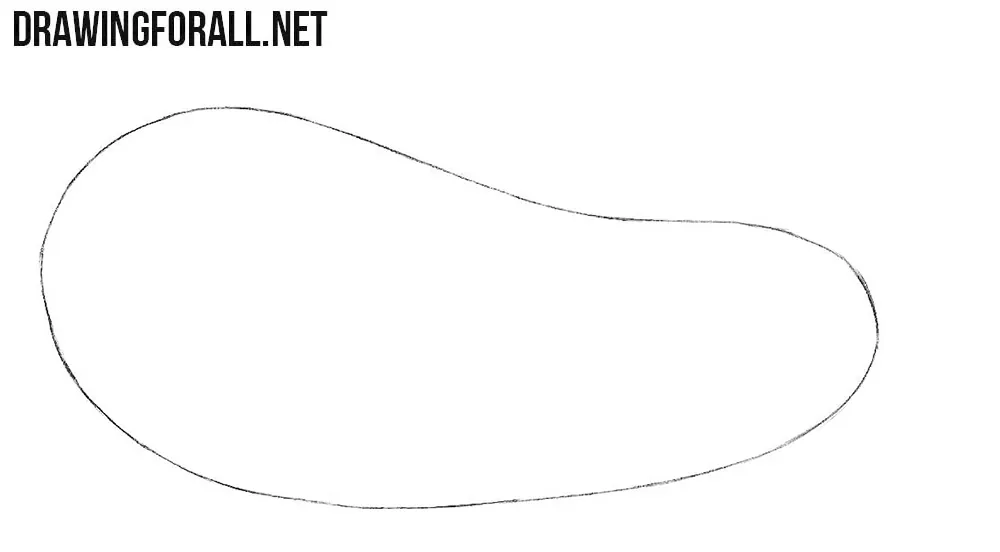
Step 1: Sketch the eggplant shape
Almost all our tutorials about fruits and vegetables start with simple circles and ovals. But here we will draw a slightly more complex eggplant shape, similar to a curved oval that narrows at one end.
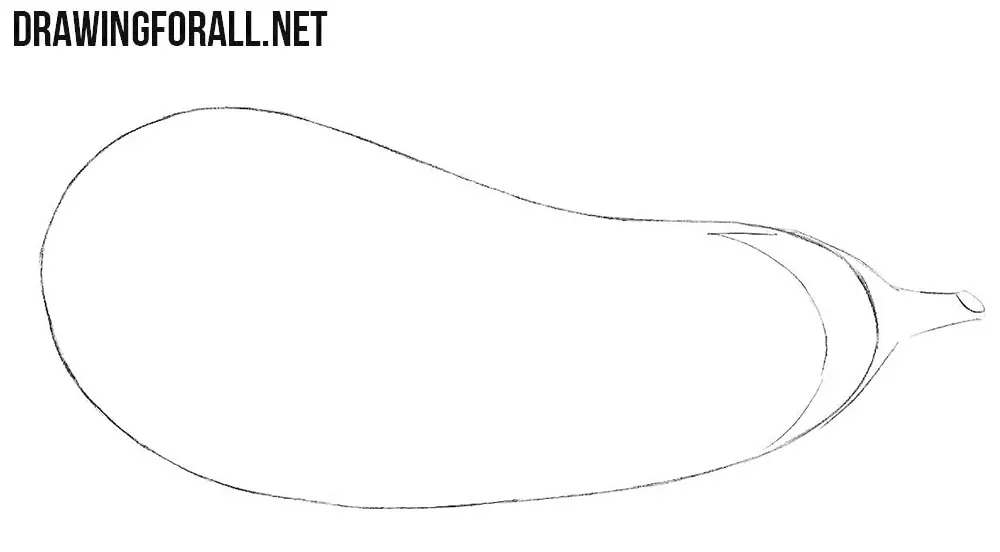
Step 2: Draw the calyx and stem
The body of our vegetable is ready, and now we will make the drawing look more like an eggplant. To do this, sketch out the calyx and stem at the narrower end. Pay attention to the size and placement of these parts on the eggplant. Draw the visible calyx lobes as long, pointed shapes. At the end of the slightly curved stem, add a small oval to show its cut surface.
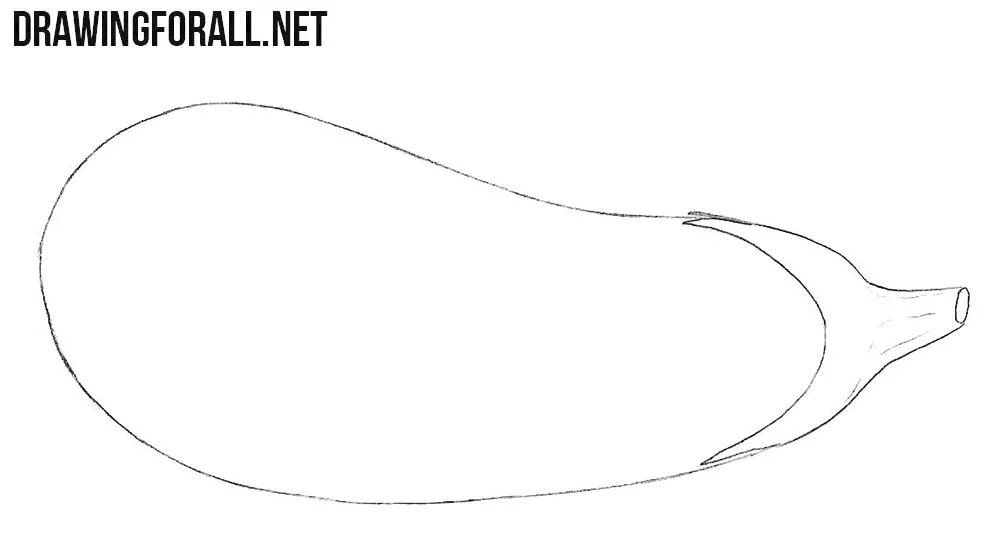
Step 3: Refine the eggplant and calyx
In the previous two steps, we outlined the eggplant body, calyx, and stem, and now we will make the sketch clearer. Trace the contours with dark lines and erase the unnecessary guidelines. Draw several smooth longitudinal lines on the surface of the calyx.
Step 4: Shade the eggplant and cast shadow
As usual, the final step is devoted to shadows. Using hatching, draw the shadows along the lower part of the eggplant and beneath the calyx and stem. Leave most of the upper surface light and add only a few short, light curved strokes to indicate highlights on the smooth eggplant skin. Next, draw the cast shadow on the surface beneath it.
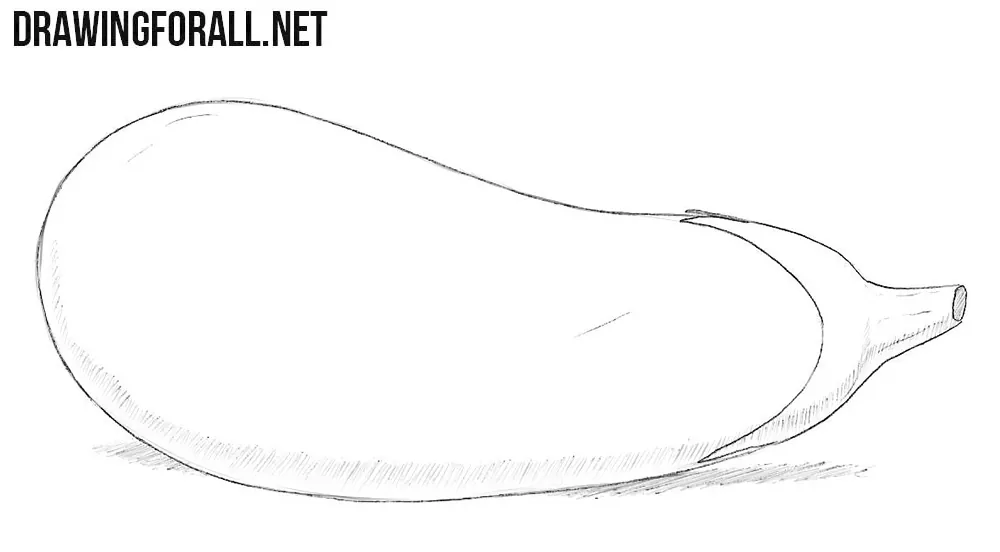
The basic form of an eggplant is a cylinder that is thicker on one side and thinner on the other. You should keep this basic form in mind when drawing the vegetable from beginning to end. This is exactly what helps you create volume, since this is the form you need to visually convey with hatching.
The same form is also the basis for drawing a carrot, by the way, although the details are different. So you can practice drawing this vegetable as well.
The highlights on the skin of the fruit are similar to those you see when drawing a cherry: you can convey the smooth surface with light, long highlights. By the way, you can try combining all these vegetables and fruit to create an interesting still-life composition.
Also, try to draw this vegetable again without looking at this page, using only what you learned from the tutorial. If it worked out, move on to the next drawing tutorial.


