How to Draw Angel from Marvel
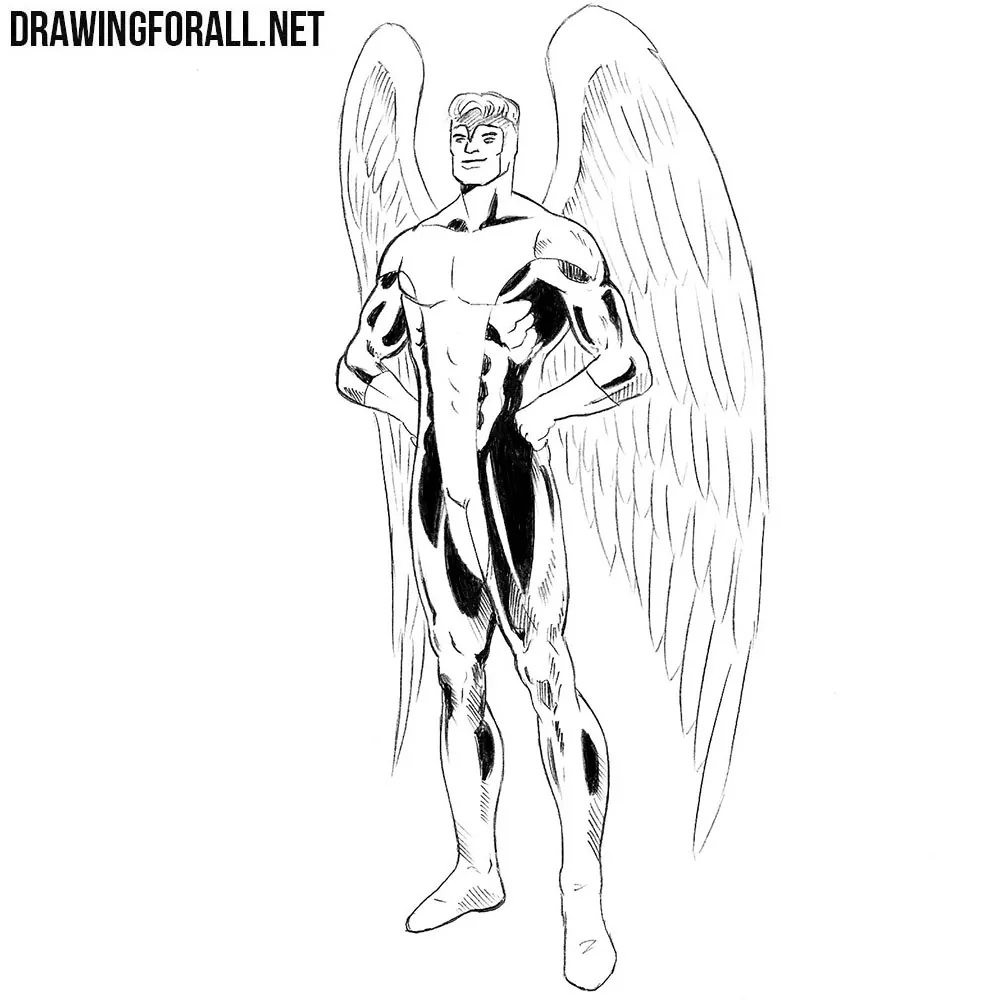
Angel is one of the original members of the X-Men, and his appearance has changed quite significantly over time. In this tutorial, we will show you how to draw Angel in his costume from the classic Marvel comics of the 1980s.
How to draw Angel from Marvel step by step
Step 1: Sketch Angel’s basic guidelines
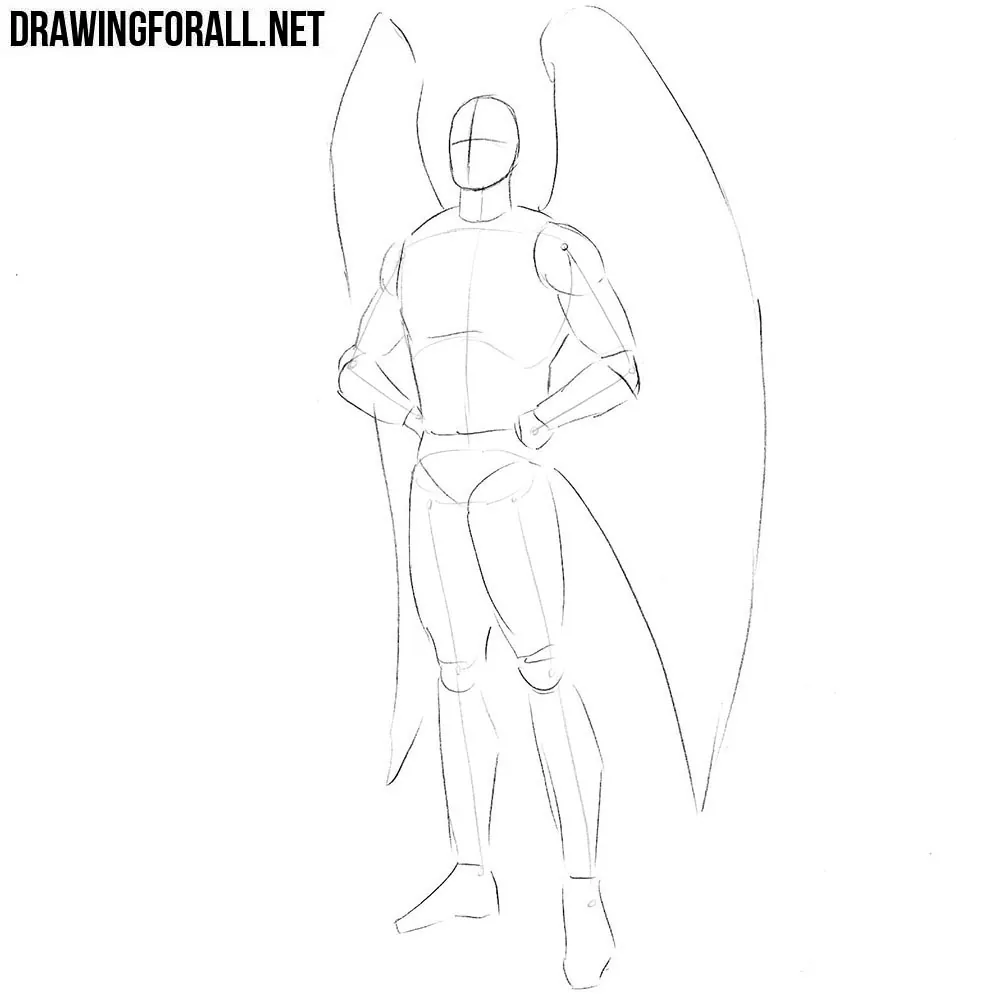
First, draw a simple stick figure to mark the general proportions and pose of the character. Before you begin, look carefully at these proportions. Compare the length of the head with the total height of the figure. The head should be about one-seventh to one-seventh and a half of the total height. The shoulders should be significantly wider than the pelvis. Use light lines to mark the position of the arms and legs.

Step 2: Add volume to the figure and wings
Sketch the neck in the form of a cylinder. After that, outline the torso, which is wider at the shoulders and narrows toward the waist. Give the arms and legs volume using cylinders and rounded shapes. Keep the main forms simple. Finally, sketch the general outlines of the wings. Angel has very large wings, each approximately as long as his body.
Step 3: Outline the facial features and feathers
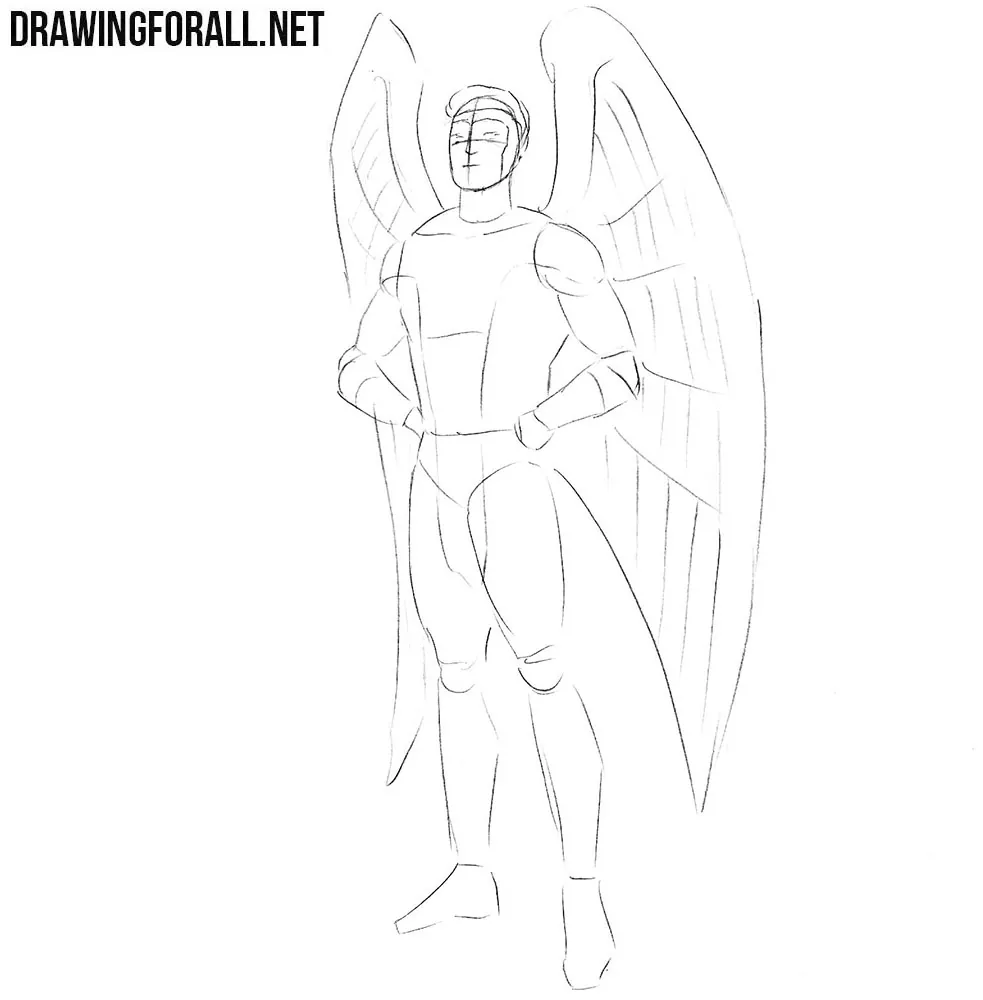
In this step, add the most basic details. Starting with the head, sketch the hair, eyes, mouth, and nose. Then mark the main lines of the costume. Don’t forget that we are drawing Angel, so outline the rows of feathers inside the wings. Follow the curved shape of each wing and make the feathers longer toward their outer edges.
Step 4: Detail Angel’s face
Starting with this step, use clear, dark lines to draw the final details. Carefully refine the contours of the face and hair. Then define the eyes, nose, and mouth. Pay attention to the shape of the jaw and the position of the facial features, which should follow the angle of the head. After that, erase all unnecessary guidelines from the head.

Step 5: Draw the torso muscles and costume
It’s time to draw the torso. Carefully define the shapes of the pectoral and abdominal muscles. Make the chest broad and the waist narrow, following the proportions created in the first steps. After that, erase the unnecessary construction lines from the body and refine the lines of the costume.
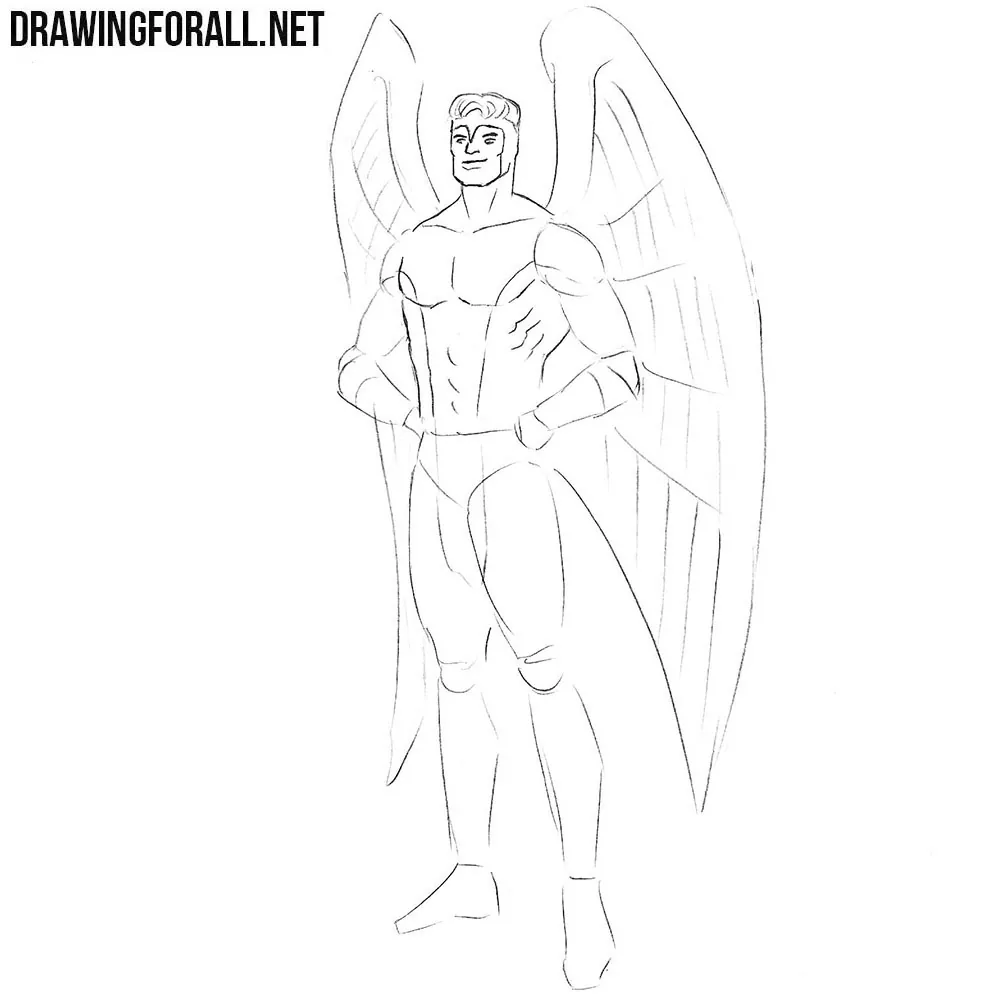
Step 6: Refine the arms and fists
First, define the large deltoid muscles. Just below them, draw the biceps, triceps, and forearm muscles. Keep the transitions between these muscle groups smooth. After that, draw the hands clenched into fists and erase the remaining guidelines from the arms.

Step 7: Detail the legs and boots
Move down and start working on the lower part of Angel’s body. First, refine the contours of the tight-fitting pants, keeping the folds to a minimum. Next, define the shapes of the thigh and calf muscles beneath the costume. Erase the extra construction lines and add a few folds around the boots.

Step 8: Draw the feathers of Angel’s wings
After finishing the details of the figure, we would usually start working on the shadows. But in this drawing tutorial, we still need to finish the wings. Carefully refine their outer contours and draw the individual feathers. Start with the larger feathers along the edges, then add the smaller overlapping rows closer to the base of each wing. Note that the feathers along the lower outer edges are especially long.

Step 9: Add shadows to Angel
Determine the light source and outline the main shadow areas on the body and wings. Fill the darkest areas with solid black, especially where the forms overlap and receive very little light. For lighter shadows and transitions between light and dark, use dense hatching. Follow the shapes of the muscles and the direction of the feathers.
The main characteristic feature that distinguishes this character from others is the wings on his back, and these are what largely remain unchanged from one version to another.
His costume has changed quite significantly from his first appearance to the present day. The wings have also changed slightly depending on the version, looking either like real bird wings or metallic ones.
To draw a different version of this character, try studying his appearance in a particular comic or other adaptation and changing the specific parts of the costume that need to be replaced.
The main thing to remember is that the drawing is based on the principles of drawing a classic superhero, with all the characteristic features and proportions of the figure. The main differences here will be in the costume itself, the gloves, boots, and so on.