

How to Draw a Plug
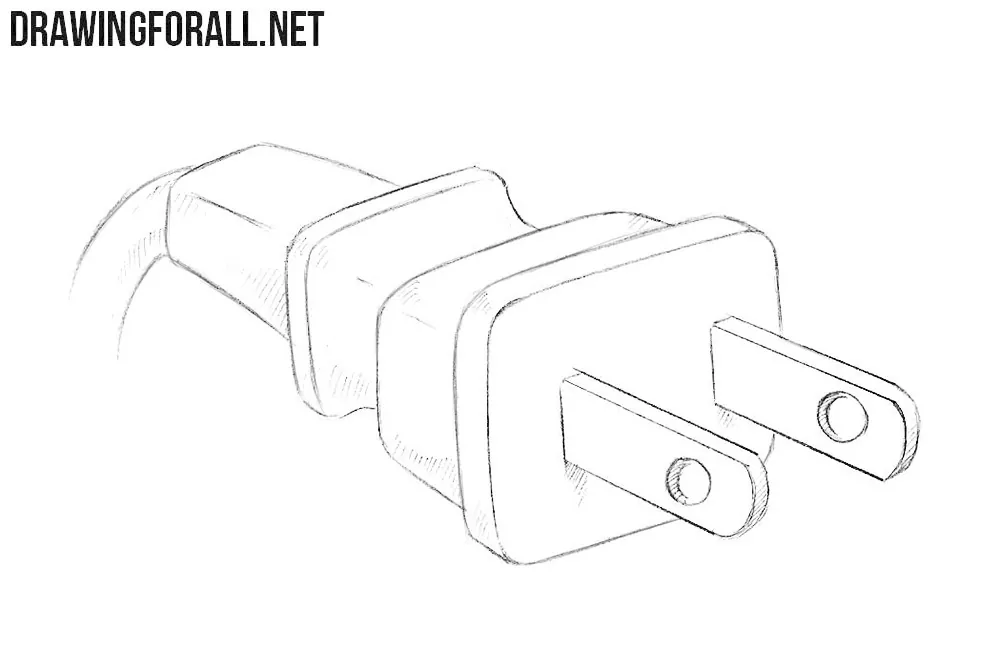
To practice drawing ordinary everyday objects, we created this easy tutorial on how to draw a plug step by step.
How to draw a plug step by step
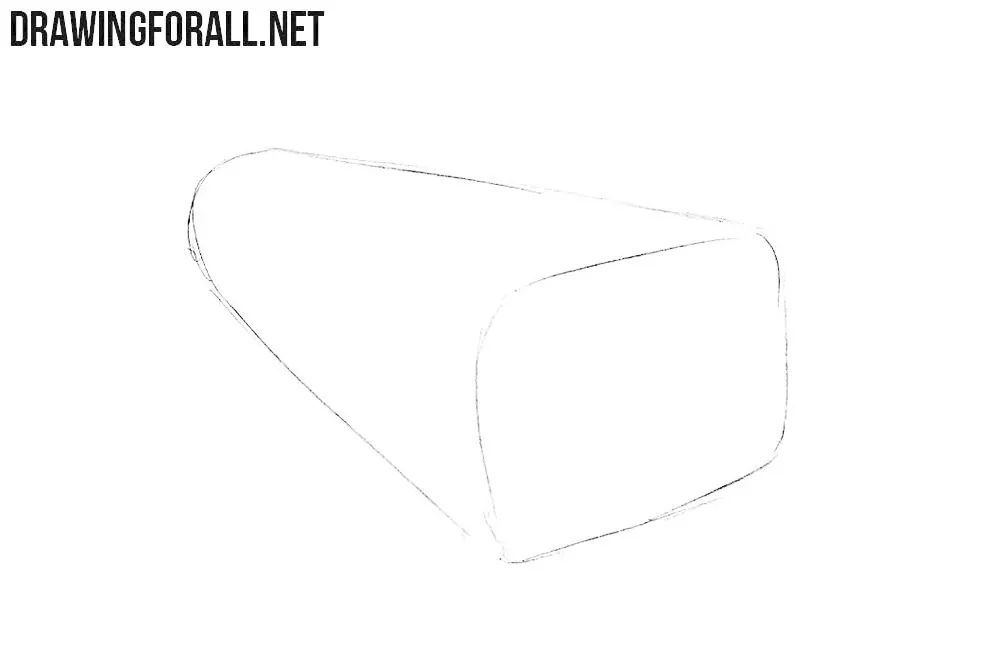
Step 1: Sketch the plug body
First, draw the basic shape of the plug body, which looks like an inverted cone with a rounded top. Do not try to make the lines perfectly smooth at this stage. However, the two sides of the plug should be roughly symmetrical.
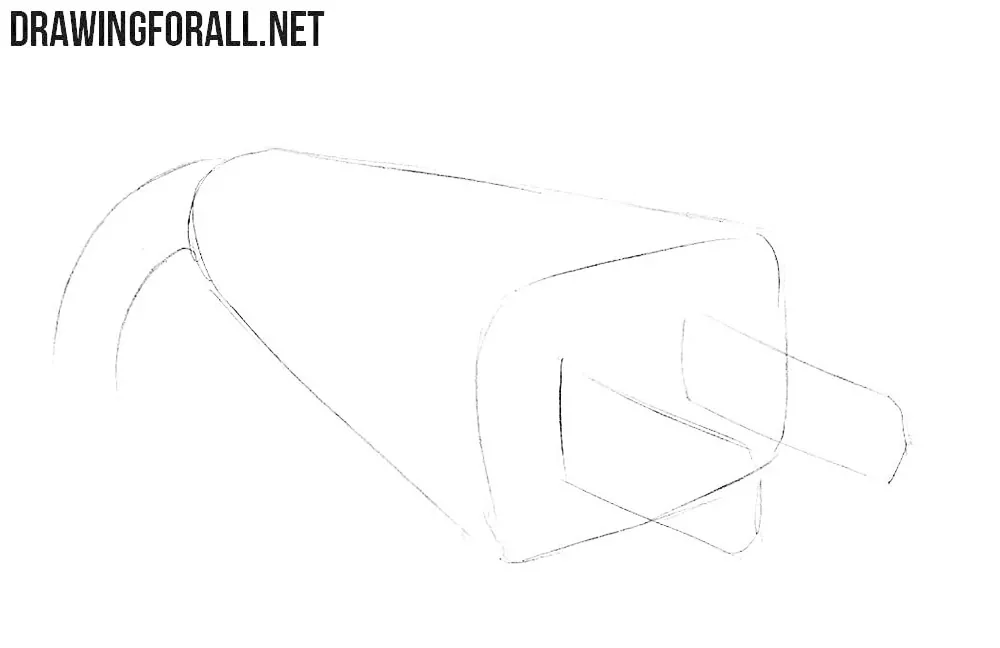
Step 2: Add cord and prongs
Now draw the contours of the electrical cord and the two plug prongs. Use smooth lines for the cord as it curves upward from the plug body. If you want, you can draw round-shaped electrical contacts instead of the flat prongs.
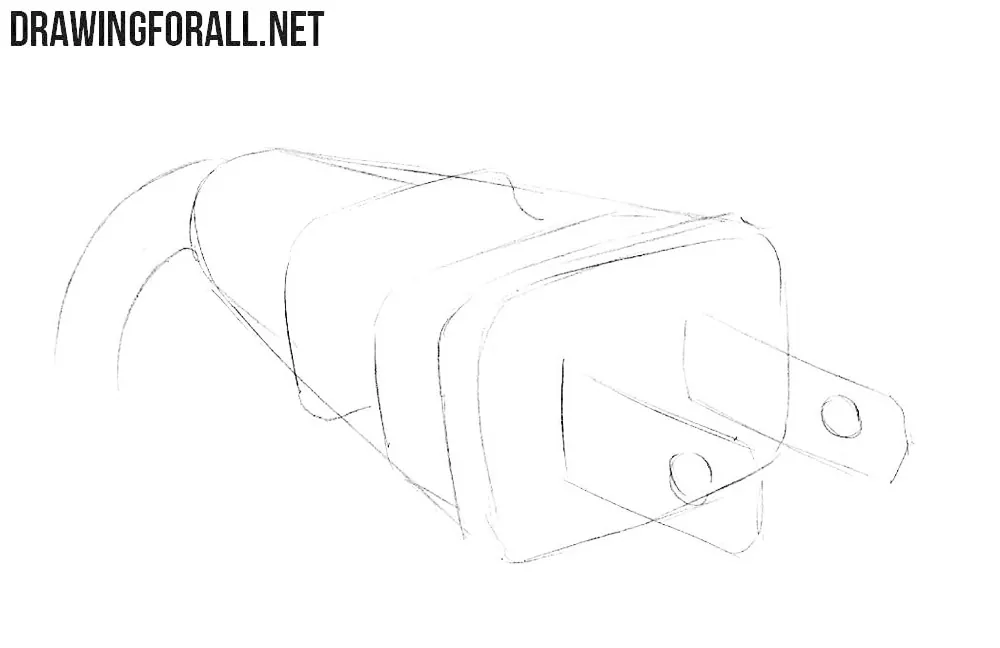
Step 3: Shape the plug front
You can see that the plug does not look like a simple block with two electrical contacts. Draw the smooth bend of the plug body and add several edges around its front surface. These lines will give the plug its characteristic three-dimensional shape.
Step 4: Refine the plug drawing
Erase the extra lines from the plug and the cord. Outline the entire drawing with smooth and clear lines. Then draw the small holes and define the edges of the two electrical prongs.
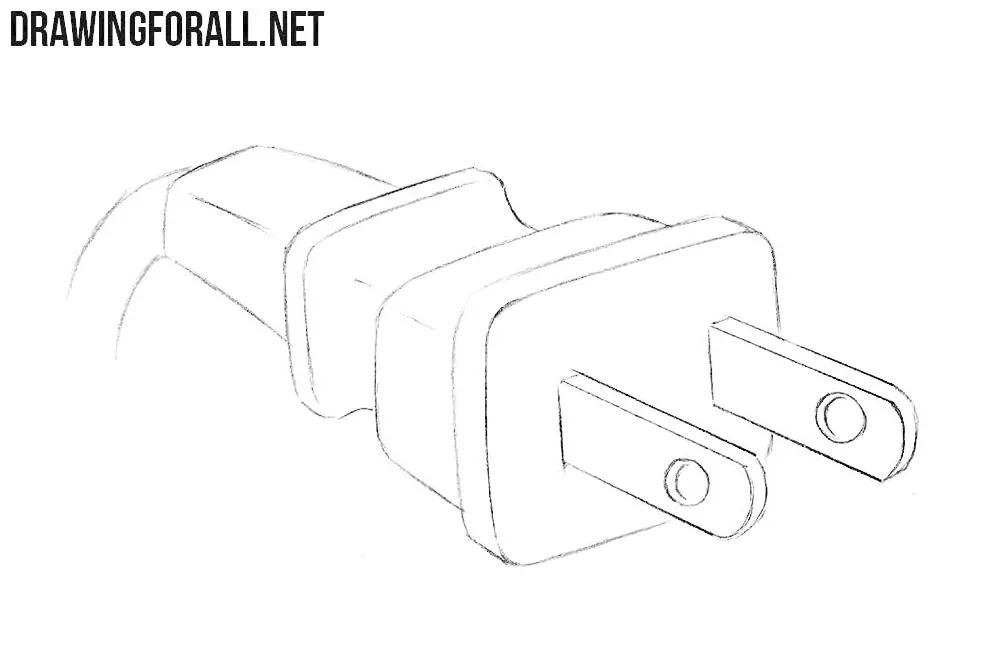
Step 5: Add shadows with hatching
The plug drawing is almost finished, and we just have to give it a little more volume so that it does not look flat. To do this, add shadows with hatching along the plug body, cord, and electrical prongs.
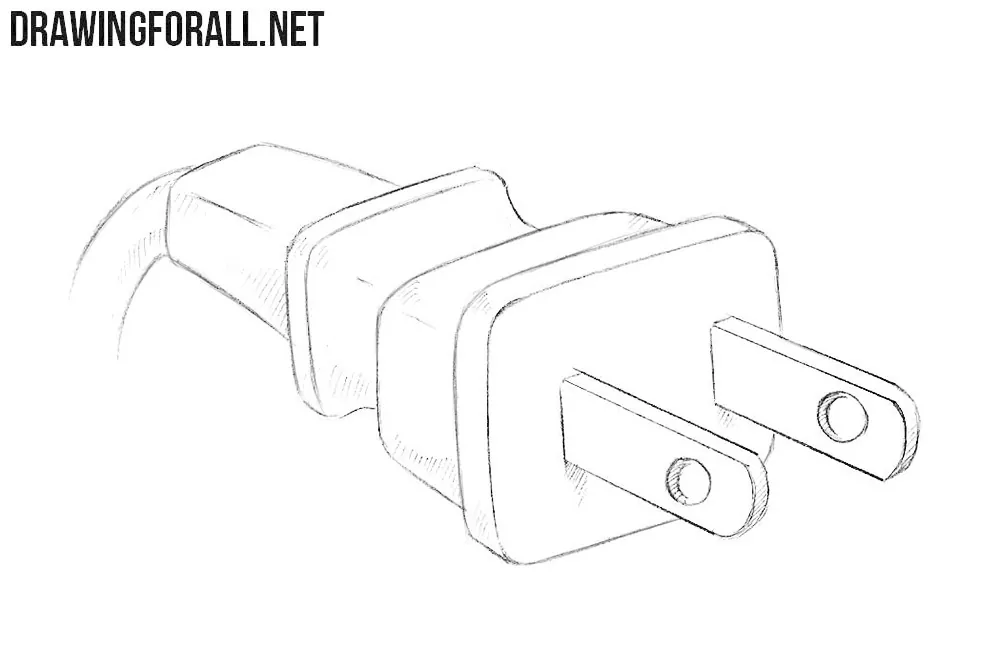
Was the tutorial on how to draw a plug easy for you? Write to us in the comments and let us know what you want to see in new posts on Drawingforall.net.
This tutorial consists of simple symmetrical forms that should be correctly positioned in relation to each other.
You can also practice drawing other ordinary objects to improve your ability to depict different forms and details.
To continue working with similar objects, try to draw a socket, which is also a simple symmetrical object consisting of basic lines.



Some how easy but i could draw. It was maybe nice.
Move to a different location.