

How to Draw a Gymnast
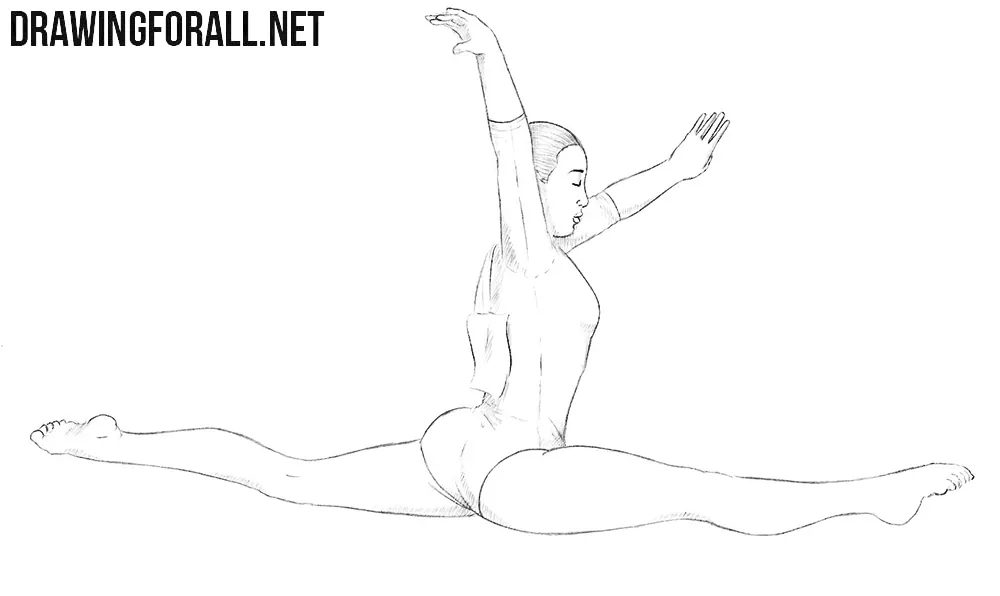
Drawing a gymnast is a great way to practice creating dynamic compositions. Here we will show you how to draw a gymnast in a jumping pose, wearing a leotard, and demonstrate how to convey movement in your drawing.
How to draw a gymnast step by step
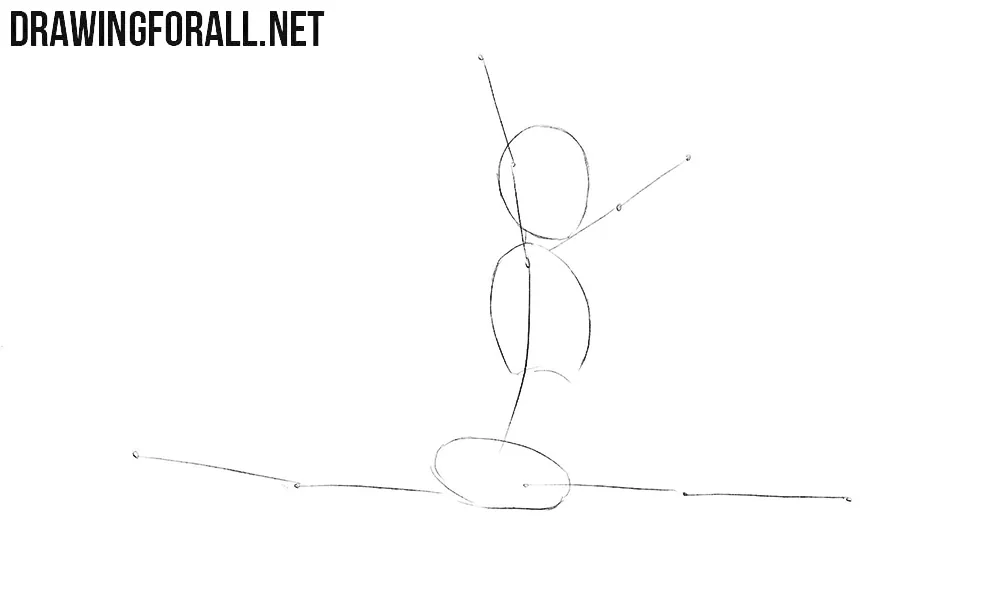
Step 1: Sketch the gymnast’s basic figure guidelines
Mark the head and a line for the spine, then place the chest and pelvis along it. Sketch the two leg lines from it in opposite directions, almost along the same horizontal axis. Already at this early stage, you have indicated the main movement in the drawing. Next, you will add volume and details.
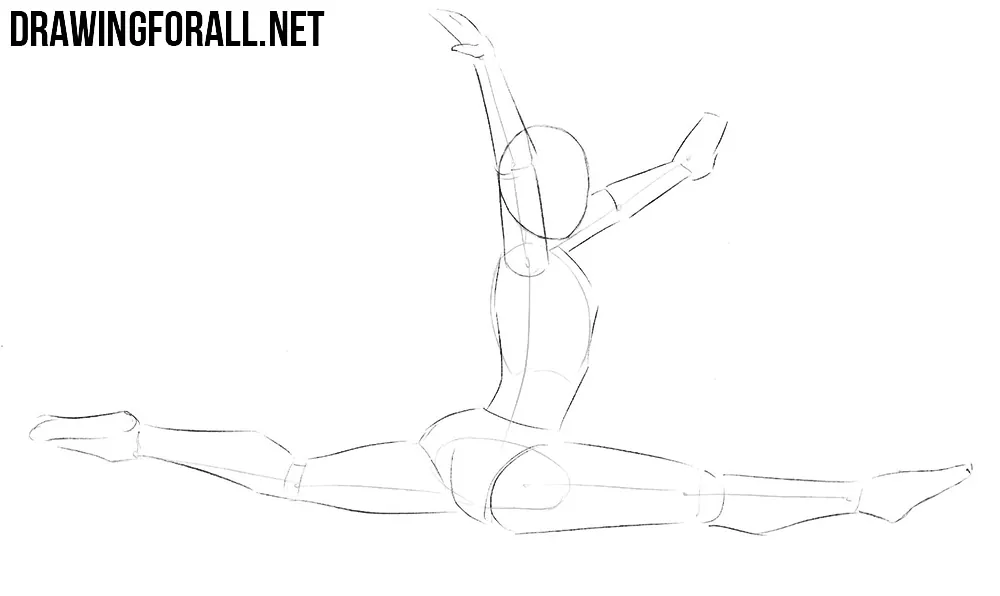
Step 2: Build the gymnast’s body forms
Outline the neck and torso, which narrows at the waist. After that, use simple cylindrical forms for the arms and legs and mark the main joints. Make the thighs slightly thicker near the hips and gradually narrow the legs toward the ankles. Use simple forms to indicate the palms at a slight angle and the pointed feet to convey movement.
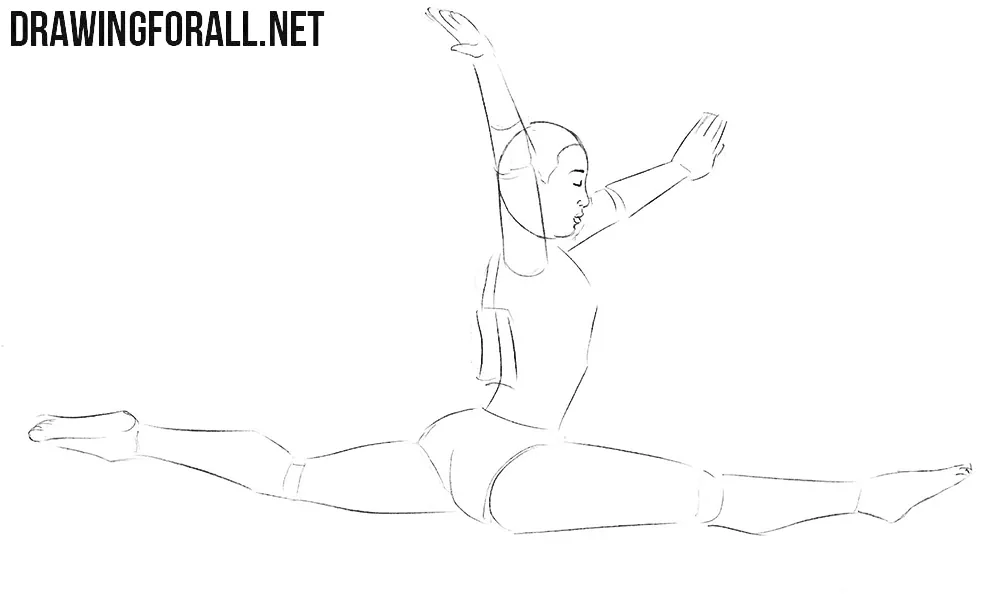
Step 3: Add the face and clothing
Sketch the profile with the nose and lips and outline the mass of the hair at the back of the head. Next, move to the torso and outline the clothing and the rectangular detail on the back. Follow the shape of the torso when sketching the leotard and mark its openings around the arms and upper thighs. Also mark the fingers and toes.

Step 4: Refine the gymnast’s face
With clear lines, refine the profile and draw the eye, eyebrow, nose, and lips. Since the head is shown from the side, form the nose and lips directly on the front contour of the face. Draw the ear behind the jaw and add several lines inside it. Finish the outlines of the head and hair, then remove the unnecessary guidelines.
Step 5: Draw the torso and leotard
Now carefully refine the torso of the gymnast with clear, dark lines, following the curves of the body. Draw the outlines of the leotard and the detail on the back. The leotard fits closely to the figure, so its outer contour follows the chest, waist, hips, and upper thigh. Remove the unnecessary guidelines from the torso and add a few clothing folds.
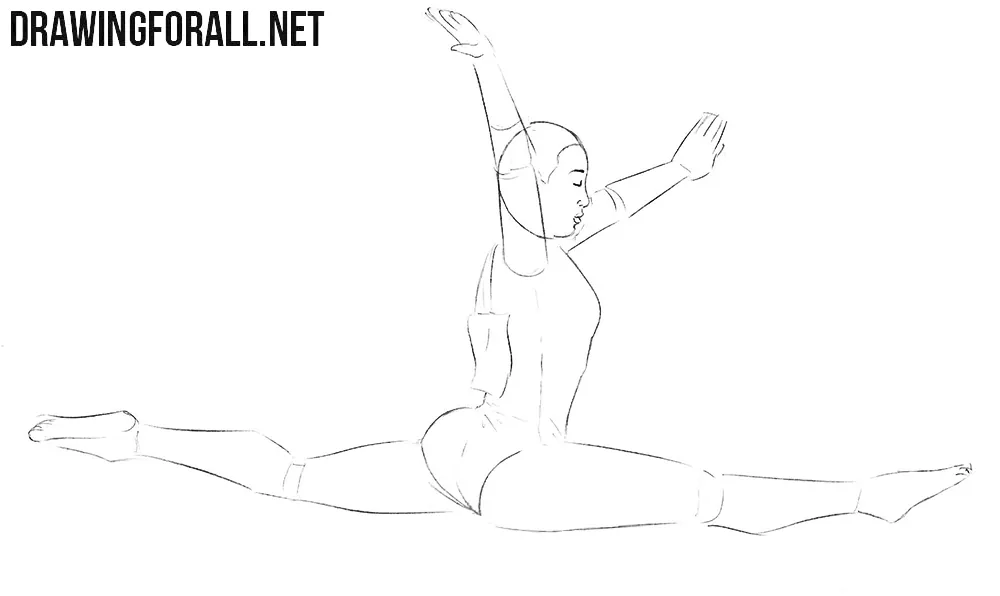
Step 6: Refine the gymnast’s arms and hands
Continuing the lines of the shoulders, carefully refine the contours of the arms. Next, draw the hands and fingers in detail, add the sleeve lines, and remove the unnecessary guidelines. The position of the fingers should convey movement, while slight overlaps between the forms should create volume.
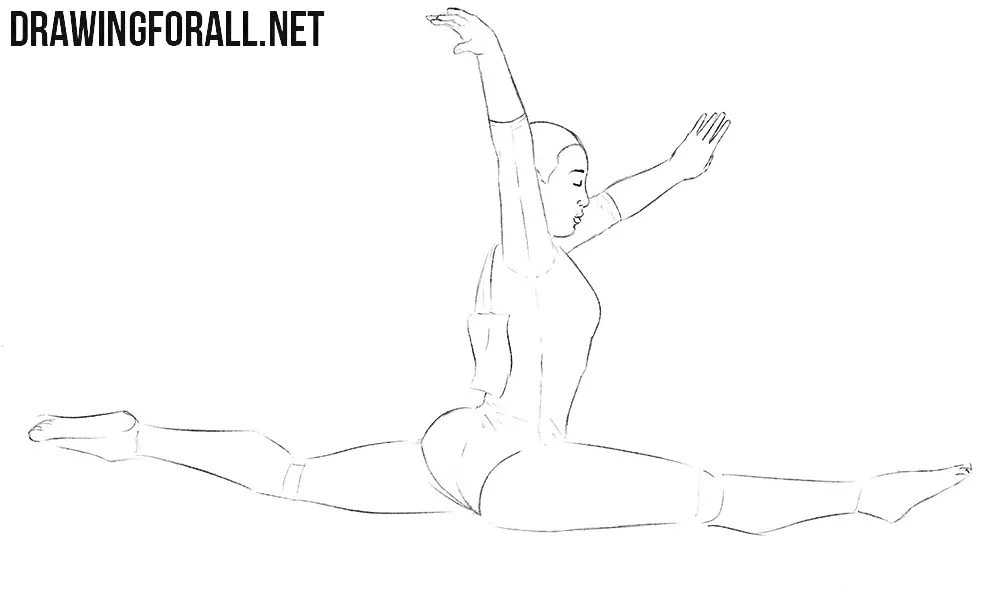
Step 7: Draw the legs and feet
Continuing from the hips, carefully outline the long extended legs in the split pose. Refine the outlines of the feet and toes, gradually erasing the construction lines. The toes should be very slightly bent to convey tension and emphasize the movement in the drawing.
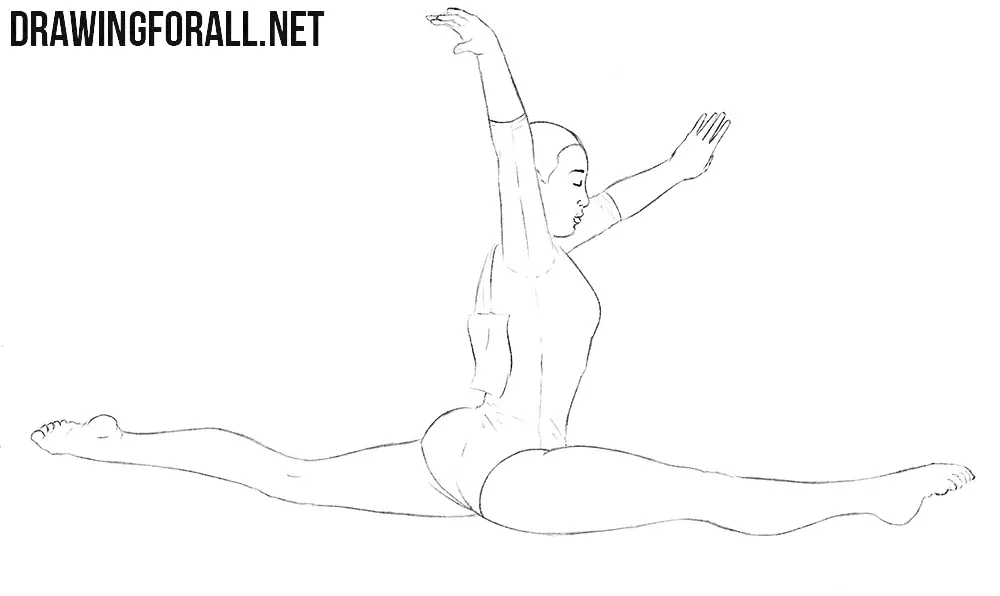
Step 8: Add shadows to the gymnast
The gymnast drawing is almost complete. Remove any remaining unnecessary guidelines, then darken the hair with hatching. Direct the strokes from the front of the head toward the back to follow the direction of the hair. The strokes should be slightly lighter in the middle of the head, leaving a strip of highlight. Next, add light hatching to the areas of the torso, limbs, and head that receive the least light.
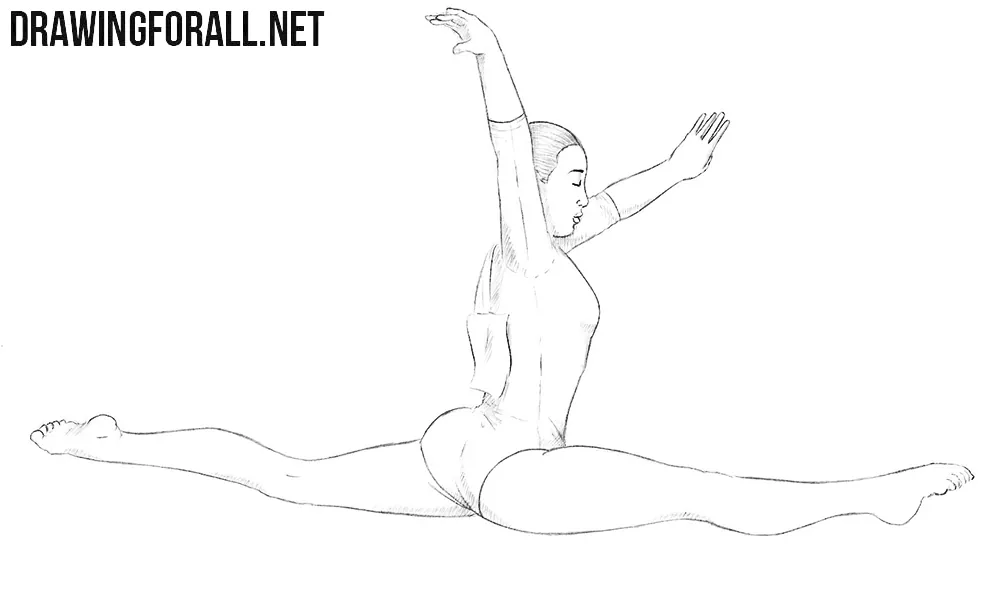
A drawing is a frozen moment, but by knowing a few simple techniques, an artist can convey movement even in this frozen state.
With a person or any other living creature, this is especially easy to do because there are certain gestures that we perceive as movement even in a still image. A jump is one of the clearest examples, since, as you understand, a person in the air is necessarily in motion.
Smaller elements within the composition emphasize this state. For example, the pointed toes and characteristic arm movements shown in the tutorial.
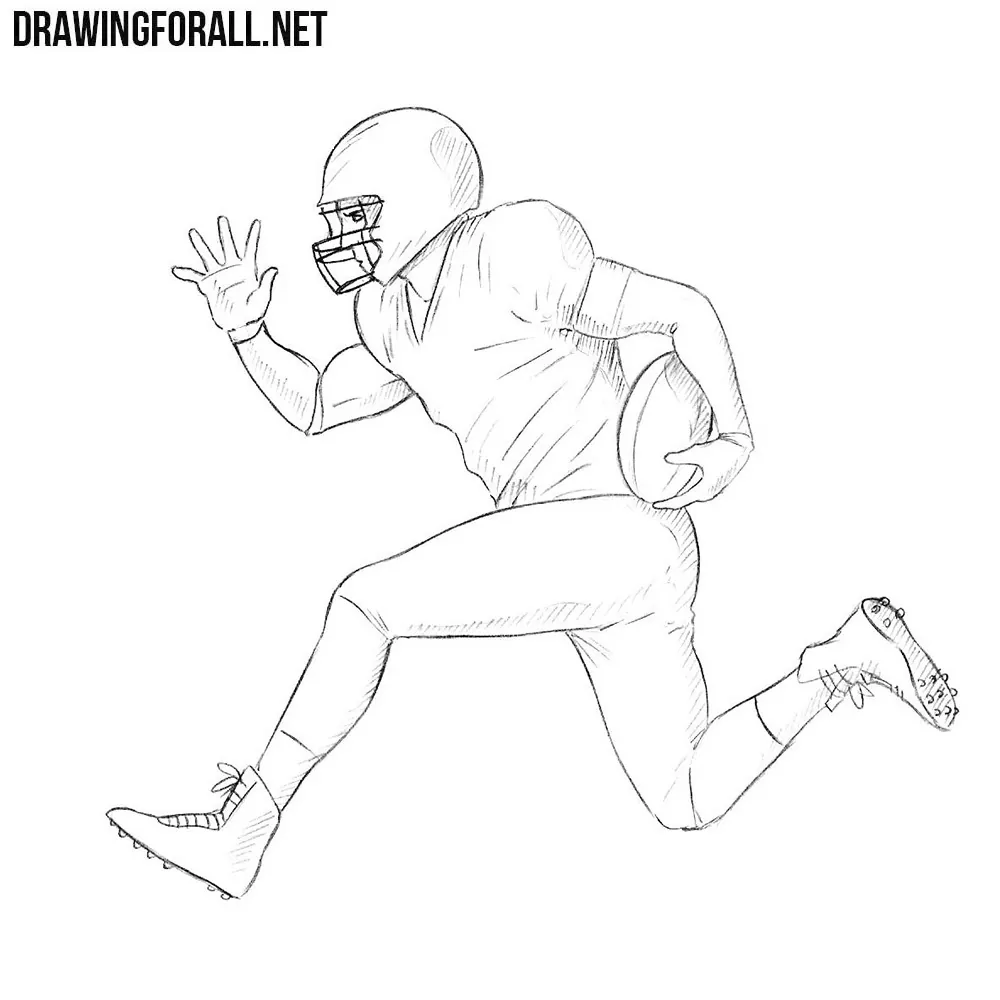
But this applies specifically to a gymnast. What about other sports? When drawing a soccer player, you can convey movement through running.
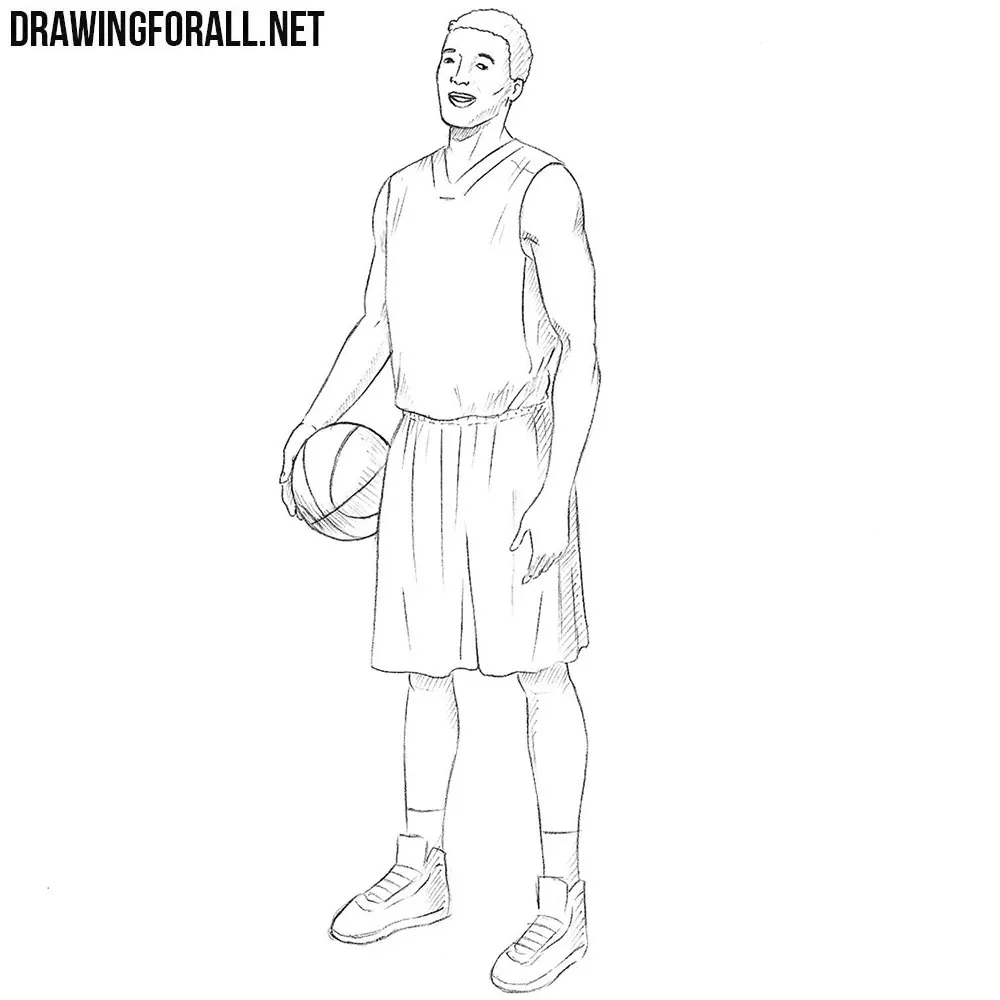
When drawing a basketball player, you can easily convey movement through the position of the arms and by depicting the ball in the middle of its movement from the hand toward the floor. Even when drawing a wrestler, you can convey movement through a jump, the moment of a strike, or another action.



O MY GOD WHAT IS WRONG WITH YOU?????
You are soo god at art 🖼 😍🙃👌🏻