

How to Draw With a Pencil

A pencil is a simple and familiar tool and one of the best choices for drawing, especially for a beginner artist.
Of course, modern graphic tablets offer many possibilities, but traditional pencil and paper remain excellent tools for learning and practicing drawing.
It is worth starting your drawing practice with pencils. Different materials can sometimes distract from the process of learning the basics, while a simple pencil helps you focus on the most important things. Controlled hatching and thin lines help you explore shapes, learn to see volume, and depict it on paper.
Pencils are available in a wide range of hardness grades. The letter H means that the pencil is hard, and the letter B means that the pencil is soft. The number next to the letter indicates the degree of hardness or softness. The designation HB indicates a pencil with a medium grade between harder and softer pencils.
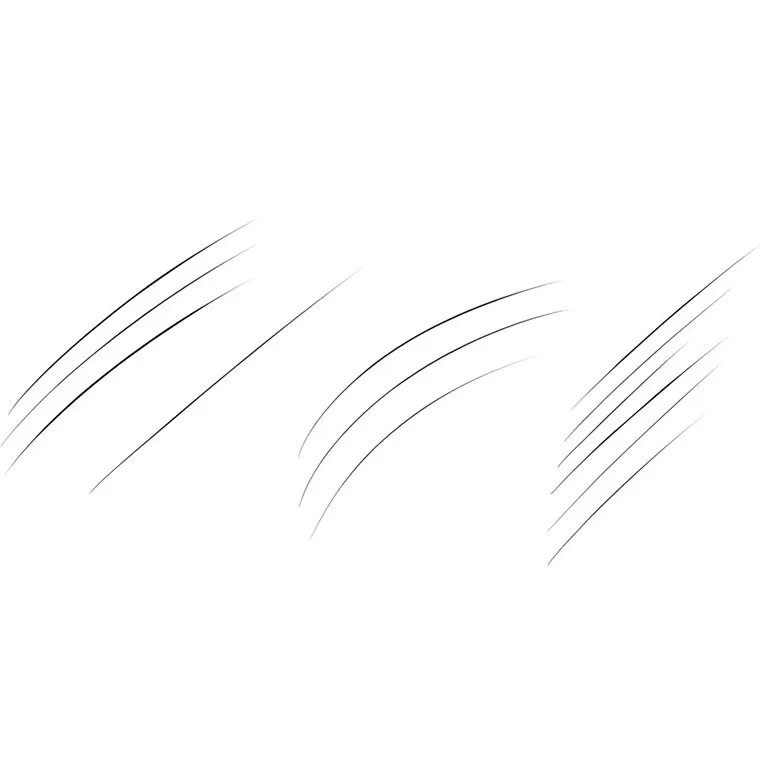
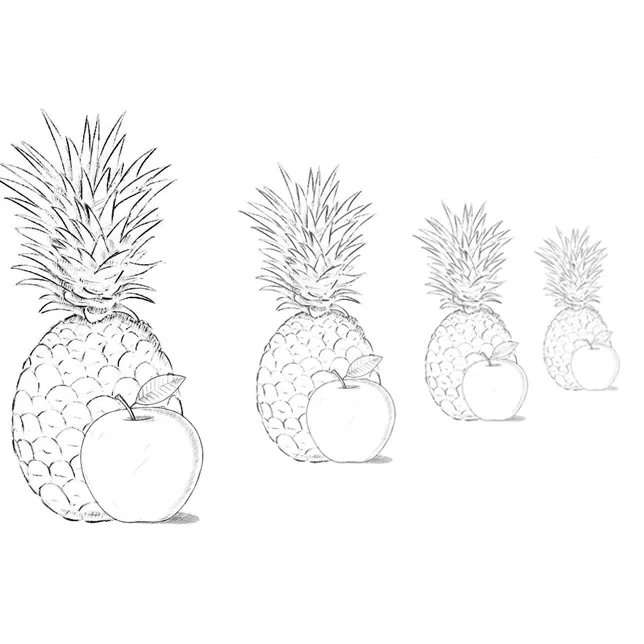
Soft pencils are particularly useful for drawing because they can create expressive lines and dark tones without requiring heavy pressure. In addition, with soft pencils, you can create a wide range of tones on paper. It is very important to learn how to work with a pencil and control tone and texture by varying the pressure and angle of the pencil.
Pencils differ not only in hardness but also in thickness and type. For example, in addition to traditional wooden pencils, there are mechanical pencils. They are convenient because you do not have to sharpen them, and the line remains consistently thin. However, with such a pencil, it is more difficult to create lines of different thicknesses.

So, how do you draw with a pencil?
First, decide how the sheet of paper will be positioned. It can lie flat on a table or be placed more vertically on a drawing board or easel. The first option is more familiar to most beginners, while the second is also commonly used by artists.
Both options are suitable, and you can choose whichever is more comfortable. The way you hold the pencil while drawing may also depend on the position of the paper. We talked about this in our article on how to properly hold a pencil.
Now decide what you want to depict. It can be anything, and here you are free to choose. But if you are a beginner artist, we strongly advise you to start by studying the basics. For example, sketch simple geometric shapes using the principles of perspective and light and shadow.
Next, you need to decide how the objects will be arranged in your drawing. This depends on your idea and the goals of the artwork. We talked about this in an article about composition, where we examined how to arrange elements within a drawing.
After that, you should choose the right pencil and paper. The pencil should not be too hard, as we said earlier. But remember that the softer the pencil, the more difficult it can be to create very light lines with it.
Next, you can make some preparatory sketches on a separate sheet of paper. This will help you understand what the finished artwork should look like. Of course, you can skip this stage if you are not going to create a very complex drawing.
Once you have made these preparations, start drawing. The first lines should be as light as possible so that you can easily correct them later. At each subsequent stage, use slightly darker lines, gradually correcting and refining the lines from the previous stages.
As you work, keep the basic principles of drawing in mind and correct the drawing whenever necessary. Periodically ask yourself whether everything looks right at the current stage. Each stage should establish the forms clearly enough before you move on to smaller details.
During the drawing process, regularly check your sketch for accuracy. To keep all parts of the artwork consistent, look at the drawing as a whole rather than focusing on one small area for too long. You can use an eraser to make corrections, but work carefully so that you do not smudge the surrounding lines.
At the very end, add the finishing touches carefully. Look for any remaining inaccuracies and gradually correct them, bringing the artwork to the desired finish.
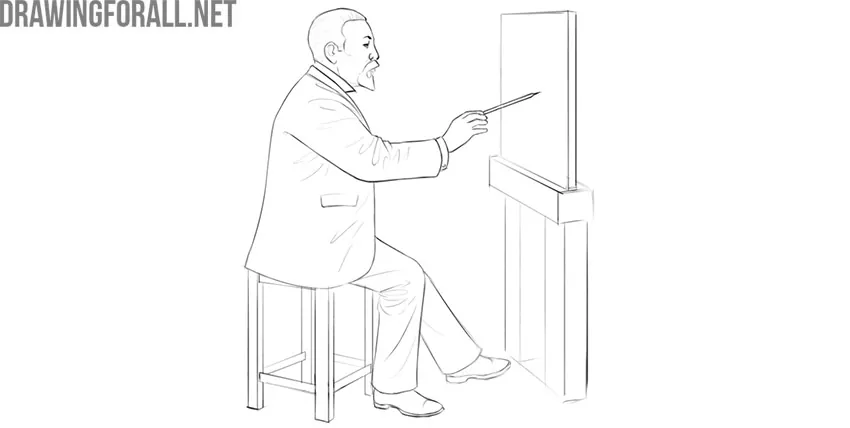
So now you know the basic principles of drawing with a pencil. But you may face another important question: what should you draw?
As we said above, if you are a beginner artist, you should start with the basics. You need to understand the fundamental concepts in order to build a foundation for creating finished artworks. These concepts are covered throughout the Fundamentals section of Drawingforall.net.
Start by exploring perspective, light, and shadow. Then learn how to draw simple geometric shapes. After that, study human anatomy and gradually move on to drawing the figure using our tutorials.
If you are just beginning to draw, start with relatively simple subjects. Try to draw a chibi girl or sketch a car, for example. These kinds of tutorials will help you practice the basic principles of drawing.
If you already know how to draw and want to improve your skills, try to draw a girl or another more complex figure. Such tutorials will help you improve your understanding of construction, form, and other fundamental drawing skills.




I don’t know how to draw can someone tell me please