

Composition
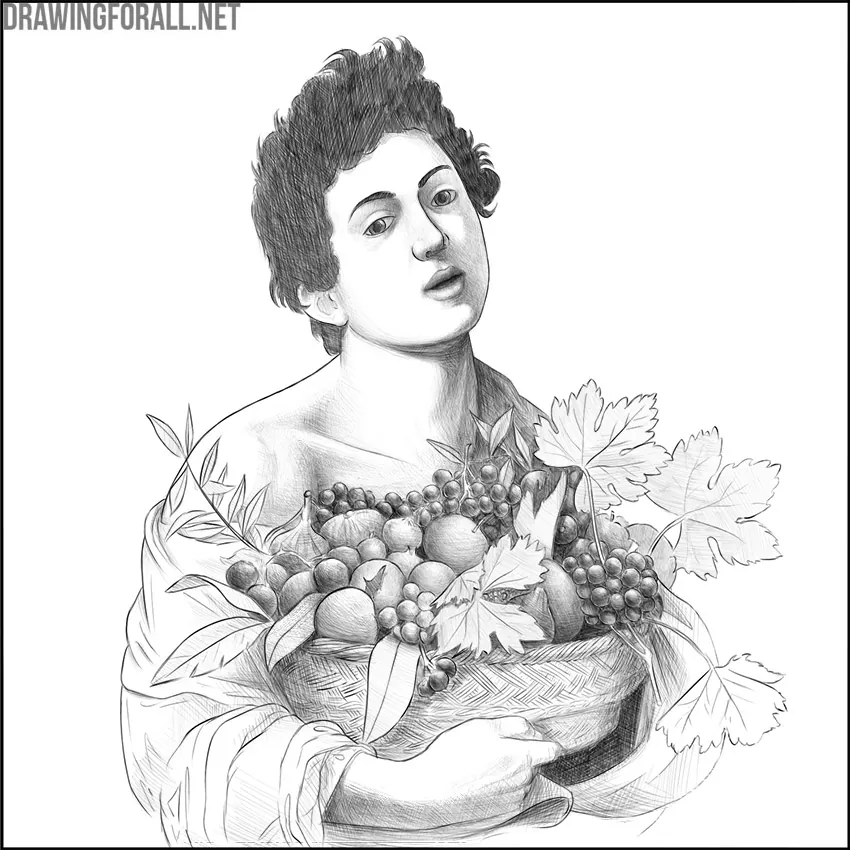
Any artwork begins with the placement of objects on a sheet of paper. The overall impression of the artwork depends greatly on how these objects are arranged within the drawing.
This article is primarily theoretical. Here, the team of Drawingforall.net will explain what composition is, cover some basic principles of composition, and discuss several mistakes that are common among beginners.
The main task of composition in art is to arrange objects and their parts in a way that creates a unified, harmonious, and expressive artwork.
Composition is a system of principles and techniques for arranging different parts of a work of art. The ability to place an image accurately and expressively within the format of the sheet is an important skill for any artist. Composition can also be understood as the artistic structure of a work and the way its different elements relate to each other.
The main objectives of composition are:
- convey the idea of a picture or sketch to the viewer;
- harmoniously arrange objects within a given format.
We naturally perceive relationships between objects, their sizes, positions, and surrounding space. When drawing, we need to learn how to observe these relationships and transfer them to a sheet of paper.
When working with composition, you need to learn to find interesting arrangements in the environment around you. This ability can be developed through various exercises. For example, look at several objects, compare them with each other, and imagine them inside a frame, mentally moving them to different parts of it.
You can also draw a simple spot or another object and place it inside a frame. Or first draw the frame and then place an object inside it. The shape and orientation of the frame should correspond to the general shape and arrangement of the subject you want to place inside it.

As you master these techniques, you can gradually make the task more difficult by including two or more objects in the composition. This will help you understand the basics of composition and prepare you for drawing more complex objects and scenes.
A good composition gives a drawing a unified and finished appearance, while a poor composition can weaken even a technically well-made drawing.

So, any artwork begins with roughly estimating the size of the objects and their location on the sheet of paper. For example, suppose we are going to draw a rose. We can make it large or small, place it in the center of the sheet, or shift it in any direction.

If there is only one object in the artwork, placing it on the paper is relatively simple, as in the examples above. But if there are two or more objects in the image, you need not only to arrange them correctly on the sheet but also to make sure they work harmoniously together.
One of the best-known compositional principles is the rule of thirds. To use it, mentally divide the sheet into three equal parts vertically and horizontally. Important objects placed near the intersections of these lines or along the lines themselves can create a balanced and visually interesting composition.

In a portrait, you can place the head, eyes, or other expressive parts of the face near these lines and intersections. When drawing landscapes, you can place the horizon near one of the horizontal lines of the grid.
The rule of thirds can also be used to convey movement in an image. For example, place a character near one of the vertical lines and leave more free space in front of the direction in which the character is looking or moving.
Keep in mind that an object does not have to be placed exactly on a line or intersection. These are simply useful reference areas that can help you position the main subjects in the artwork.
Of course, the rule of thirds is only one of many ways to organize a composition. For example, you can place the main subject directly in the center and build the rest of the image around it.
How to Create a Composition in a Drawing
When creating a composition in a drawing, you should:
- Determine the objectives and goals.
- Examine the subject and choose a point of view.
- Determine the size of the subject and choose a vertical or horizontal format.
- Place and balance the objects on the sheet.
- Determine the center of the composition.
- Draw the objects taking into account perspective and proportion.
- Create the volume of the objects using light and shadow.
- Review and complete the composition.
Determine the Objectives and Goals
Before starting the drawing, determine the idea and main objective of the future artwork. This depends primarily on your idea and the task you want to solve in the drawing.
Examine the Subject and Choose a Point of View
Carefully study the subject or scene you are going to draw. This will help you understand its structure, position, and volume before you begin working on the final drawing. Also, choose the point of view from which the subject will look most suitable for your composition.
Determine the Size and Orientation of the Paper
The arrangement of objects in a drawing depends greatly on their general shape and size. If we, for example, depict a vertically standing bottle, it is usually better to choose a vertical sheet of paper. If we depict a car, a horizontal format will usually work better.
Place and Balance Objects on the Paper
At this stage, place the subject within the sheet of paper. To find a suitable arrangement, make several small sketches on a separate sheet.
This will help you compare different points of view and positions before starting the main drawing. After choosing the best version, lightly mark the outer boundaries of the objects. Avoid placing them too close to the edges of the sheet, but do not leave unnecessary empty space around them either.
Determine the Center of the Composition
The center of the composition is usually connected with the main subject or group of subjects depicted on the sheet. The visual center is the area that attracts our attention most strongly.
The compositional and visual centers do not always have to coincide. Their location depends on the main subject, the surrounding objects, and the point of view you have chosen.
Draw the Objects in Perspective
Earlier, we outlined the general boundaries of the objects. Now draw their main contours and construct their basic forms. At the same time, check their sizes and positions in space. Pay attention to the distances between the objects and how they relate to each other. It is better to correct mistakes at this stage before moving on to smaller details.
Create Volume Using Light and Shadow
To create the volume of the objects, first determine the light source and separate the light areas from the shadow areas. Outline the main shadows, then gradually fill them with hatching.
After that, add halftones and strengthen the darkest areas where necessary. Try to direct the hatching according to the form of each object, as this will help make the forms look more three-dimensional.
Review and Complete the Composition
This is the final stage of creating the composition. Look at the drawing as a whole and make the necessary corrections. Check the placement of the objects, their contours, light and shadow, and the relationships between the different parts of the drawing. Add the final details and make sure the composition looks complete.

To make working with composition easier, you can create a simple viewfinder. Take a sheet of paper or cardboard and cut a rectangular opening in it that corresponds to the format of your drawing.
Looking through this opening can help you isolate different compositions in the environment around you. You can also use the camera on a phone or tablet for the same purpose.
Keep practicing composition with both simple and complex subjects. Start with one object, then try arranging several objects together and changing their size and position within the frame.
Over time, this will make it easier to find a suitable composition before you begin working on the details of a drawing.




this is complicated but it helped but very hard please can you do it in bits
I absolutely love this site. It has helped me a lot.
I doubted that it could because the lessons were not video, but your instructions and illustration are very well presented.
Thank you
P.S. I am an absolute Beginner.
Thank you very much. The team of our site is very happy when our drawing lessons help our readers learn to draw. We are confident that you will be able to achieve great success in drawing. The main thing is to practice drawing as often as possible.
Excellent drawing tutorials. Great job!