

How to Draw a Sitting Cat
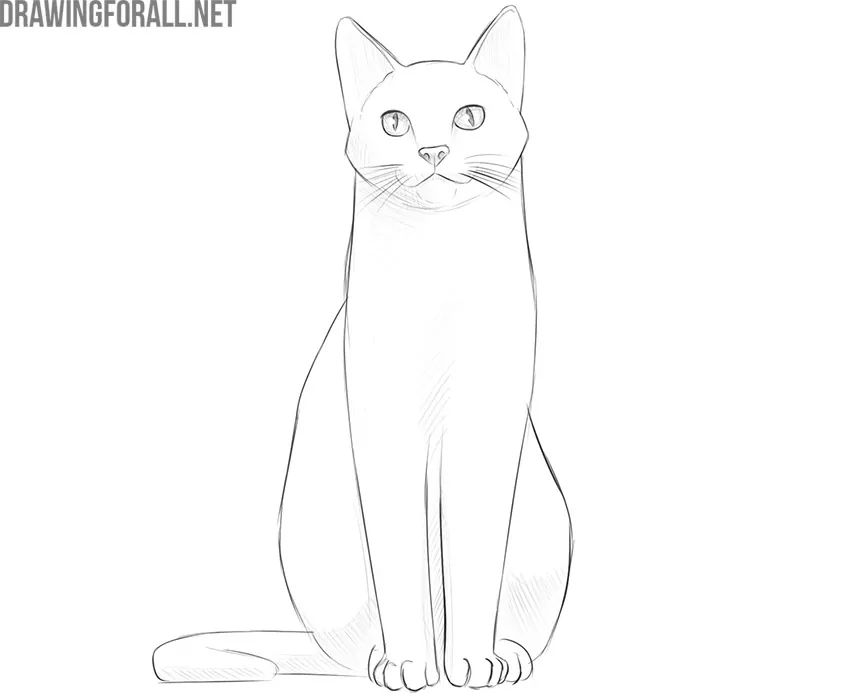
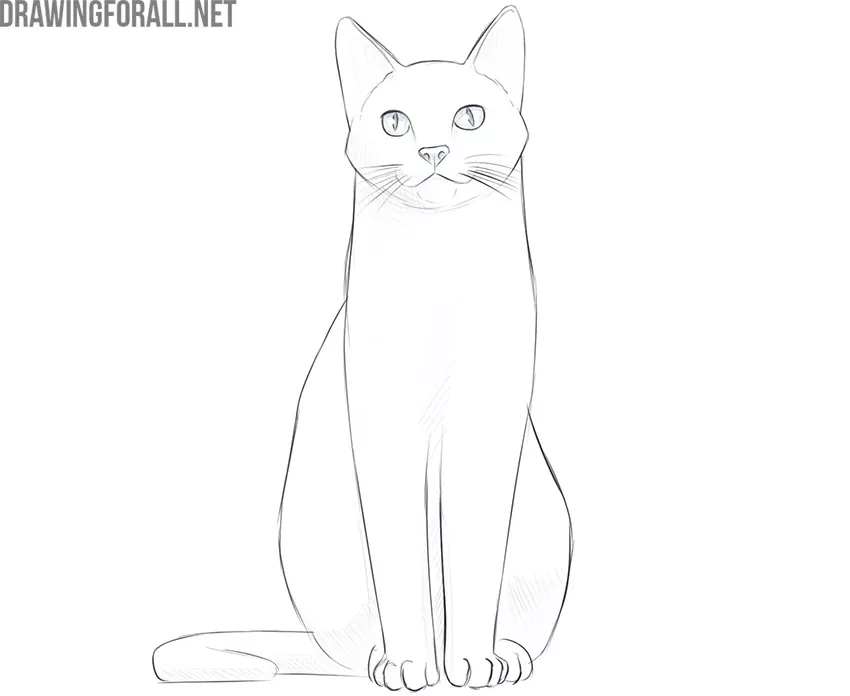
The whole world loves cats today, doesn’t it? That is why we present you with this guide on how to draw a sitting cat. We tried to create a really simple guide that will be relevant even for novice artists. These are really easy nine steps to create a really cool drawing.
Step 1
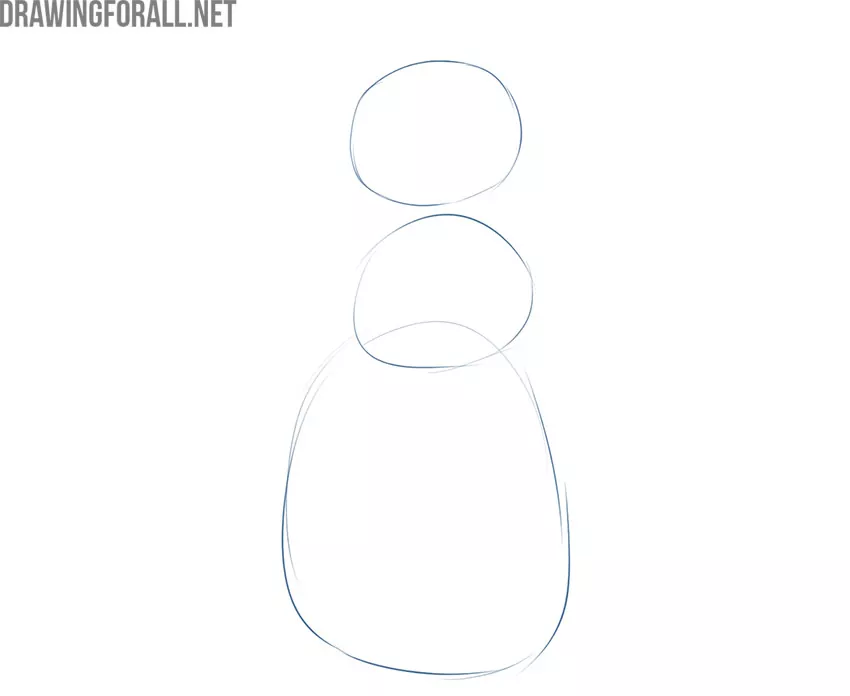
So let’s start a guide on how to draw a sitting cat. Unlike a human, a cat does get taller when sitting. Let’s try to depict this pose using simple geometric shapes. Draw two identical circles and one large, irregular oval shape, as in our reference.
Step 2
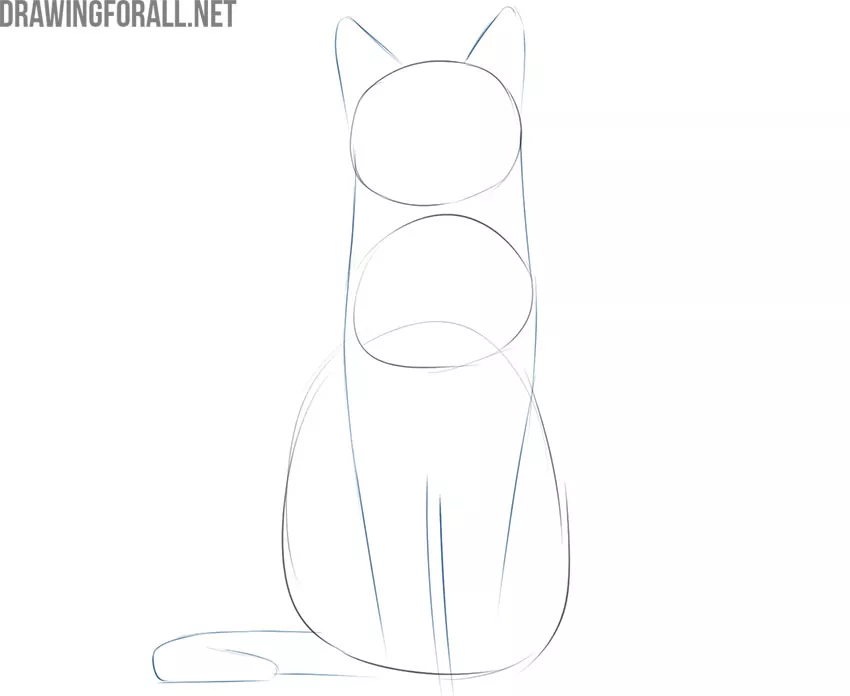
We connect the two upper shapes using two smooth vertical lines. After that, you can add the outlines of the ears, which look like a pair of triangles. At the very end, draw the outline of the tail, which is under the largest shape from the first step.
Step 3
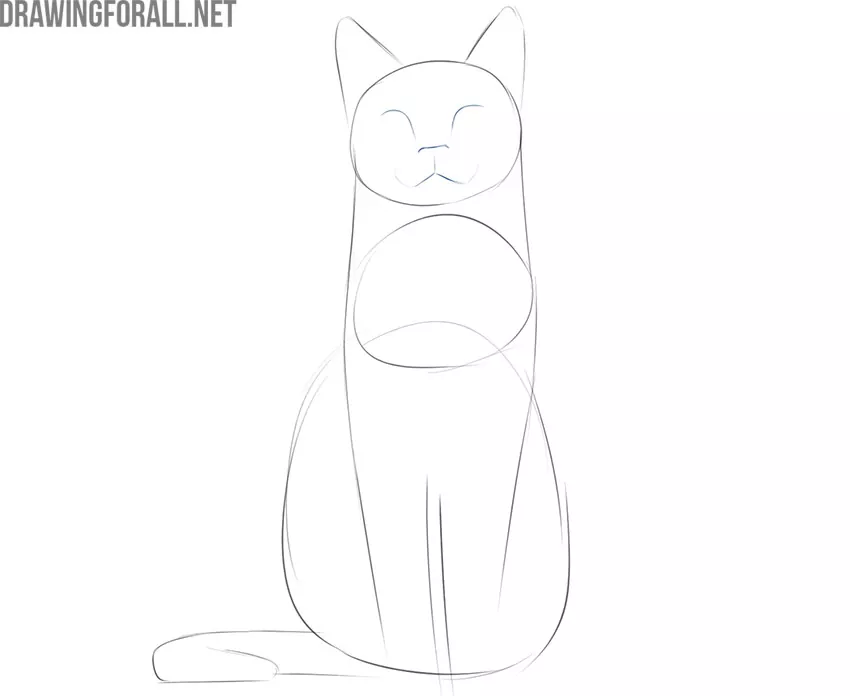
Now let’s draw the face of our cat. Use small, smooth, curved lines for this. Try to avoid putting too much pressure on the pencil in this step.
Step 4
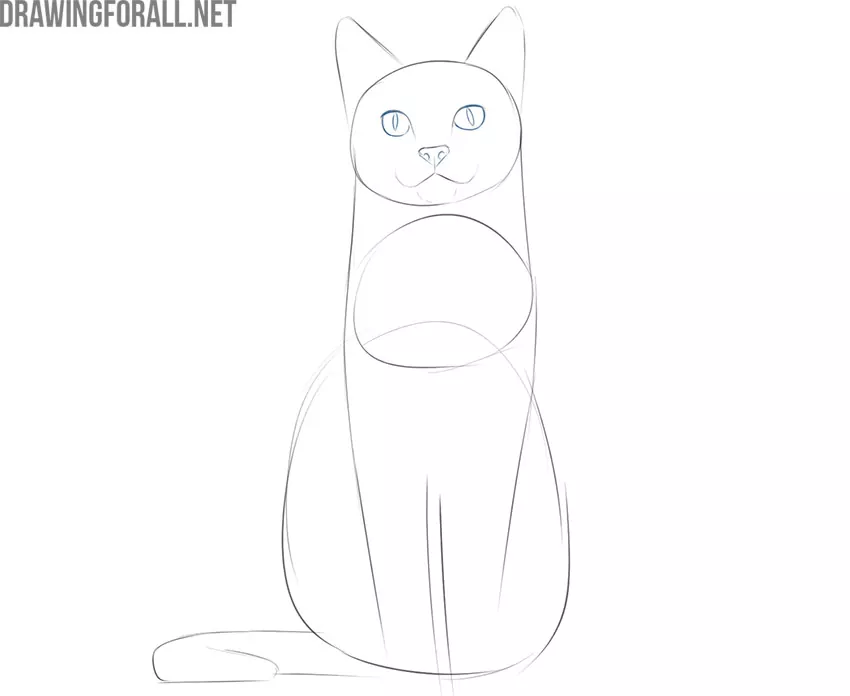
In this step, we will detail the parts of our cat’s face. To form the final eye cut, close the two curved lines from the previous step. Inside each eye are narrow, elongated pupils. The cat’s nose looks like a small inverted triangle. There are three rounded lines under the nose.
Step 5
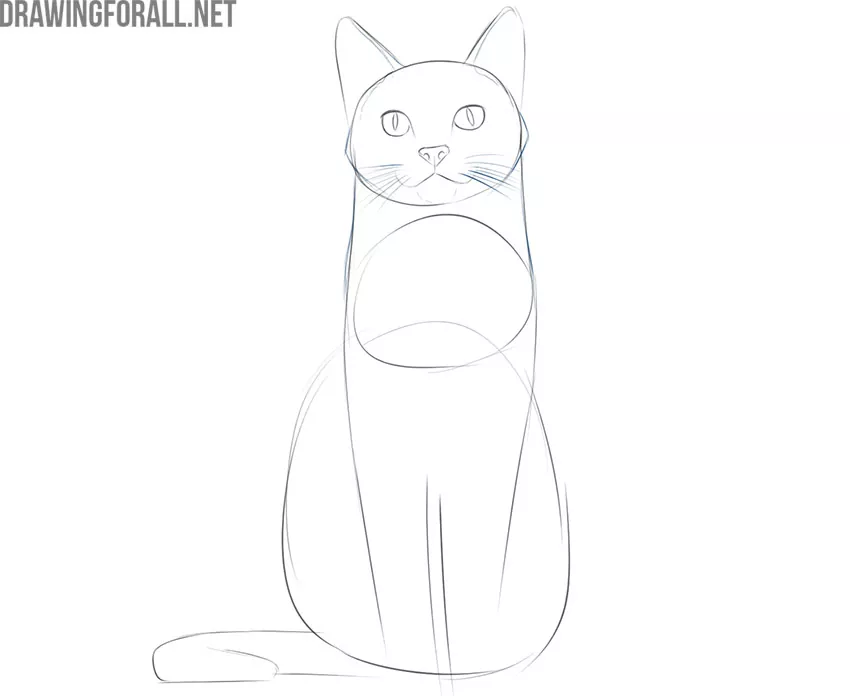
We hope that you are not very tired of this guide on how to draw a sitting cat. Let’s add the outlines of the inner parts of the auricles. It looks like a pair of triangles. Also, with the help of sweeping short straight lines, we outline the beams of the mustache of our cat.
Step 6
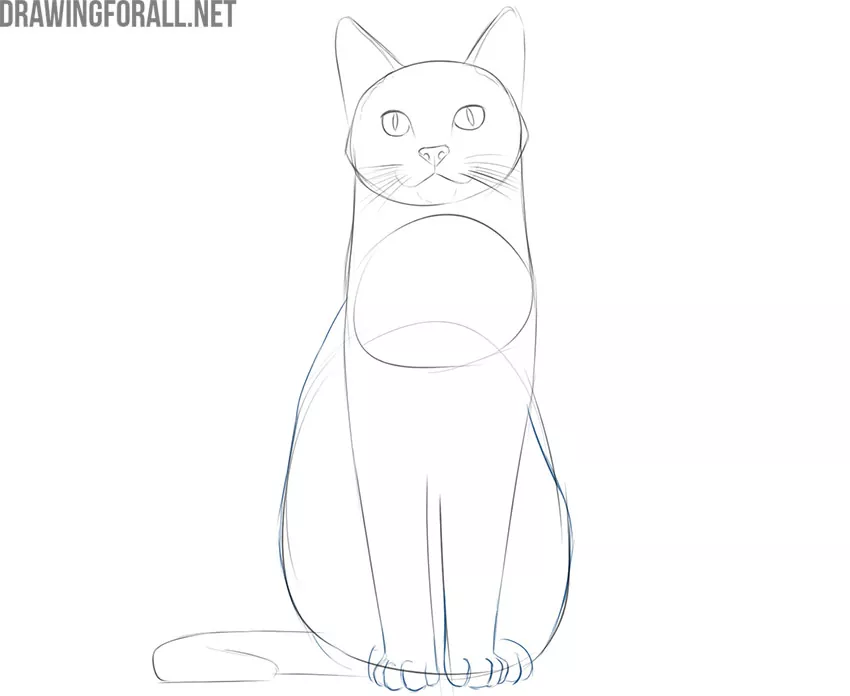
To make our drawing more complete, let’s sketch out the fingers of our cat. It looks like small rounded lines. Well, now our cat looks much more cute and realistic, doesn’t it?
Step 7
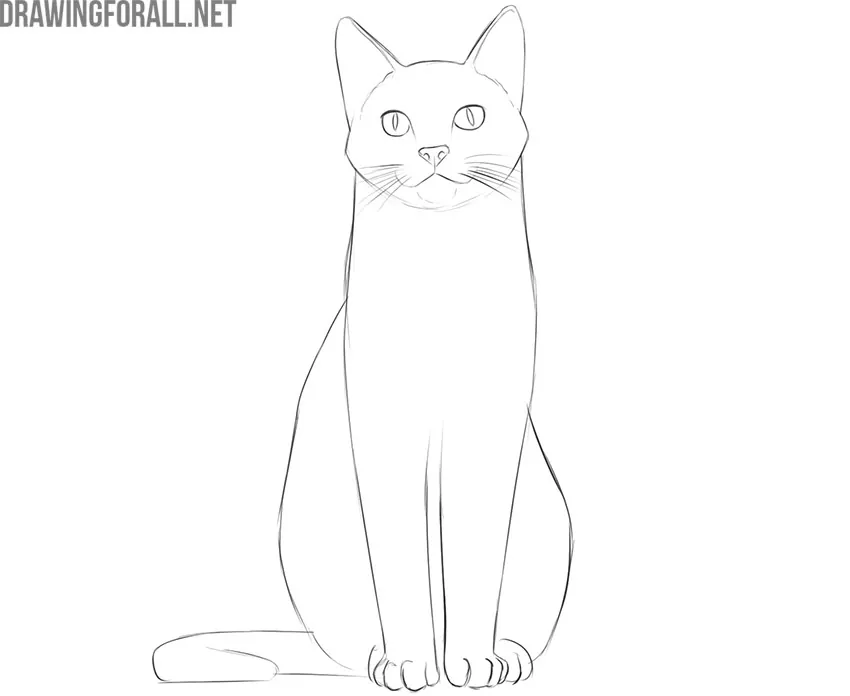
So, it’s time to remove all unnecessary construction lines from the previous steps. Without this action, the body parts of the cat will look transparent. We will also make the contours of the body and face clearer and more complete.
Step 8
Any drawing looks much cooler with shadows. Therefore, in this step, we will add light shadows inside the outlines of the eyes, under the nose, in the lower torso, and on the tail. Don’t forget about the highlights, which are located within the contours of the eyes.
Step 9
In this step, we finally get rid of all the mistakes that could have been made during the entire drawing lesson and make the final touches.
If this drawing guide on how to draw a sitting cat was helpful, please let us know about it. Your opinions and criticism are very important to us. Your comments really help us to understand in which direction our drawing lessons should be moved.

Your tutorials are the best! Can you guys draw a lion head?
Thank you. Yes, over the next couple of days, we will publish a lesson about drawing a lion’s head.
Your tutorials are phenomenal! I have been able to improve my drawing skills exponentially with your help.
Can you draw an Anime person from a show on Hulu (Is that how you spell it?) Called: My Hero Academia. I’m mostly asking for you to draw Eri, if you can’t, that’s all right.
plz draw a axolotl i rlly want to draw one
draw a axolotl plz
Pls pls pls pls pls pls pls do a tutorial on like a scene with a little pool at night under some bushes where some cats can come in (i love warrior cats so yeah)
I’m a fan too 😂 you could aways just get a tutorial with a cat drinking from a pond. The Moonpool is technically a pond 🙂
Same
CAN YOU DO A YOUTUBER BUT SPECIFICALLY CORYXKENSHIN PLZ
what?
amazing details got an A+ for art tysm!!!
Thank you! Me and my friend are making a comic and this helps and the superheros, but could you please draw a hero with cat ears that can detect quiet noises, gloves and boots with retractable claws, attachable tail for balance, and a large cape for gliding.
I could draw it but it was not as good as yours. It was kind of hard and complicated for me.
Could you please do a tutorial on how to draw wolves?