How to Draw a Guava
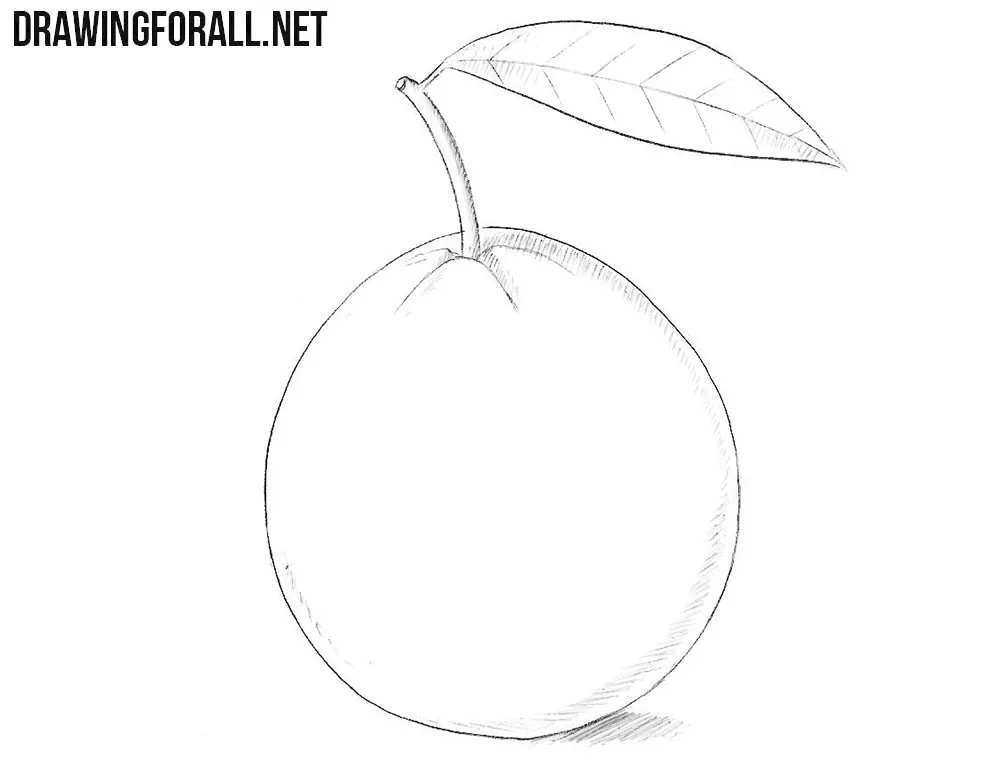
Tropical fruits are generally quite simple to draw. Also, they are useful for practicing basic geometric forms and working with shadows. In this tutorial, we will show you how to draw a guava, convey its characteristic shape, and give it volume with hatching.
How to draw a guava step by step
Step 1: Sketch the guava shape
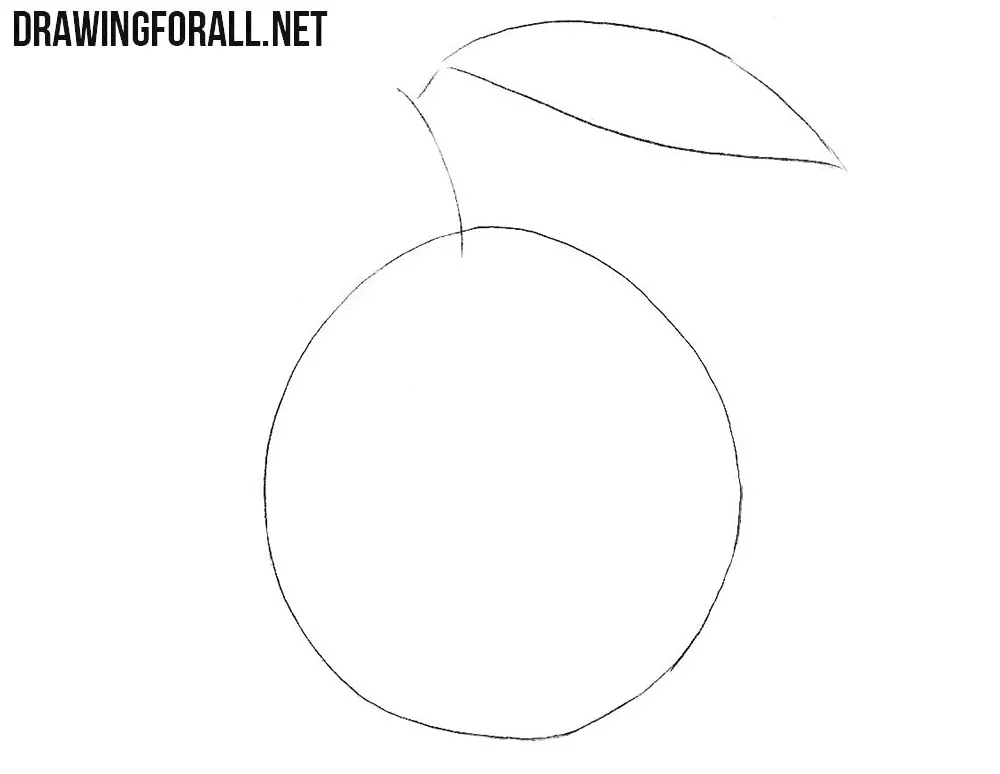
Drawing fruits start with sketching geometric shapes. Here you can see an irregular circle, slightly elongated vertically. You can first draw a regular circle and then slightly deform it. You can also draw this shape directly without preparation.

Step 2: Add the stem and leaf
At the highest point of the fruit, draw a long vertical line. Give this line a slight curve so that the stem does not look too straight. Next to this line, draw the outline of a long, narrow leaf. Now you have the rough silhouette of the guava.
Step 3: Draw the fruit details
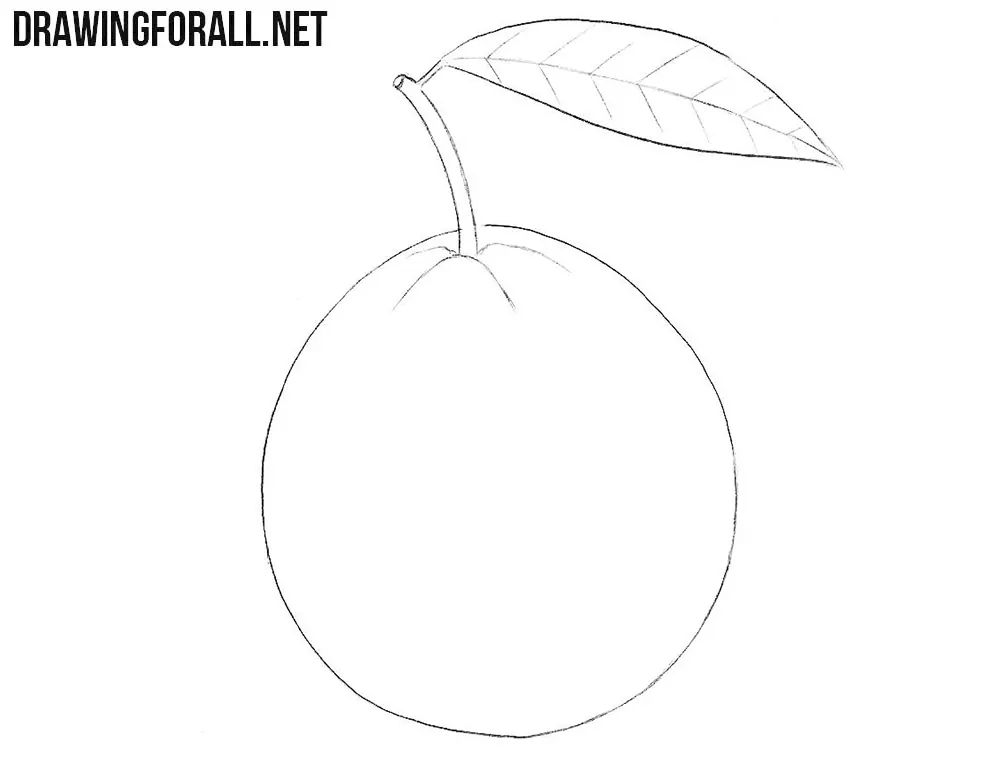
Now let’s work on the small details of the guava. At the top of the fruit, draw a few oblique lines that converge at a single point. Give the stem some thickness with a second line and mark its cut end with a small oval. Then move to the stem and draw the veins on the leaf. First draw the central vein, then add the smaller veins extending toward the edges of the leaf.
Step 4: Add shadows to the guava
We already have a nice guava drawing. Apply dense hatching near the upper and lower edges of the fruit. Make the shadow darker near the stem and along the right side, then gradually reduce the density of the hatching toward the light area. Add a cast shadow to make the fruit look even more dimensional. Note that the hatching does not reach the very edge. This simple technique allows you to create the effect of reflected light.
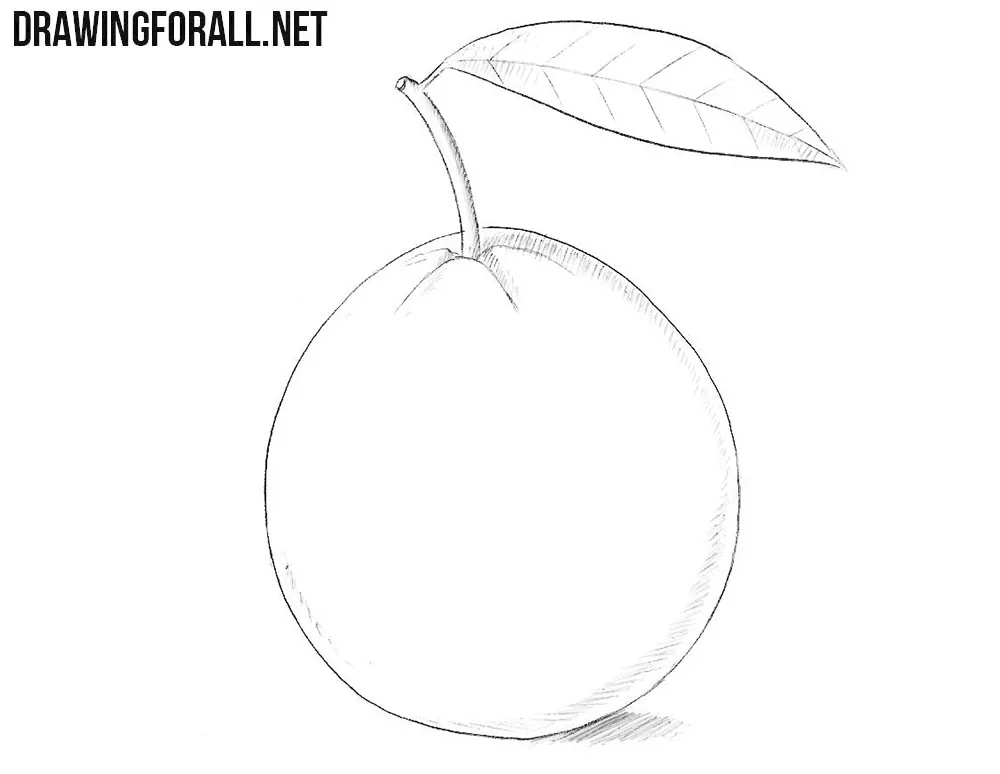
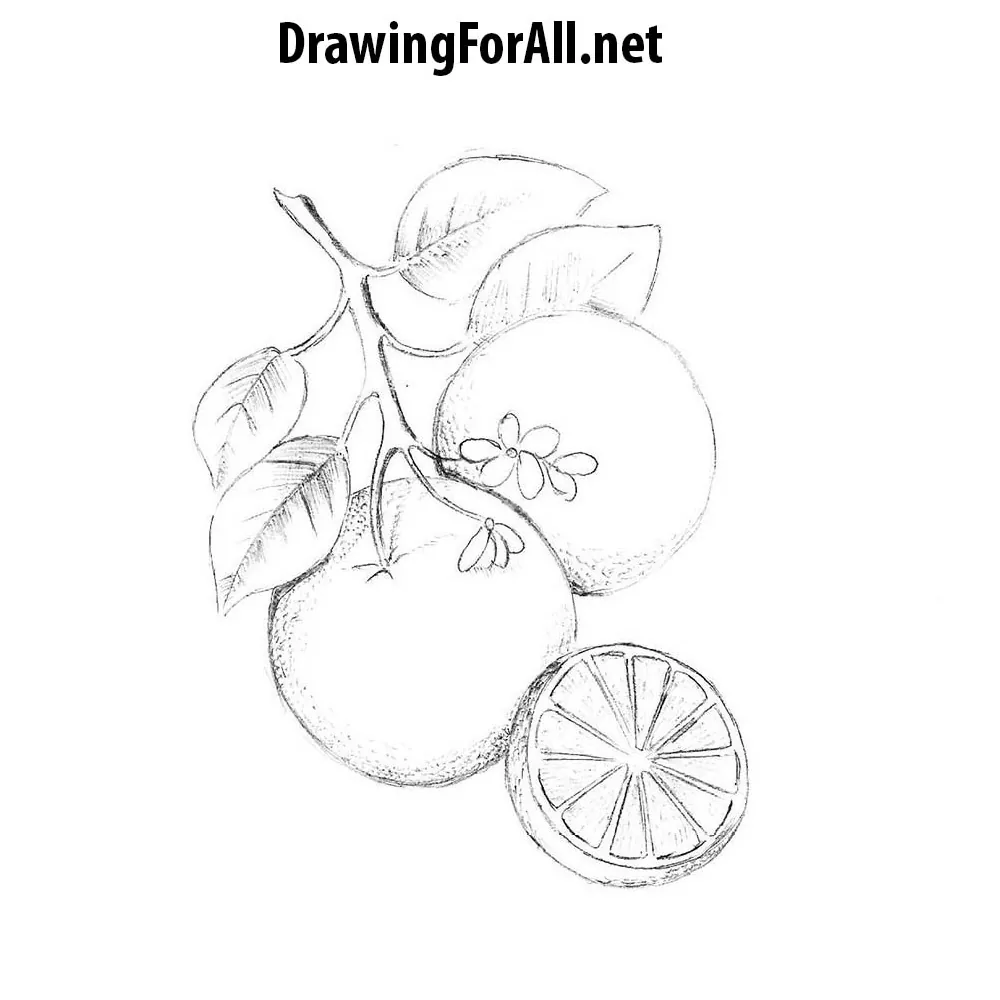
We have just drawn a tropical fruit called guava. In terms of drawing technique, it does not differ greatly from drawing a grapefruit or drawing an orange.
All three fruits have a simple spherical form, so the main differences appear in the contours and characteristic details.
Small details form the overall appearance of the tropical fruit. You may have noticed this even in more complex drawing tutorials. A good example is our tutorial on drawing a rose.