

How to Draw a Mango
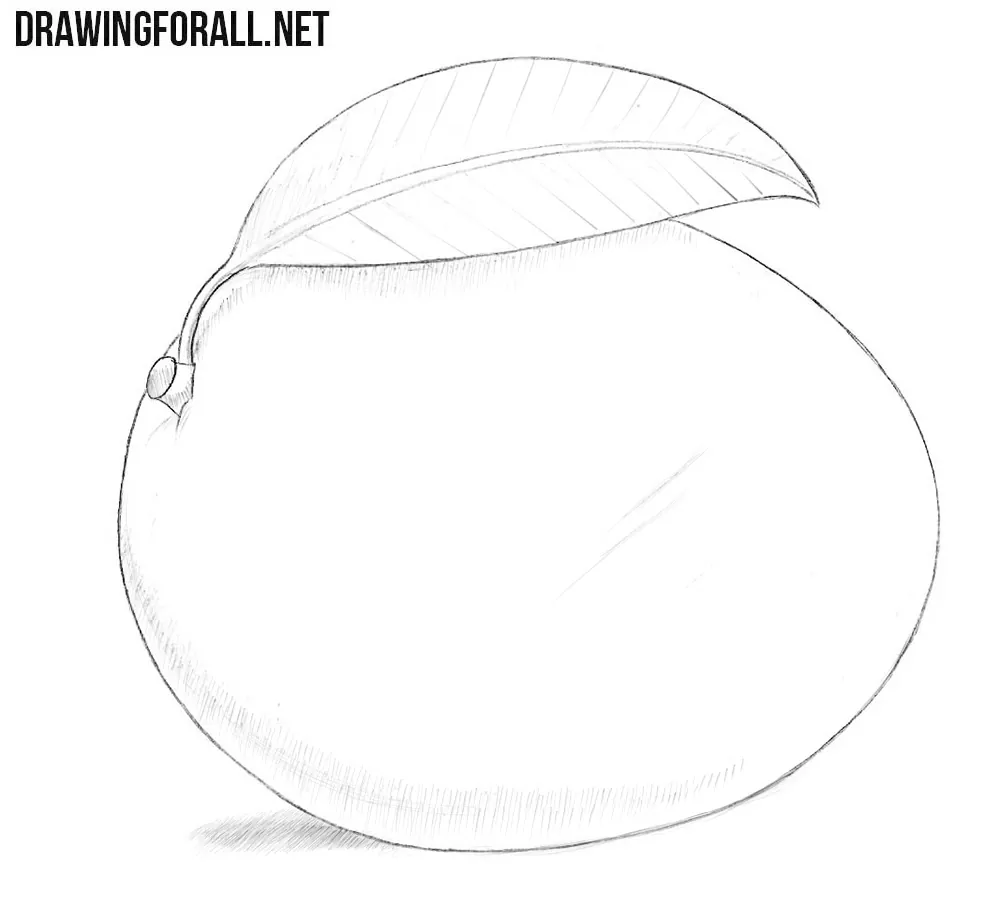
A mango is an elongated, three-dimensional oval form. It is a very simple subject to draw. In this step-by-step tutorial, we will show you how to draw a mango with a leaf and demonstrate how to create volume in the drawing using a simple method.
The fact that a mango is a three-dimensional form rather than a flat shape is exactly what you need to keep in mind throughout the entire drawing process in order to achieve volume.
How to draw a mango step by step
Step 1: Sketch the mango’s basic outline
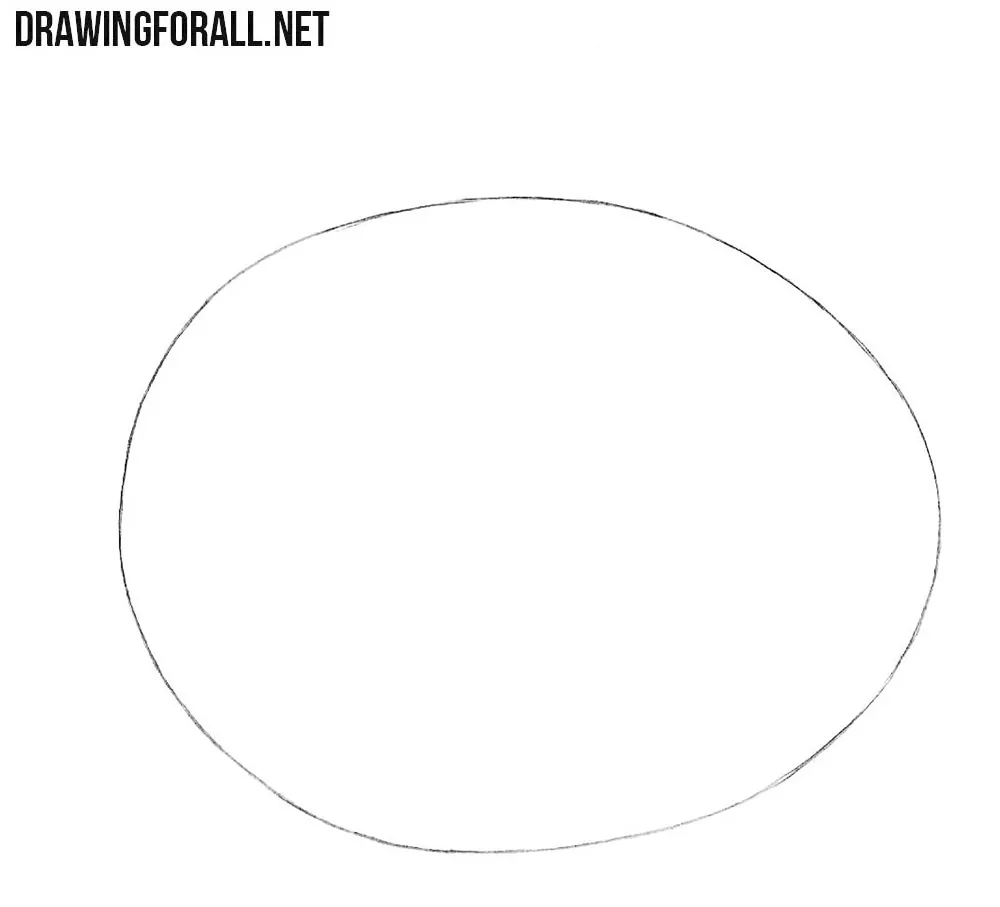
The mango we are drawing has a rounded shape, so begin by sketching a rounded outline. The fruit should look like a flattened sphere. Use light lines and leave space above for the leaf; your mango does not need to follow this contour exactly.
Step 2: Add the leaf and stalk
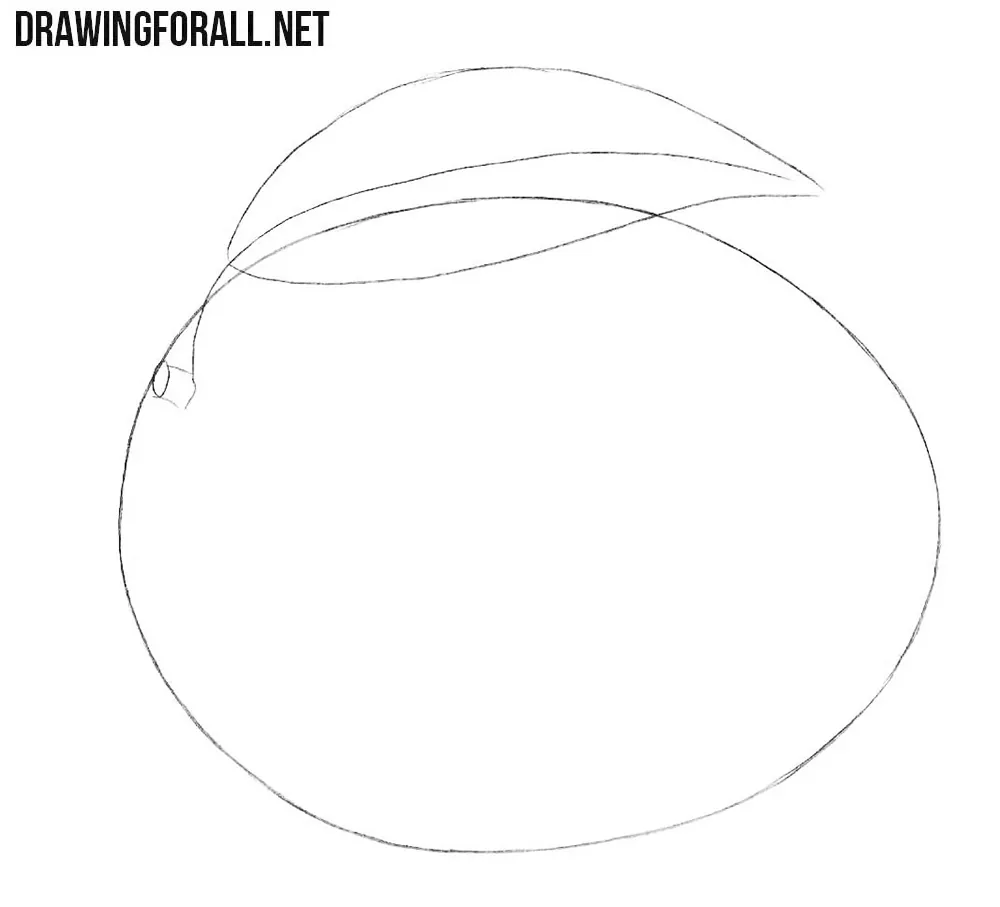
Add just two parts, and the outline will look like a fruit: a leaf and a stalk. You can place the leaf on the other side if you prefer. Next, draw a long central line for the leaf extending upward and to the right. Around this central line, draw the leaf itself, narrowing toward the tip.
Step 3: Refine the mango leaf details
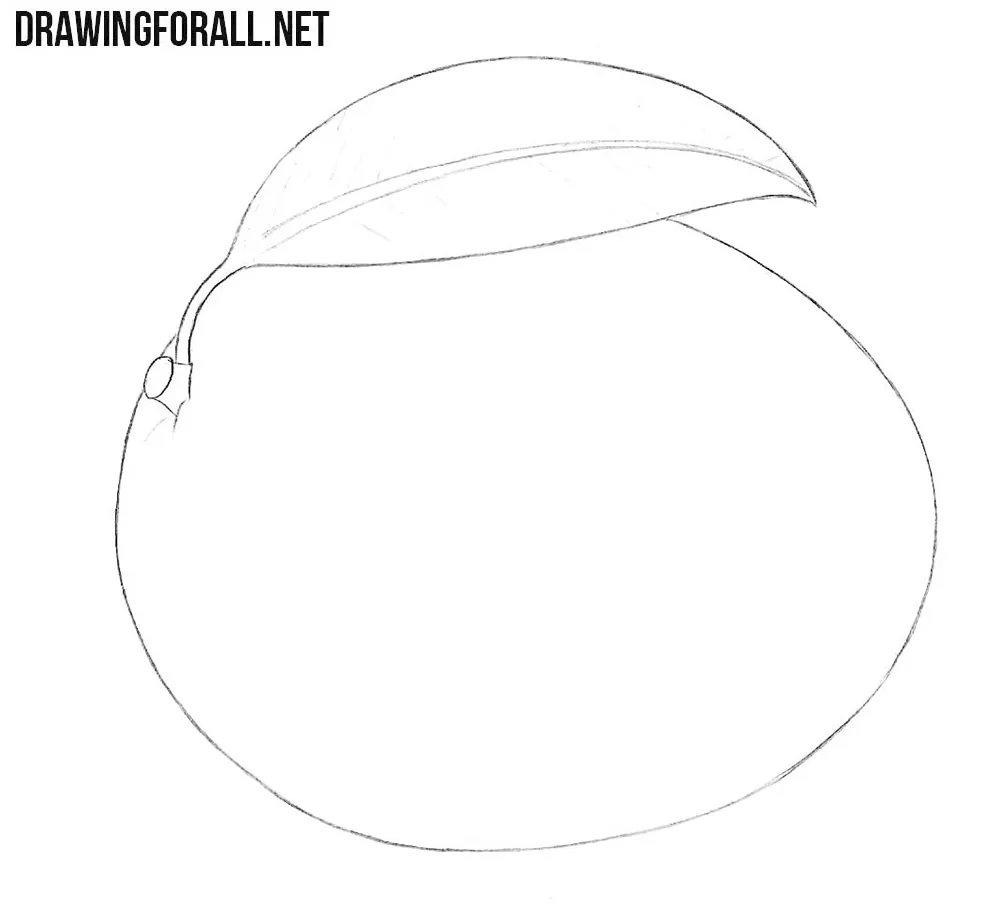
Draw the details of the leaf. Erase all unnecessary guidelines from the previous steps. Give the leaf stem a thicker appearance. Refine the outline of the leaf itself, making the transitions in form smoother. Draw the veins extending from the central line of the leaf toward the sides. Remove the fruit’s upper contour where it passes behind the leaf, then smooth the visible edges.
Step 4: Add shadows to the mango
Determine the direction of the light and shade the areas that receive less light. Do not forget to draw the shadow the fruit casts on the surface beneath it. Hatch along the lower-left curve and beneath the leaf. Extend the cast shadow to the left. Leave a small unshaded strip along the lower edge of the fruit to create the effect of reflected light, just as when drawing a sphere. Darken the side veins branching from the leaf’s central vein.
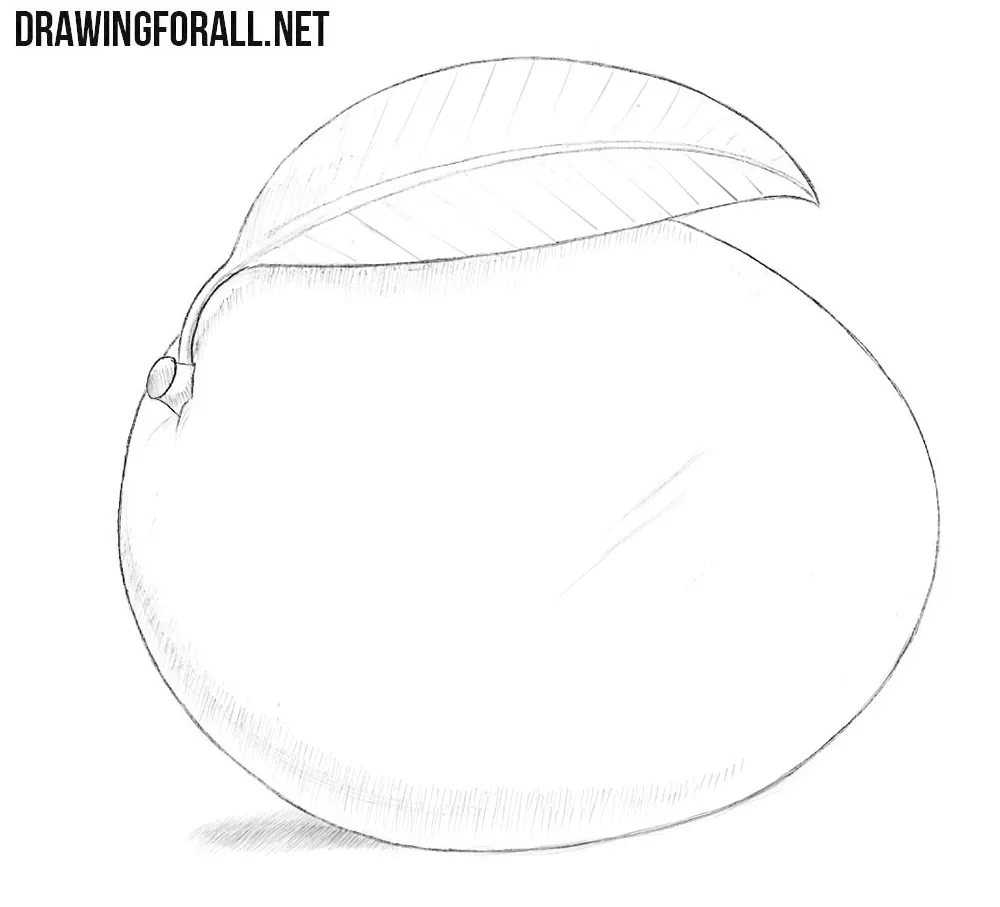
Many fruits and vegetables with similar forms are drawn in much the same way, especially when you use a simple pencil and traditional hatching.
Color can make the finished fruit more recognizable and distinguish it from others. In a pencil drawing, however, you have a more limited set of methods for helping the viewer understand which fruit is in front of them without any labels.
In this case, we used the characteristic leaf and tried to reproduce the shape of the fruit as accurately as possible. When drawing a coconut, a similar overall form is interpreted a little differently: you do not draw a leaf, and instead of a smooth surface, you depict its characteristic texture.


