Hatching

Hatching is a drawing technique that uses a series of lines. Unlike a single contour line, hatching is built from repeated strokes placed next to one another.
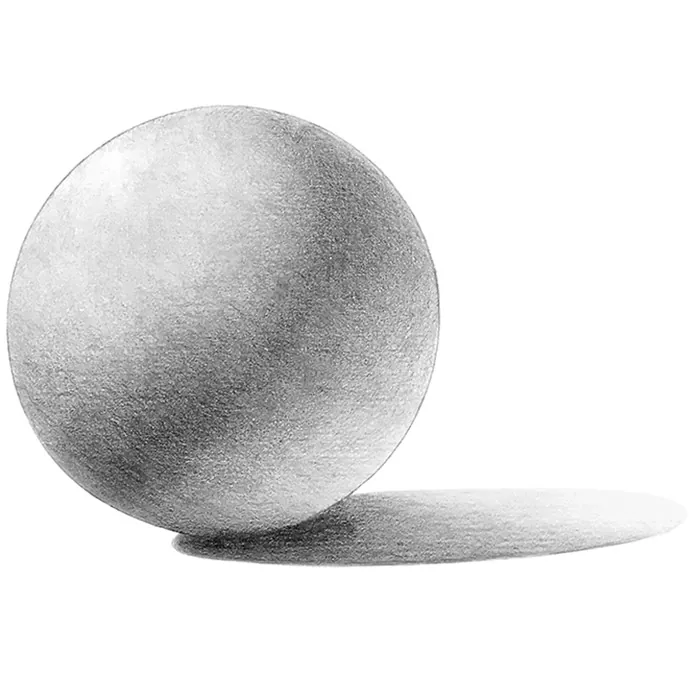
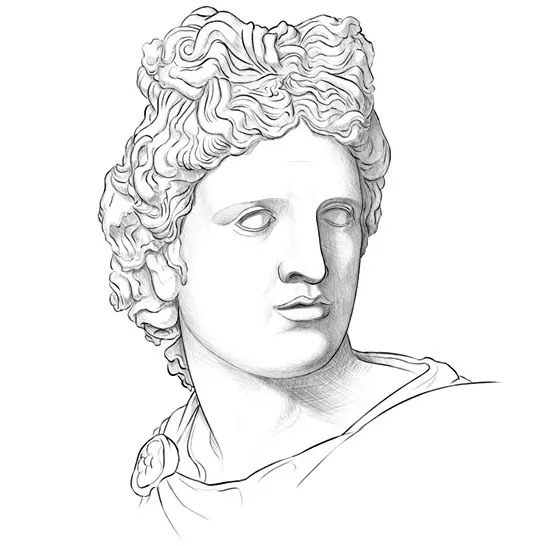
Hatching is used to create tone, shadow, and volume in a drawing. If an artist masters hatching techniques, they can use them to give objects a convincing sense of volume and form.
There are two main ways to apply hatching.
The first hatching method looks like a kind of zigzag. With this method, the pencil does not leave the sheet of paper as the hand moves.
You can use it to create different textures, but it is not well suited for creating a perfectly even tone. Because the pencil does not leave the paper, thicker marks appear at the ends of the strokes, and these become even more noticeable when additional layers are added.
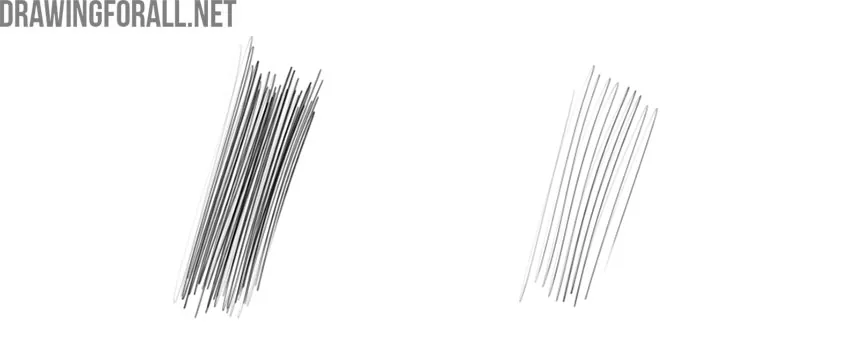
To create a more uniform tone on paper, you can use hatching with tapered ends. With this method, each stroke is drawn separately, and after completing the line, the pencil lifts from the paper before the next stroke begins. Both ends of each stroke should taper smoothly. These tapered strokes can overlap gently and create smooth tonal transitions.
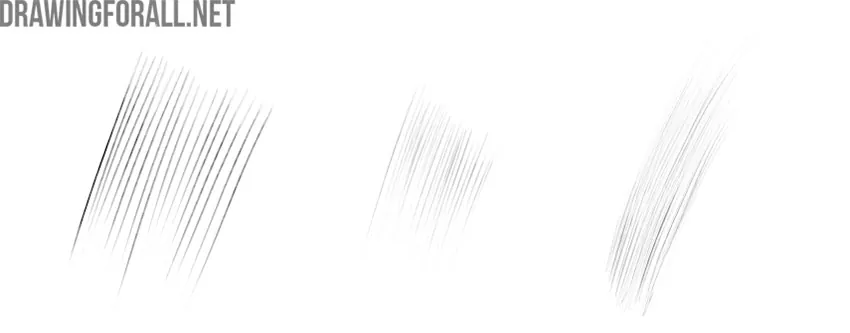
There are exercises you can use to practice this hatching technique. For example, draw a rectangle, divide it into 13 parts, and create a smooth transition from the darkest to the lightest tone. You can also try to shade an A4 sheet evenly so that the darkest tone is on the left and the lightest is on the right.
This hatching method, in turn, can be divided into two main types.
The first type is parallel hatching. With this method, all strokes move in the same general direction. These strokes can follow the form of the object or remain straight across the entire shaded area.
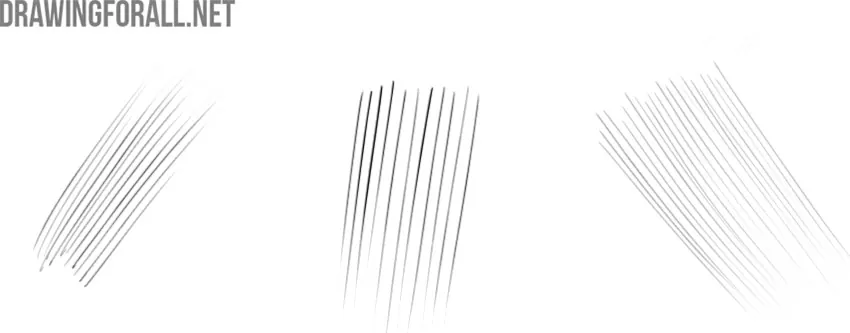
The second type is crosshatching. To create this type of hatching, first apply one layer of strokes, then draw a second layer across it at an angle. To make the tone darker, add another layer while slightly changing the direction of the strokes.
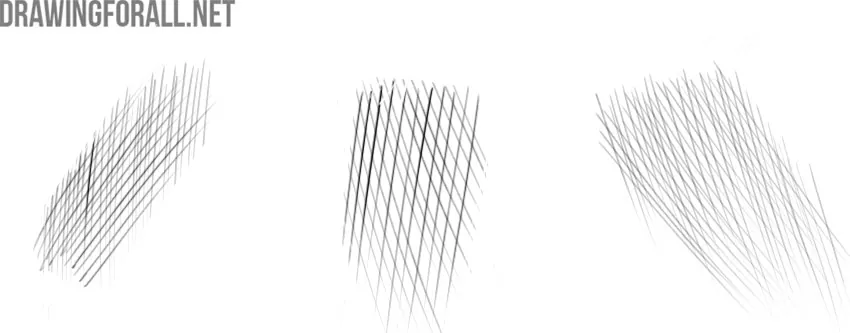
We do not recommend using too many hatching layers in one area. If you overdo the number of layers, the drawing can begin to look muddy and untidy.
To convey the form of an object correctly, the direction of the hatching should follow its form. For example, on a rounded object, curved strokes can help describe the curvature of the surface.

When drawing flat surfaces, straight hatching often works well. Vertical surfaces can be shaded with vertical strokes and horizontal surfaces with horizontal strokes when this helps describe their direction. The length and spacing of the strokes can also change depending on the size and character of the surface.
Hatching is also important when creating space and volume in a drawing. In other words, it should work together with linear perspective and aerial perspective.
For example, hatching in the foreground can be stronger and more contrasted than in the background. As we already explained in the article about drawing lines, darker and more defined lines tend to appear closer than lighter and softer ones. The same principle can be applied to groups of lines used for hatching.
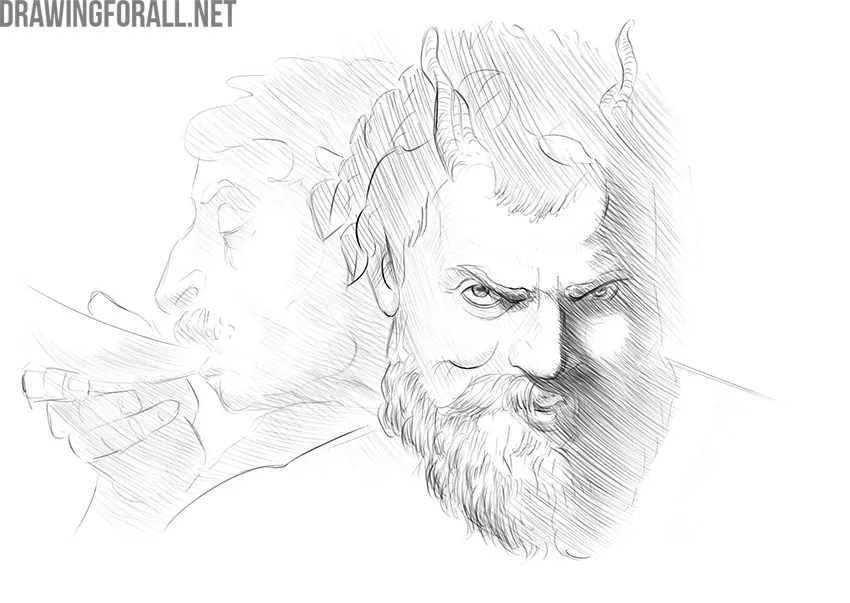
Closer objects can be hatched more carefully according to their form. As objects move farther away, the strokes can become simpler and less dependent on small surface changes. Combining more defined hatching in the foreground with simpler hatching in the distance can help create a sense of depth and volume in your artwork.

There is also a difference between hatching in light and shadow. Shadows usually have a more generalized and unified appearance. In shadow, forms and details are often less distinct than in the light, and your hatching can reflect this. Use broader, more unified strokes in shadow areas and avoid breaking them into unnecessary small details.
In other words, you can use wider and longer strokes to connect neighboring shadow areas into larger tonal masses. Illuminated areas can be hatched more closely according to their form, where appropriate. This contrast between light and shadow can help make the drawing appear more three-dimensional.
It is important to be able to create different types of hatching and choose the appropriate technique for each part of a drawing. Learning to control the direction, density, length, and layering of your strokes will give you much greater control over tone, form, and volume.