

How to Draw a Plum
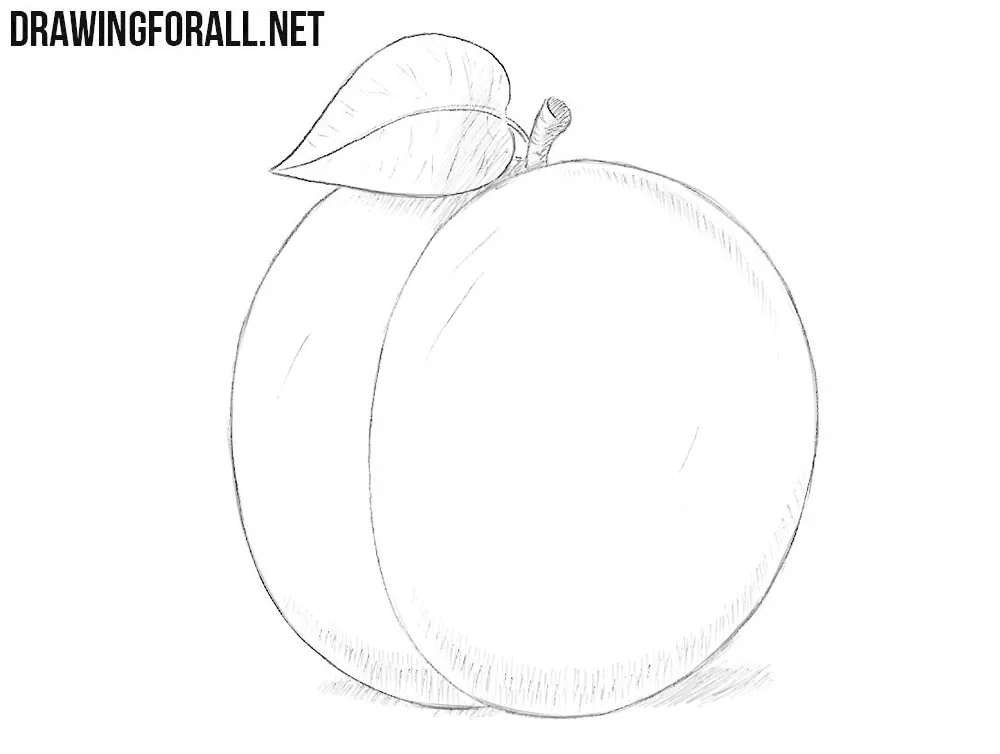
Many fruits look easy to distinguish in real life because of their color, but in a pencil drawing their differences often come down almost entirely to form. In this step-by-step tutorial, we will show you how to draw a plum, correctly convey this characteristic division of the form, and add shadows that emphasize its volume.
The main thing when conveying the form is, first, to keep in mind that a plum is a three-dimensional spherical form and that the dividing line creates two convex parts.
In other words, this line should not simply lie across the spherical form as a straight decorative stripe, but should divide the fruit into two separate volumes.
How to draw a plum step by step
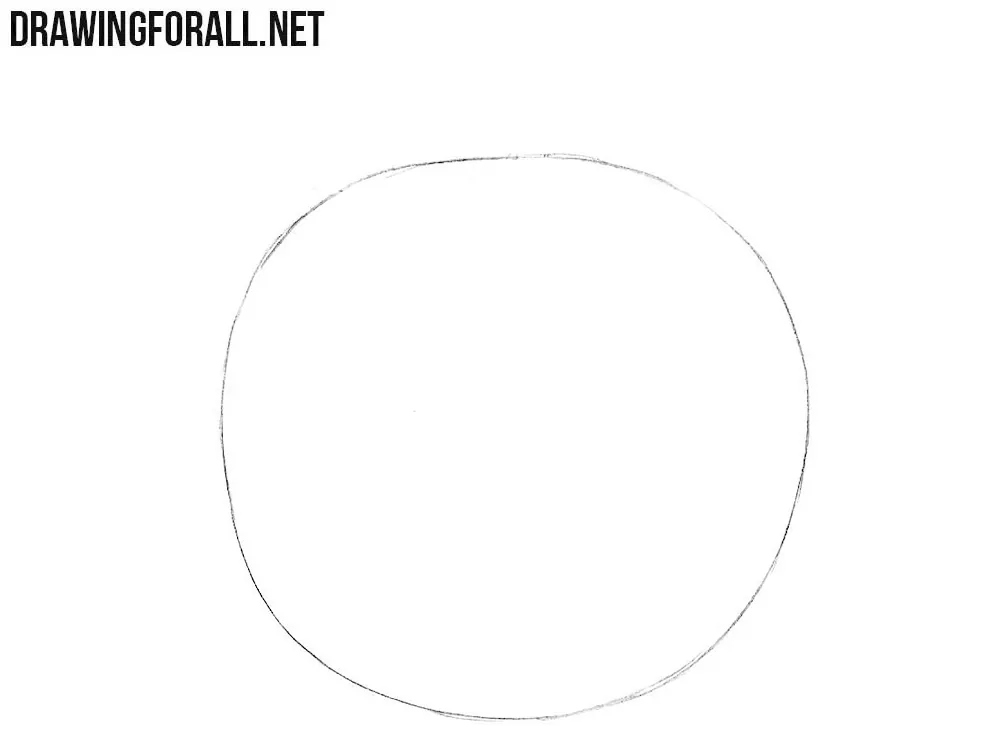
Step 1: Sketch the plum shape
Like almost all of our fruit drawing tutorials, this plum tutorial begins with a simple circle outlined with very light lines. Think of this circle as the outline of a spherical fruit form rather than a flat shape. This principle of artistic vision will later help you depict the fruit as a three-dimensional form.
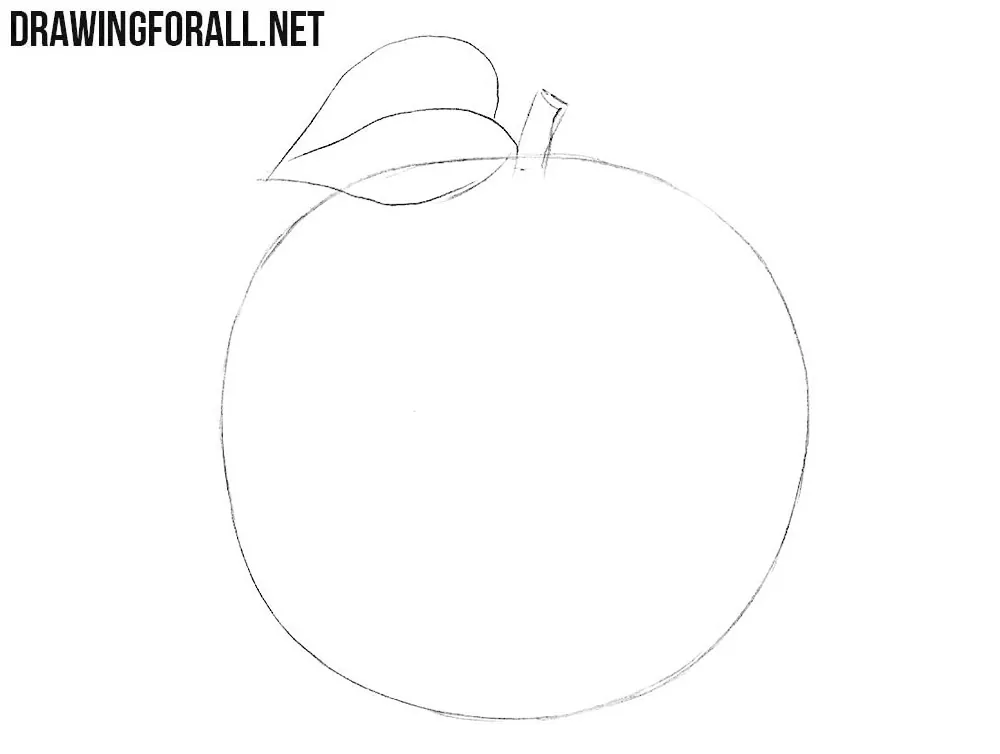
Step 2: Add the stem and leaf
Indicate the fruit stem at the top as a cylindrical or rectangular form, depending on the viewing angle. Next, sketch the leaf beside the stem and indicate its central vein. Continue using very light lines that are easy to correct.
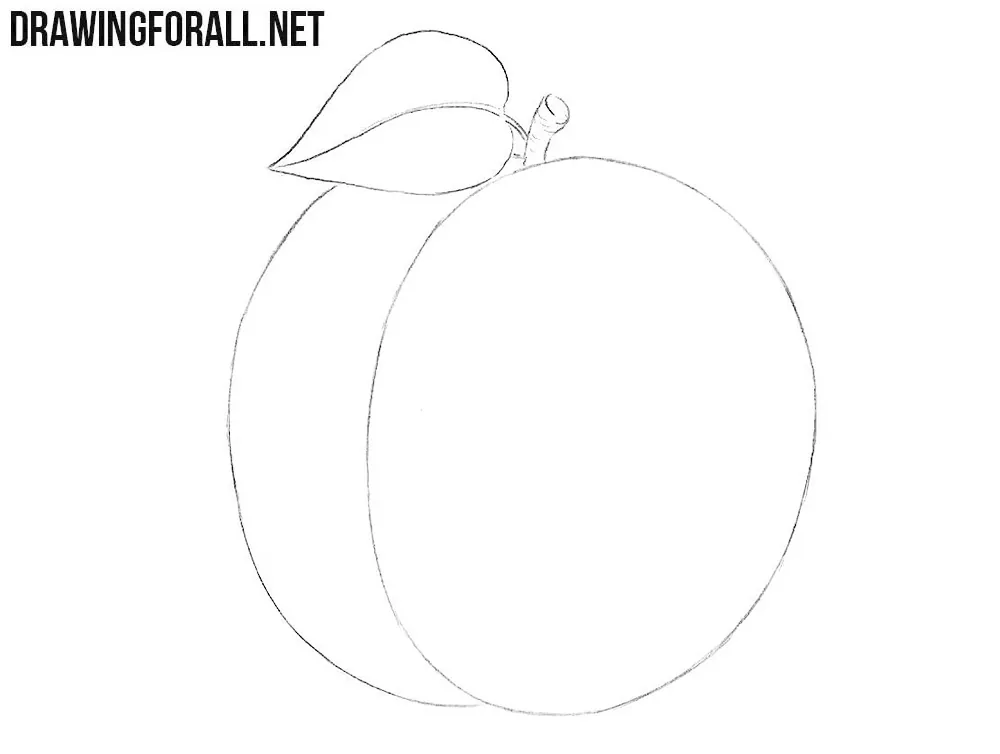
Step 3: Refine the plum groove and leaf
Now draw a long curved surface groove that runs from the top toward the bottom and visually divides the plum into two parts. Start this line beside the stem and carry it down to the lower contour, leaving the section on the left noticeably narrower than the main part of the fruit. Then trace the plum, stem, and leaf with darker lines and erase the unnecessary guidelines.
Step 4: Shade the plum and leaf
Draw the shadows with the grooves of the plum in mind. In other words, do not shade the entire form with one straight, uniform layer. The shadow should lie separately on both parts of the plum to emphasize the form. Also shade the stem according to its cylindrical form, as well as the leaf. Beneath the fruit, draw a cast shadow to give the composition more volume.
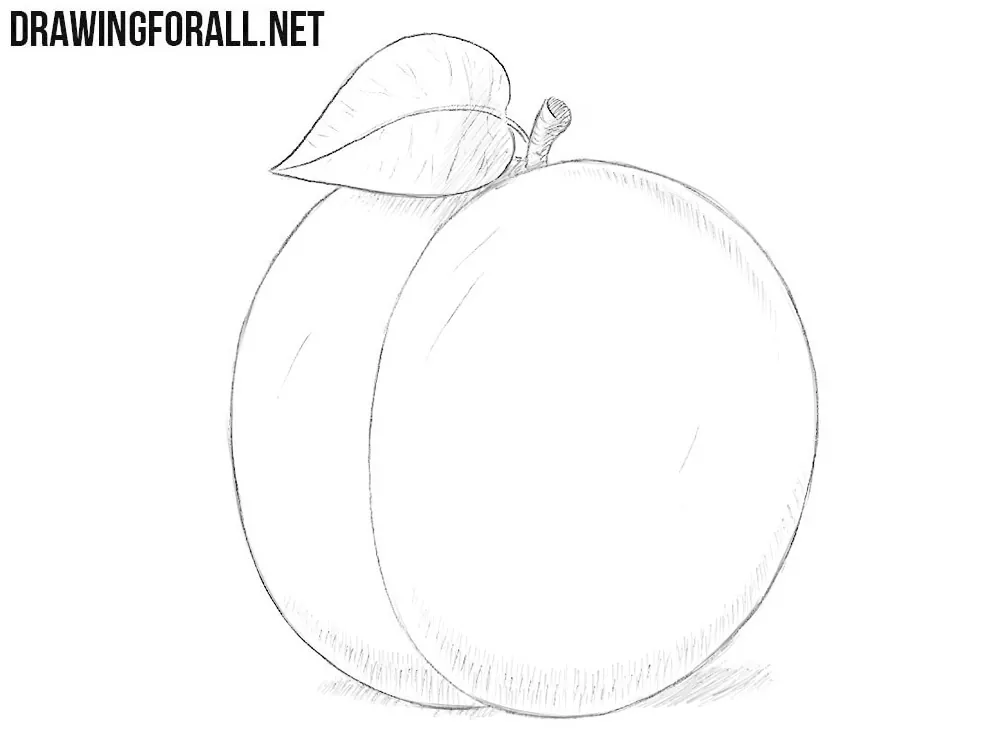
A plum has a very characteristic shape that can also be found in many other similar fruits. In a black-and-white pencil drawing, these fruits can look especially similar to one another.
A characteristic feature they share is the round shape of the fruit with a distinct visual division into two halves. The differences in this case are often very subtle visually.
To understand these differences, it is important to study real fruits of these types and compare them with one another. It is even more important to draw them separately and together, trying to understand the nuances.
Try drawing a peach using our step-by-step tutorial, or draw an apricot. As you draw, study the appearance of these fruits, their nuances, and their details. Try comparing them with one another in a single fruit composition.


