How to Draw the Blob from X-Men
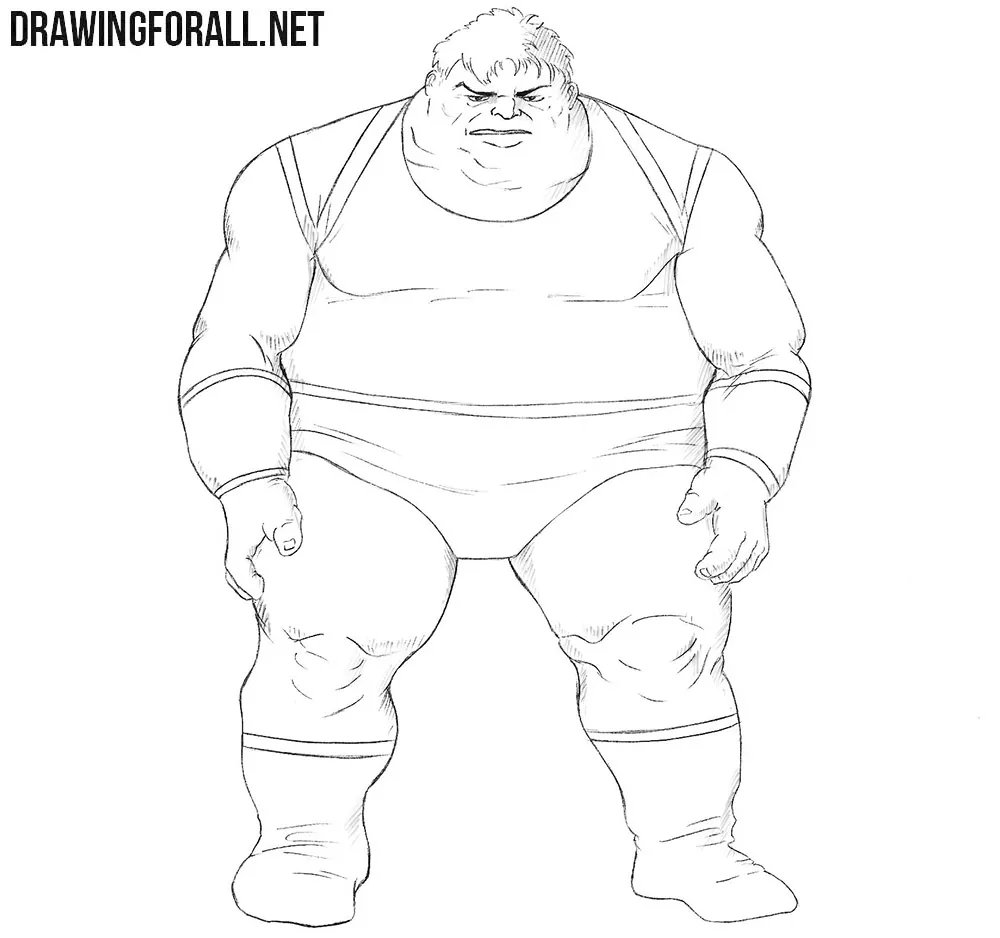
Comics are great because they feature characters with completely different body types that you can draw and practice with. In this step-by-step tutorial, we will show you how to draw Blob from the X-Men universe of Marvel.
This character is known for his extremely heavy build, and his superpowers are largely based on his weight. Therefore, our task in this tutorial will be not only to depict the character but also to convey his weight on paper.
One of our favorite comic book series is X-Men, and we have already created many tutorials about its characters, including one on how to draw Professor X.
How to draw the Blob step by step
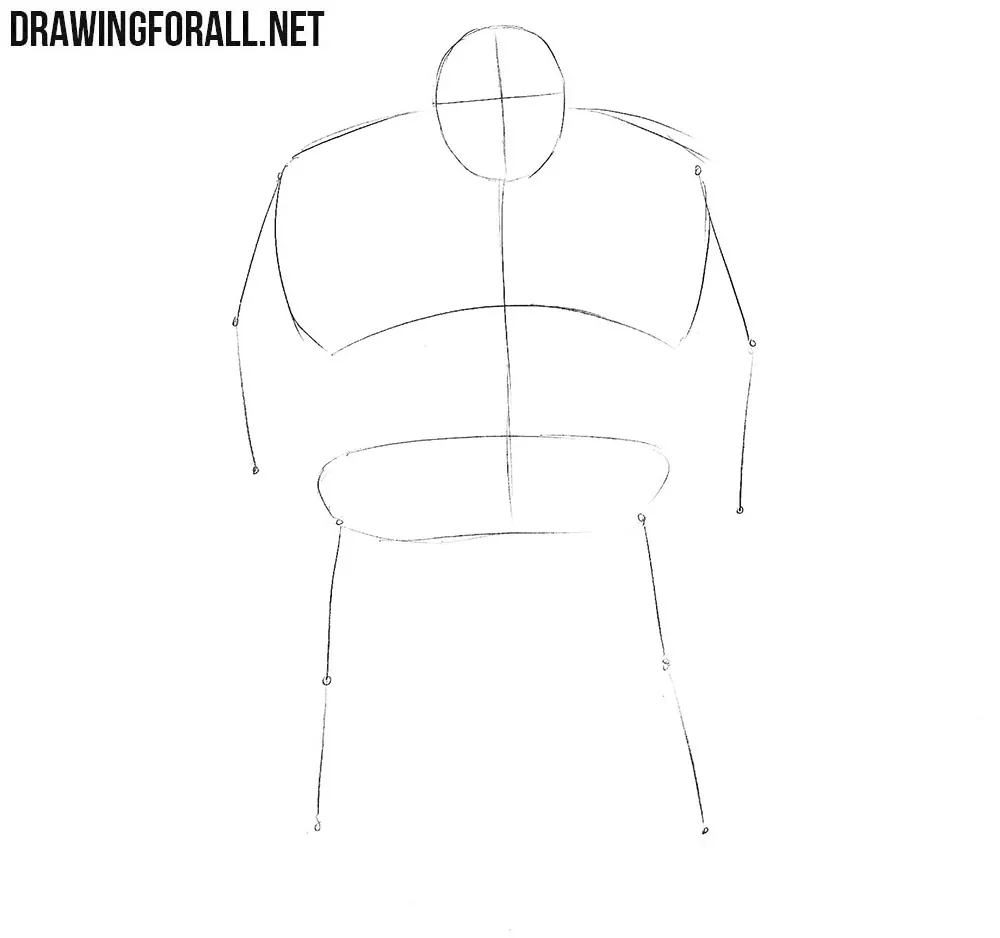
Step 1: Sketch the Blob’s wide frame
First, sketch out the Blob’s basic skeleton. His figure is very massive and resembles the one we depicted in the early stages of drawing the Hulk. Outline a round head and a line for the spine, then mark a wide chest and pelvis along it. Place the head low between the shoulders, with the chest several times wider than the head. Sketch out the arms and legs with simple lines.
Step 2: Add bulk to the figure
Now add volume – a lot of volume. First, sketch out the very large torso. Draw the belly as a full, convex form that occupies the space between the chest and pelvis. There is no need to draw a separate neck shape, since it is hidden. Next, outline the Blob’s thick arms and legs. Use large ovals for the shoulders and thick cylindrical forms for the limbs. Don’t forget to sketch intersecting guidelines on the face.
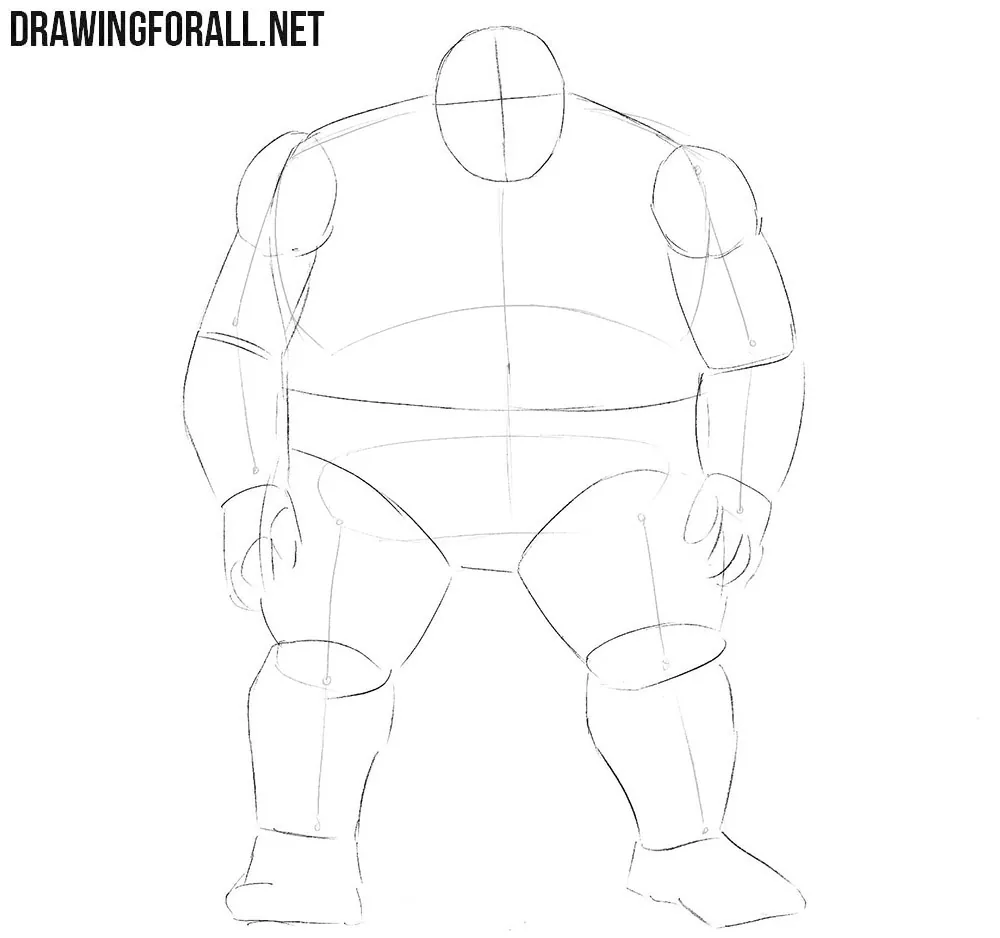
Step 3: Sketch the Blob’s costume details
Draw the basic details with very light lines. First, outline the facial features and hair. Place the small eyes beneath the fringe and sketch the mouth as a nearly horizontal line. Next, mark the broad area beneath the chin and the costume lines. Draw a low curve around the chin and cheeks. Mark the edges of the forearm coverings and the boot tops with lines that curve across the limbs. Use light pencil strokes throughout these early stages so you can erase them later.
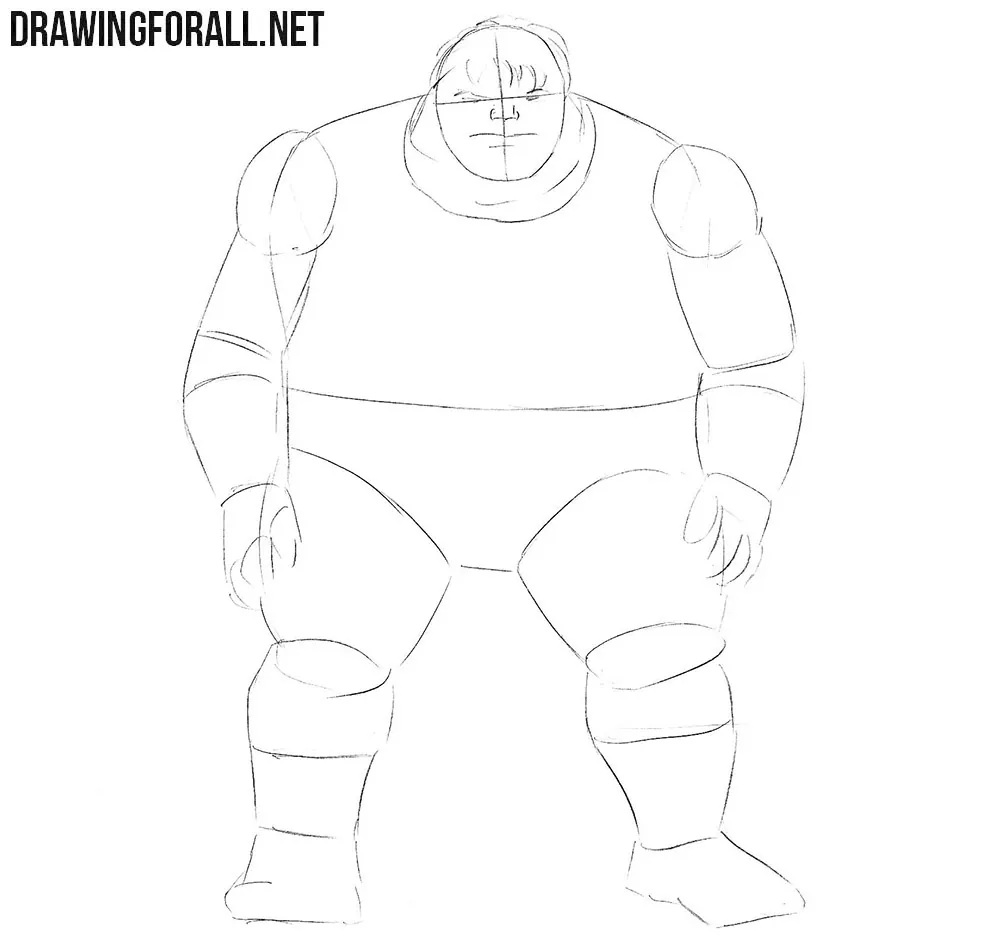
Step 4: Refine the Blob’s facial expression
Use clear, dark lines for the final details. Carefully trace the eyes, nose, and wide mouth. Draw the eyes narrow and the nose short, with distinct nostrils. Next, draw furrowed brows and wrinkles. Add short creases beside the nose and beneath the eyes, then outline the full lower lip. Finish the head by drawing the hair and the contours beneath the chin.
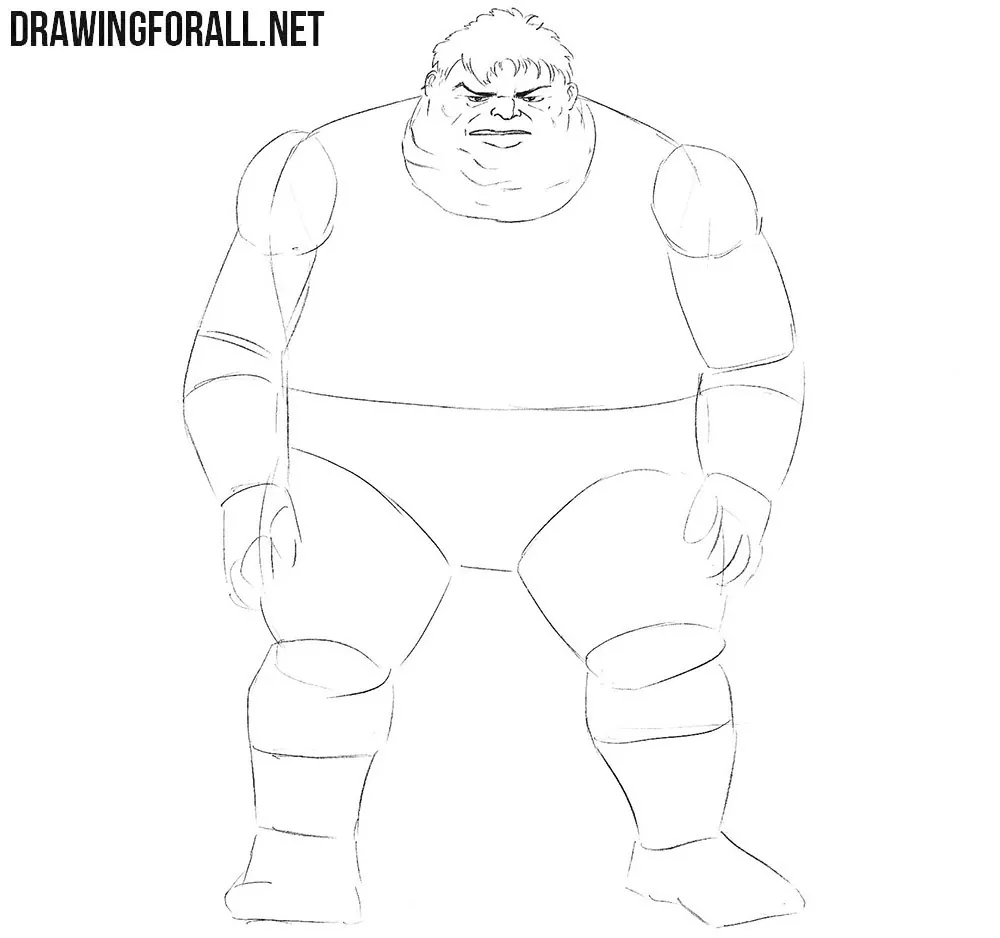
Step 5: Define the chest and belly
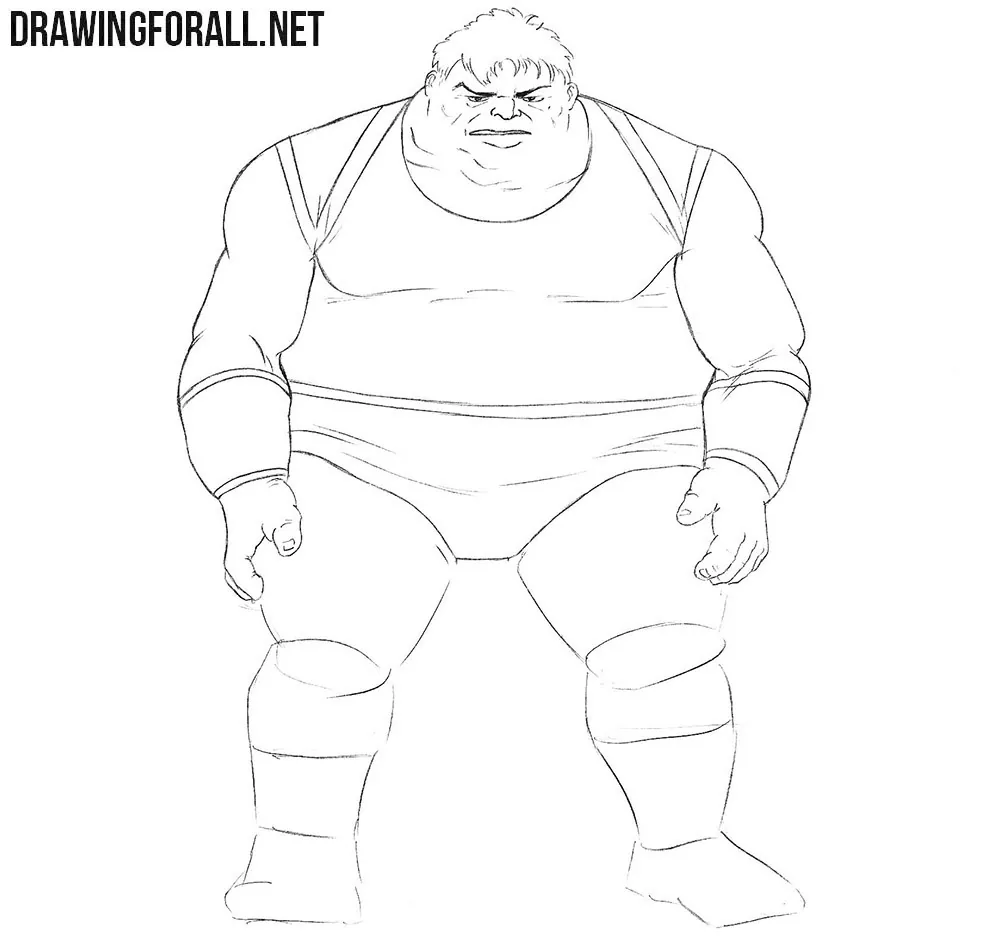
Trace the broad shoulders. Then outline the wide torso with its large pectoral muscles and belly. Draw the costume straps over the shoulders with paired lines that meet near the armpits. Add the fabric folds and costume lines on the torso. Trace the curved band across the belly and the high leg openings below it.
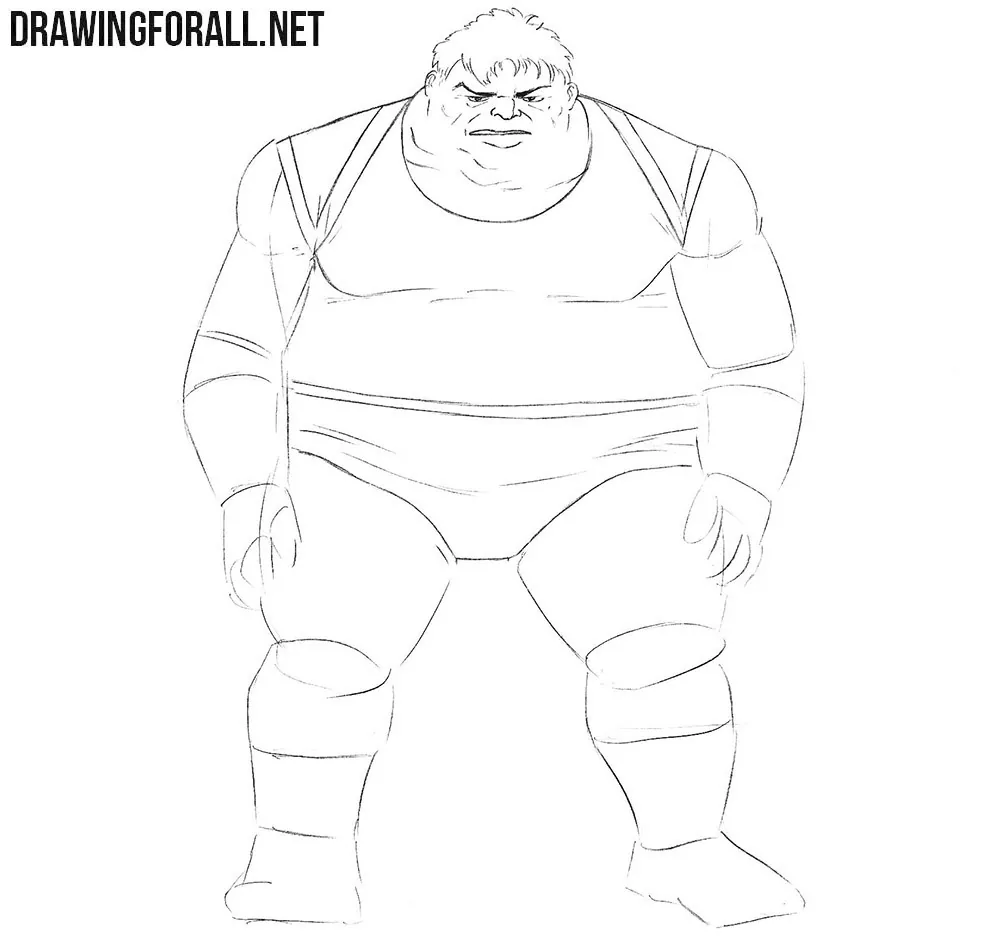
Step 6: Draw the arms and fingers
Continue the trapezius contours into the deltoids. Next, draw the outlines of the thick arms and fingers. Add small creases inside the elbows and trace the forearms with fuller outer contours. Draw both hands partly open. Erase the unnecessary guidelines from the Blob’s arms and draw the wristbands.
Step 7: Trace the legs and footwear
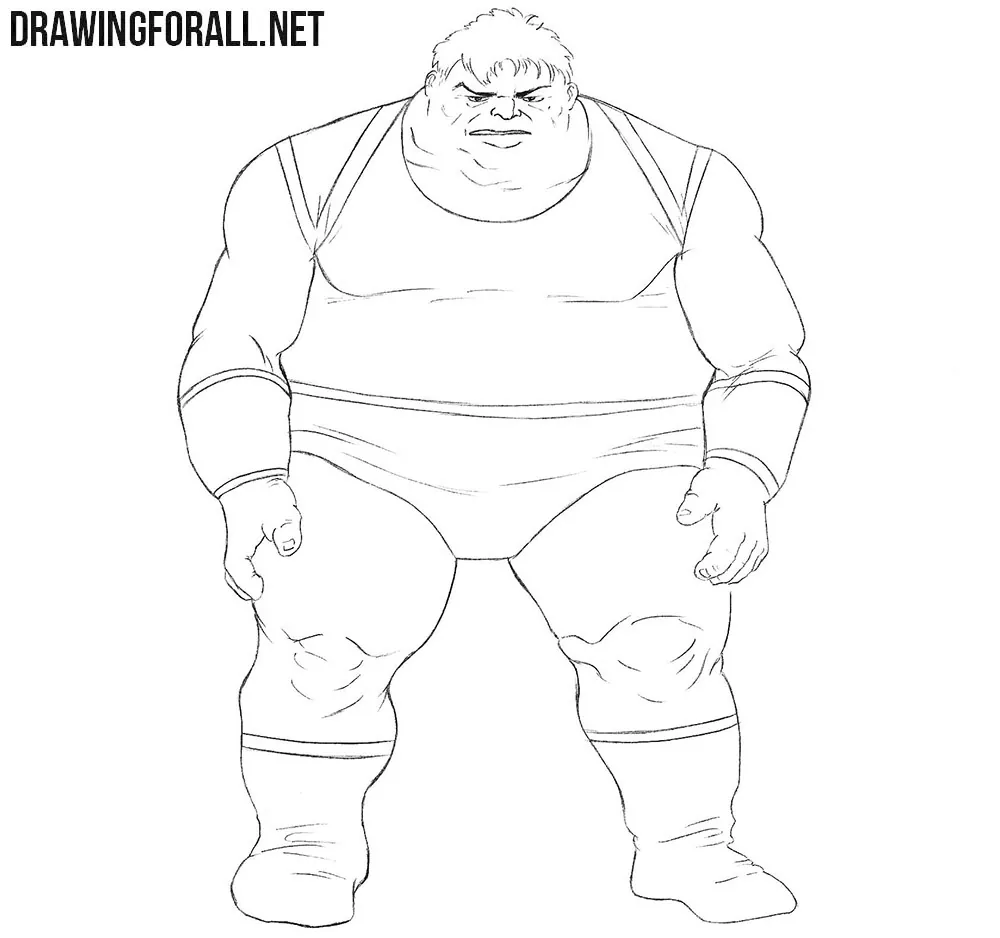
Trace the legs with dark, definite lines. The Blob’s legs should also be very thick. Outline the thighs with heavy curves extending from the costume’s leg openings. Draw the skin folds around the knees and the outlines of his footwear. Use several short, uneven arcs around each kneecap. Add narrow borders to the boot tops and a few fabric creases across the ankles. Draw the toes of the boots wide and flattened.
Step 8: Shade the Blob’s massive figure
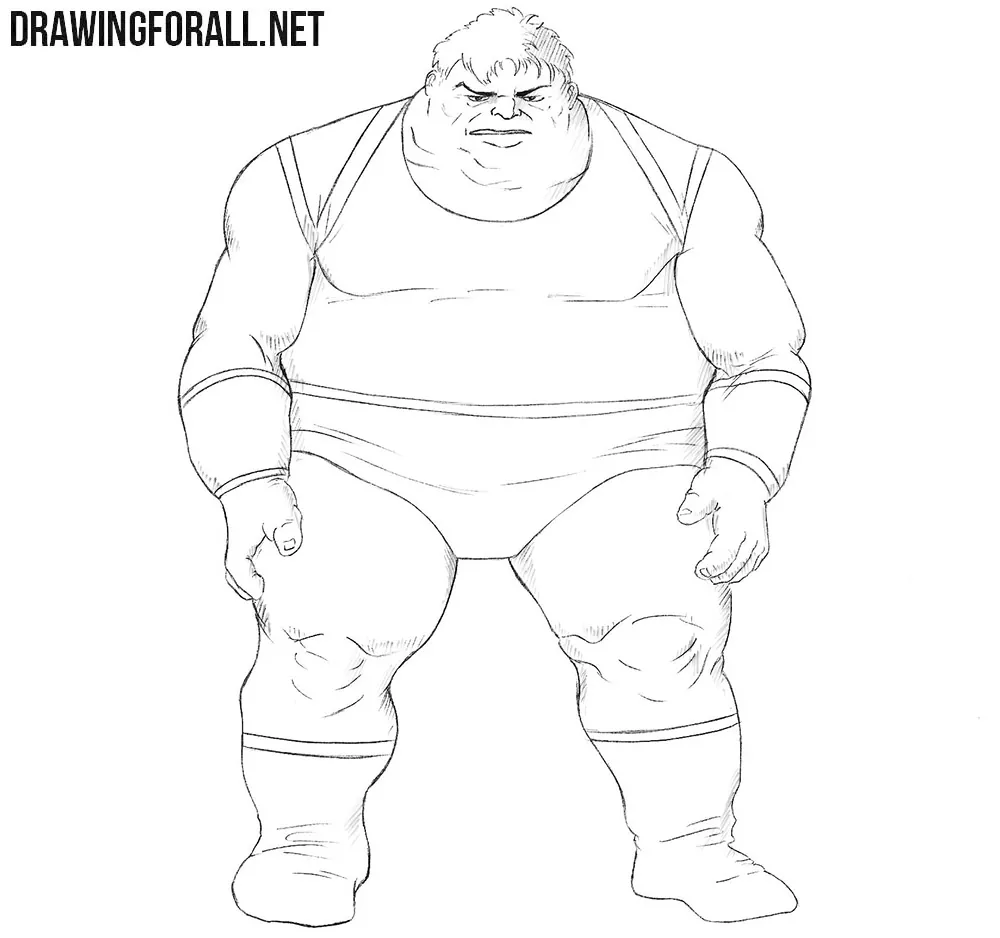
You can choose either lighter hatching for the shadows or a more contrasting approach with larger dark areas. Either way, first determine the light source and identify the areas where you will add the shadows. Then carefully shade these areas or fill them with a solid dark tone.
Regardless of which character you are drawing and what body proportions they have, the entire process follows the basic principles of drawing the human figure.
In other words, you draw step by step, constructing the drawing from basic forms and then adding volume, details, shadows, and so on.
Blob is a clear example of this. He has a very characteristic build, but when drawing him, you still need to follow all the basic techniques step by step.
The differences lie in the details. For example, when drawing Professor X or Magneto, you follow the same stages, but in the process you create a different build and add different elements and details.