

How to Draw Spike Spiegel
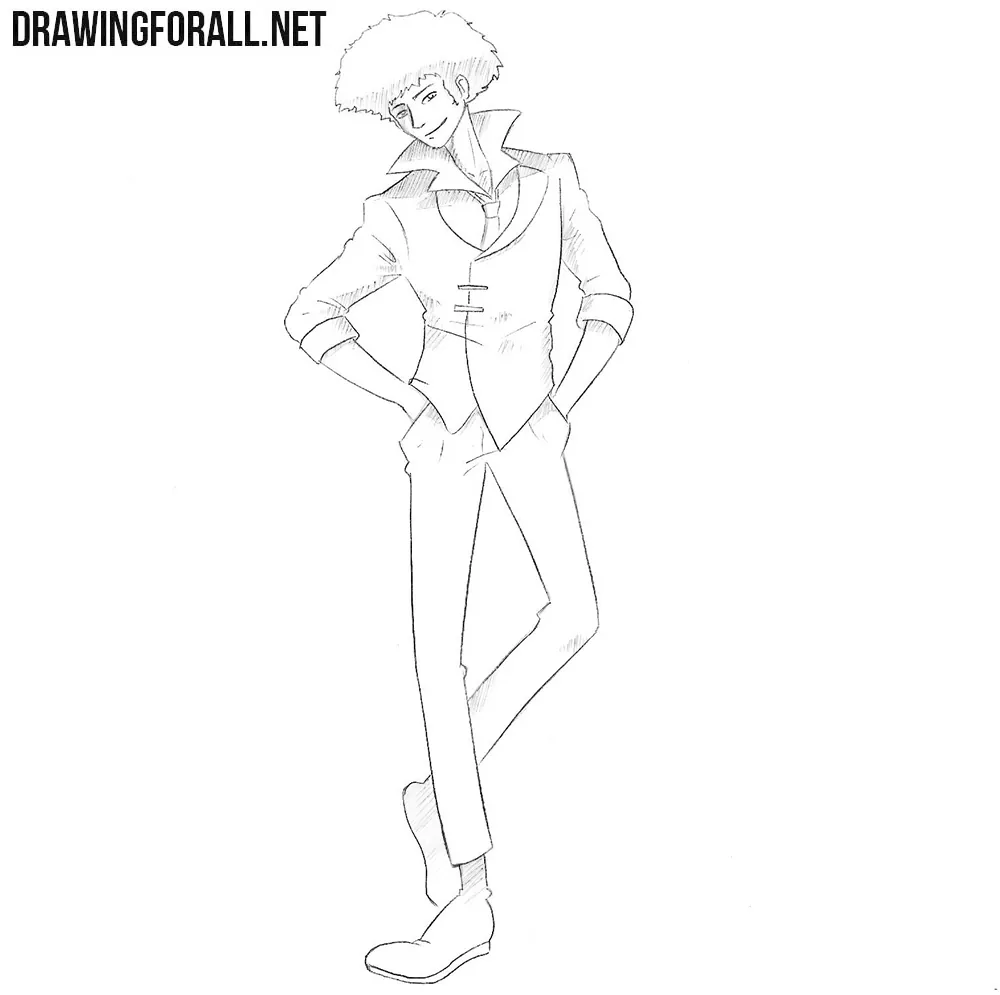
If you are on this page, you probably know that Spike Spiegel is the main character of the cult anime Cowboy Bebop. In this tutorial, we will show you how to draw Spike Spiegel and explain how to reproduce the features that make this character recognizable using relatively simple drawing techniques.
How to draw Spike Spiegel step by step
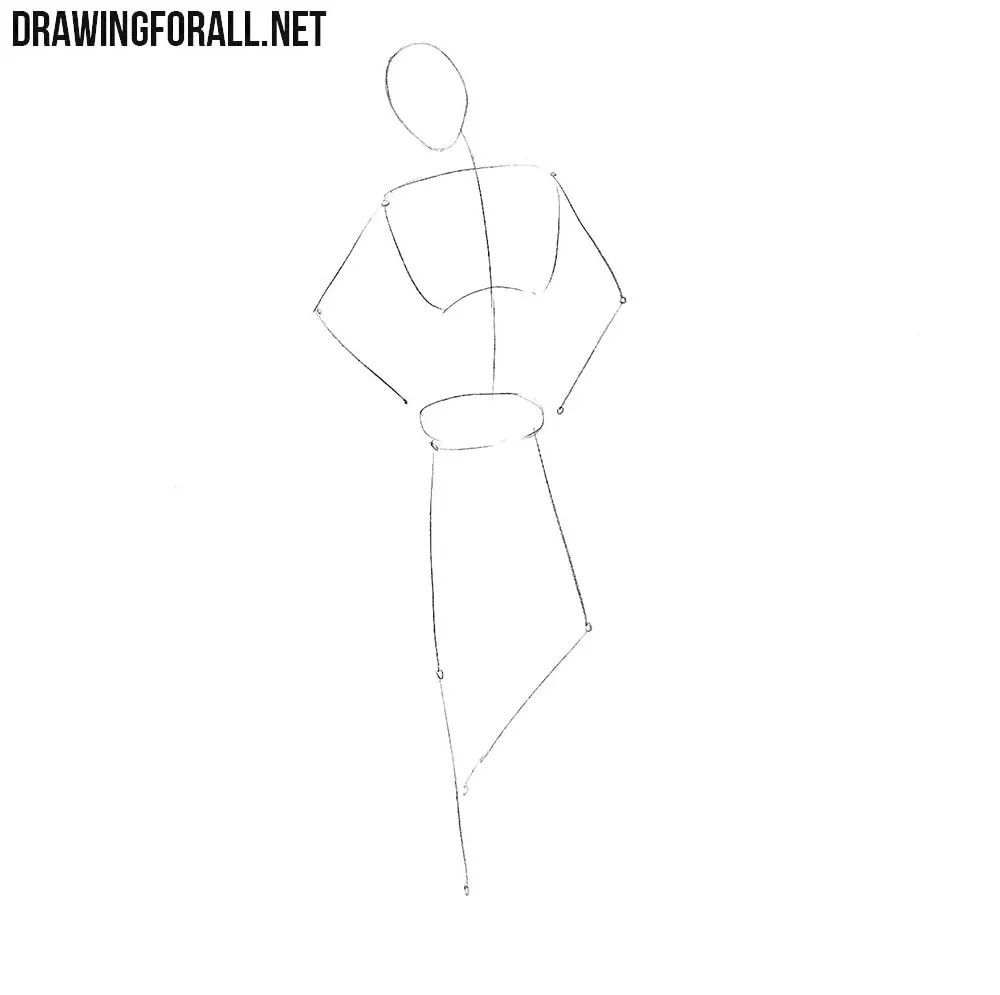
Step 1: Sketch Spike’s basic figure guidelines
We are drawing Spike Spiegel as an anime character, but the distinctive features of the anime style will become visible only after the first three steps. For now, sketch a basic stick figure of a tall, thin young man. Pay attention to Spike’s narrow chest and pelvis, noticeable neck, and long limbs. Tilt the head slightly to the side, bend both arms at the elbows, and place the hands near the hips. Draw one leg almost straight and bend the other sharply at the knee.
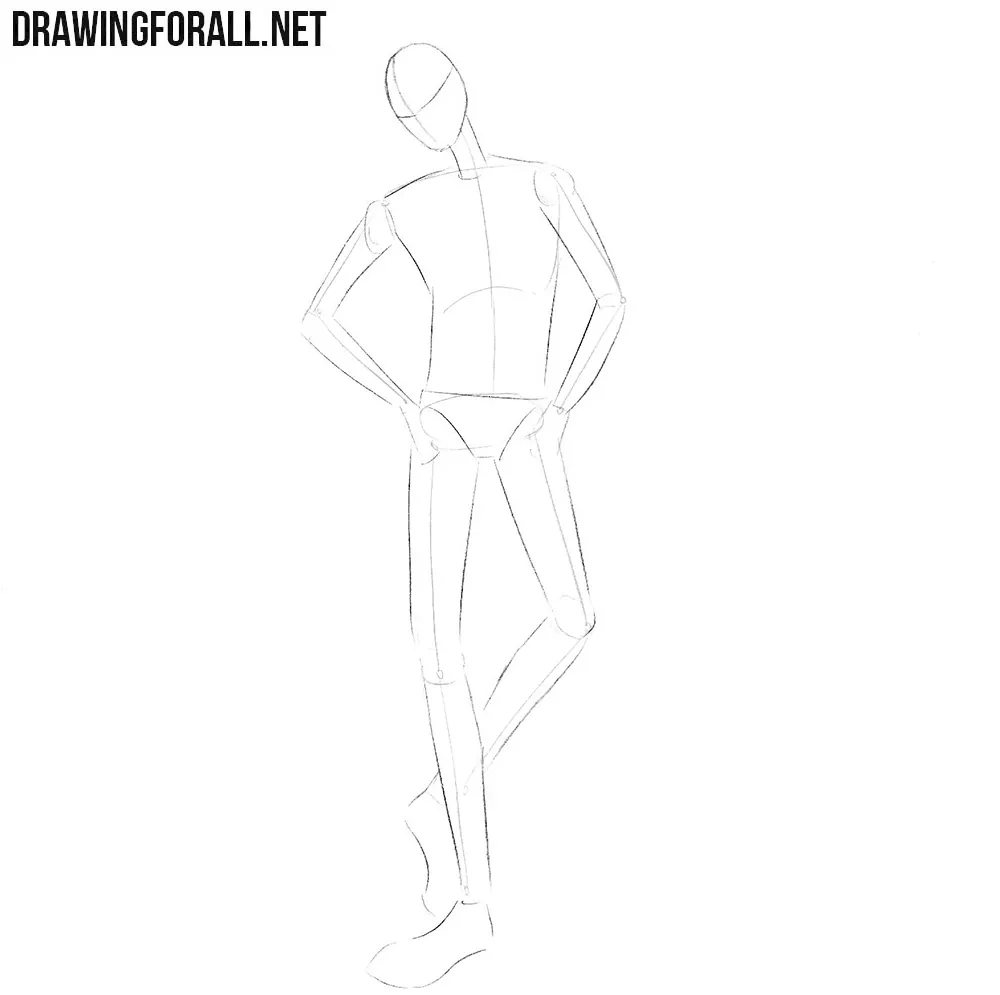
Step 2: Add volume to Spike
His thin build should become more visible. To achieve this, connect the pelvis and chest with two curved lines. Draw the neck as a long, thin cylinder. Also draw the arms and legs as cylinders. Make the upper arms and thighs slightly thicker and gradually narrow the forms toward the wrists and ankles. Sketch the guidelines on the head, to properly draw the anime face in the next steps.
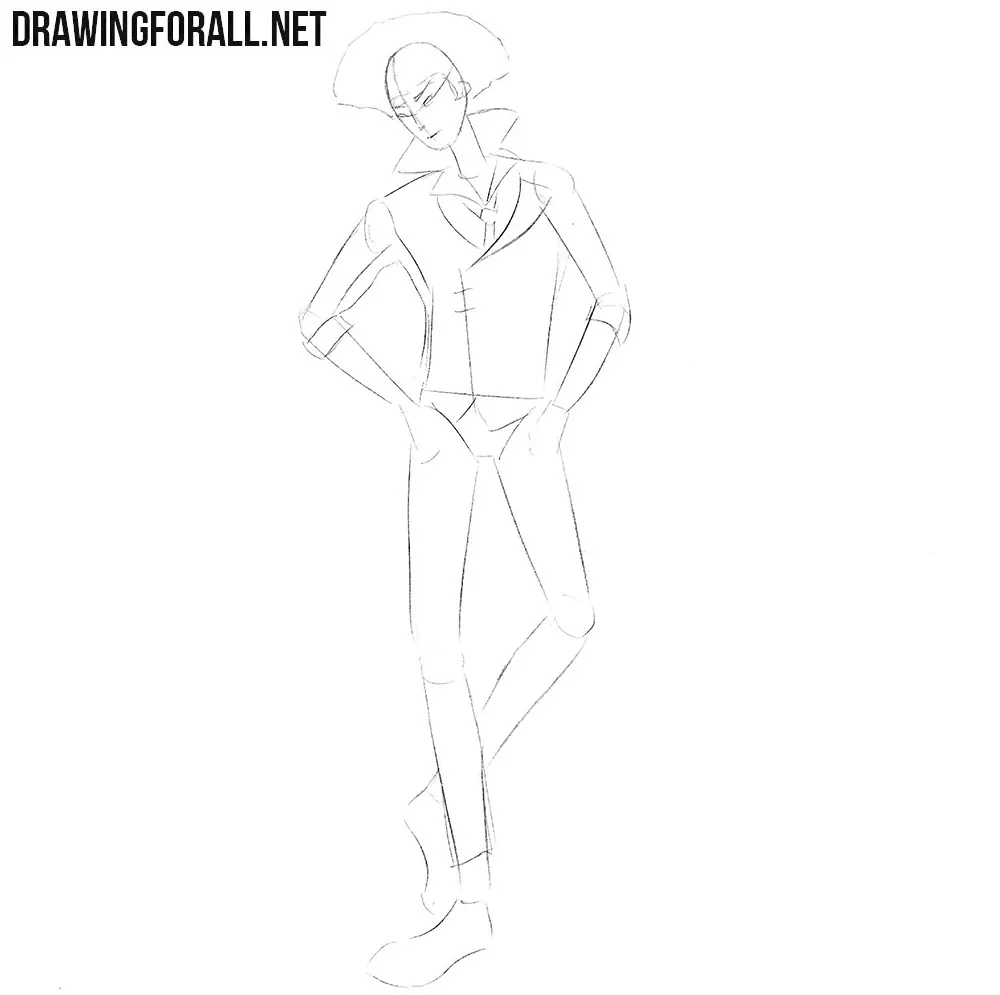
Step 3: Sketch Spike’s main details
This is a very simple but important step in which we add the basic details to the Spike Spiegel drawing. Start at the top and move downward. Using the intersecting lines from the previous step, sketch his anime eyes, nose, and mouth. After that, sketch Spike Spiegel’s tousled hair, ear, and face. With very light lines, sketch his clothes. Outline the open collar and sleeves. Sketch Spike’s jacket over the volume of the torso and indicate the position of the hands entering the pockets.
Step 4: Draw Spike’s face and hair
Now it becomes clear that we are drawing Spike in an anime style. Draw the anime nose, mouth, and ear in a very simplified manner. These features look like short lines with slight bends. Draw Spike Spiegel’s eyes more carefully. Pay attention to the position of the pupils. This detail helps convey his characteristic expression.
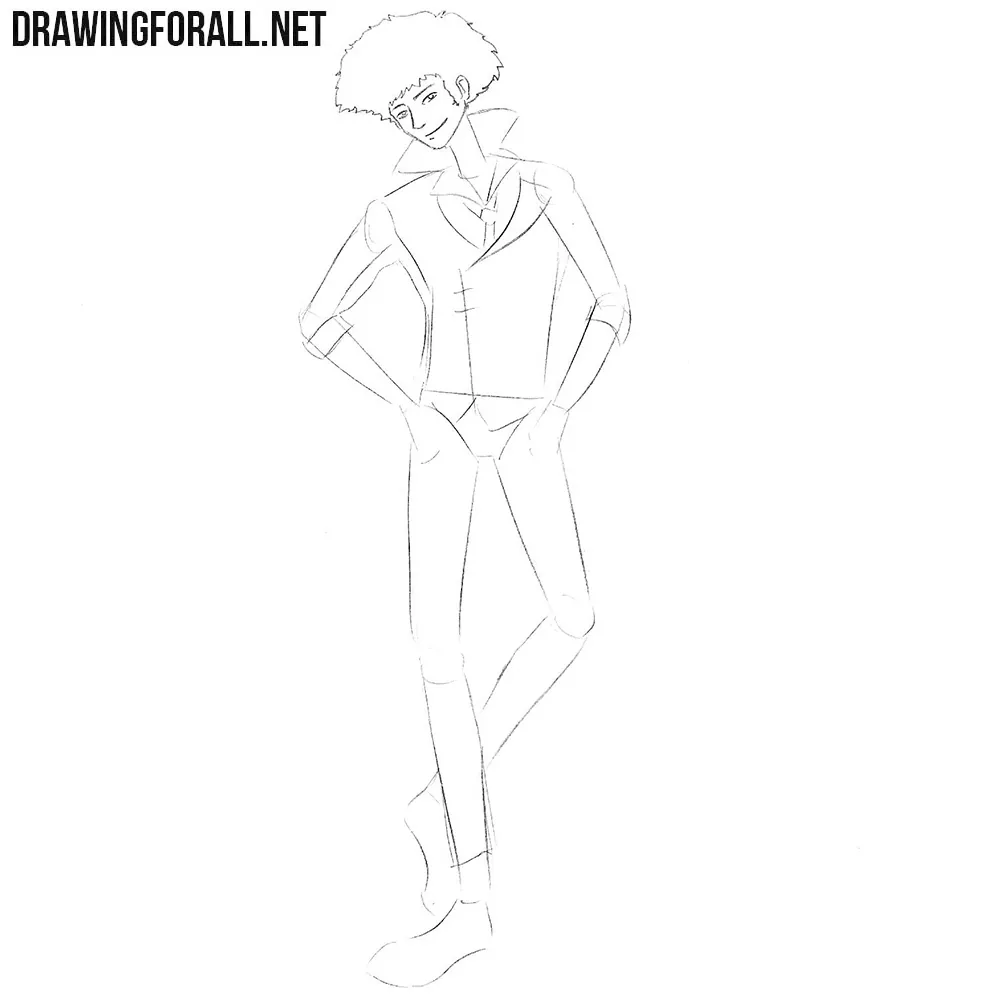
Step 5: Draw Spike’s clothing details
Draw the tie and jacket with its unusual rounded collar. Do not forget the small details, such as the horizontal fasteners, fabric folds, and muscle lines on the neck. Draw the two sides of Spike’s jacket around the narrow torso and let the lower edges separate toward the hips. The folds near the waist should follow the slight bend of the body rather than run as straight decorative lines. Our sketch is gradually starting to look more like Spike Spiegel.
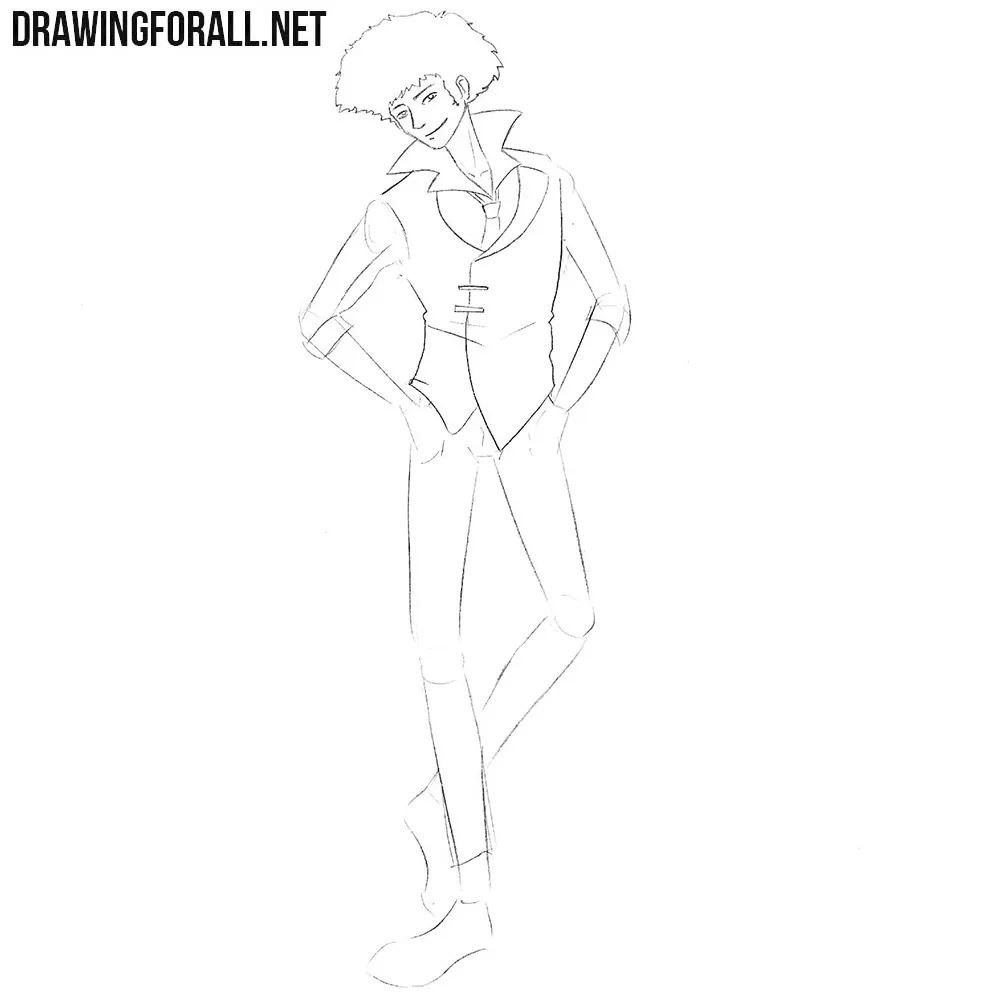
Step 6: Refine the jacket sleeves
It this case, the hands are in the pockets, so just draw the contours of the jacket sleeves and the folds in the fabric. Concentrate the folds around the elbows and rolled cuffs, where the fabric changes direction or gathers. The sleeves should still follow the cylindrical volume of the arms beneath them.
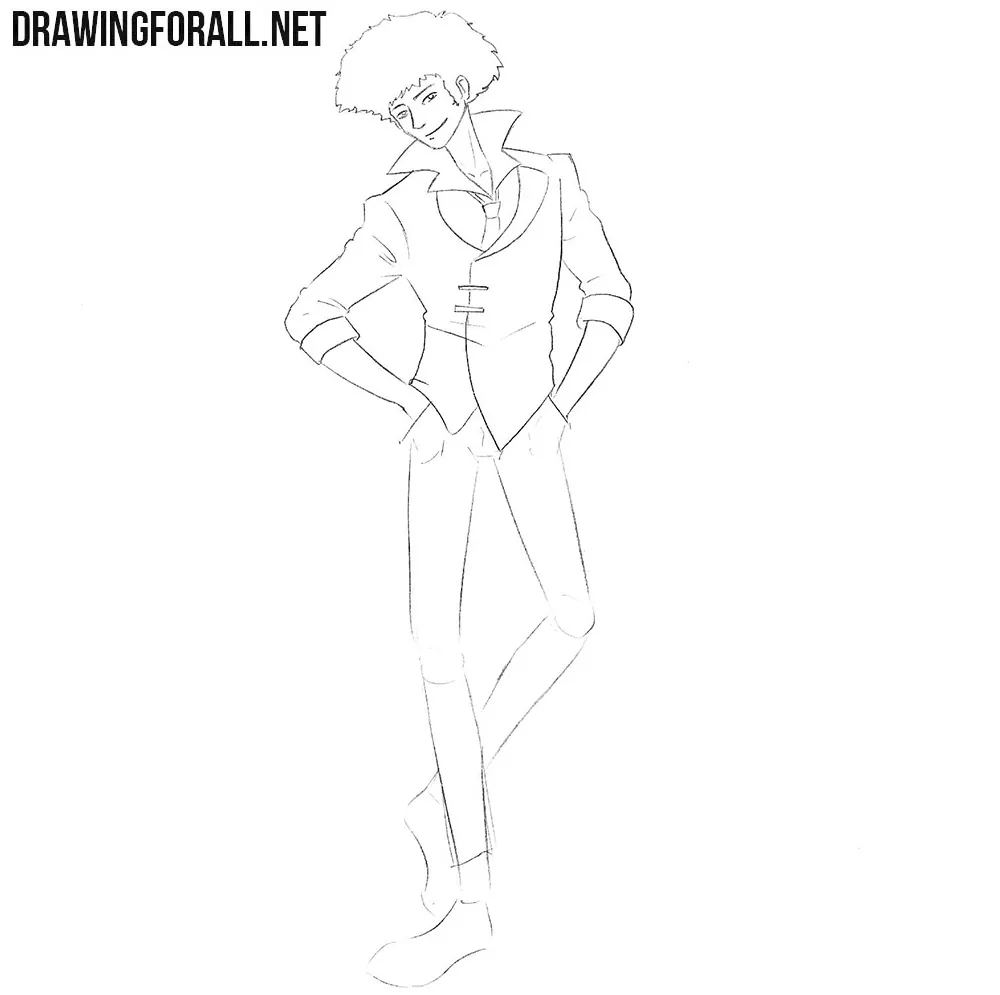
Step 7: Draw the pants and shoes
Outline the pants with confident lines and add the necessary fabric folds. Follow the long forms of his legs and show the bend of the raised leg clearly at the knee. Draw the lower edge of each pant leg around the ankle. Draw Spike’s shoes and their details. After that, erase all the remaining guidelines.
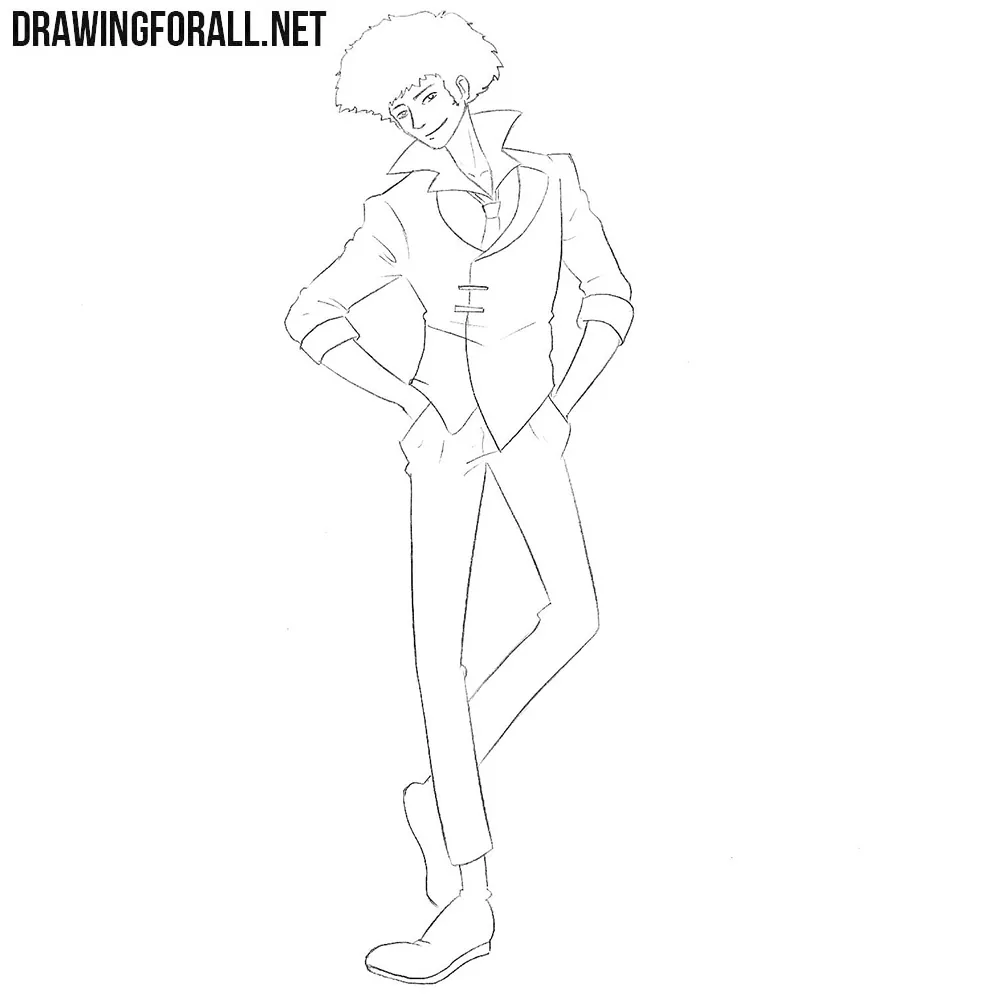
Step 8: Add shadows to Spike
As in our other anime drawing tutorials, first determine the light source. Then add hatching of different intensity to the least illuminated areas. In our case, these are the areas of Spike’s clothing under the collar, on the inner parts of the arms, and around the abdomen. Add smaller shadows beneath his hair and around the bent knee. Let the hatching follow the direction of the body and clothing.
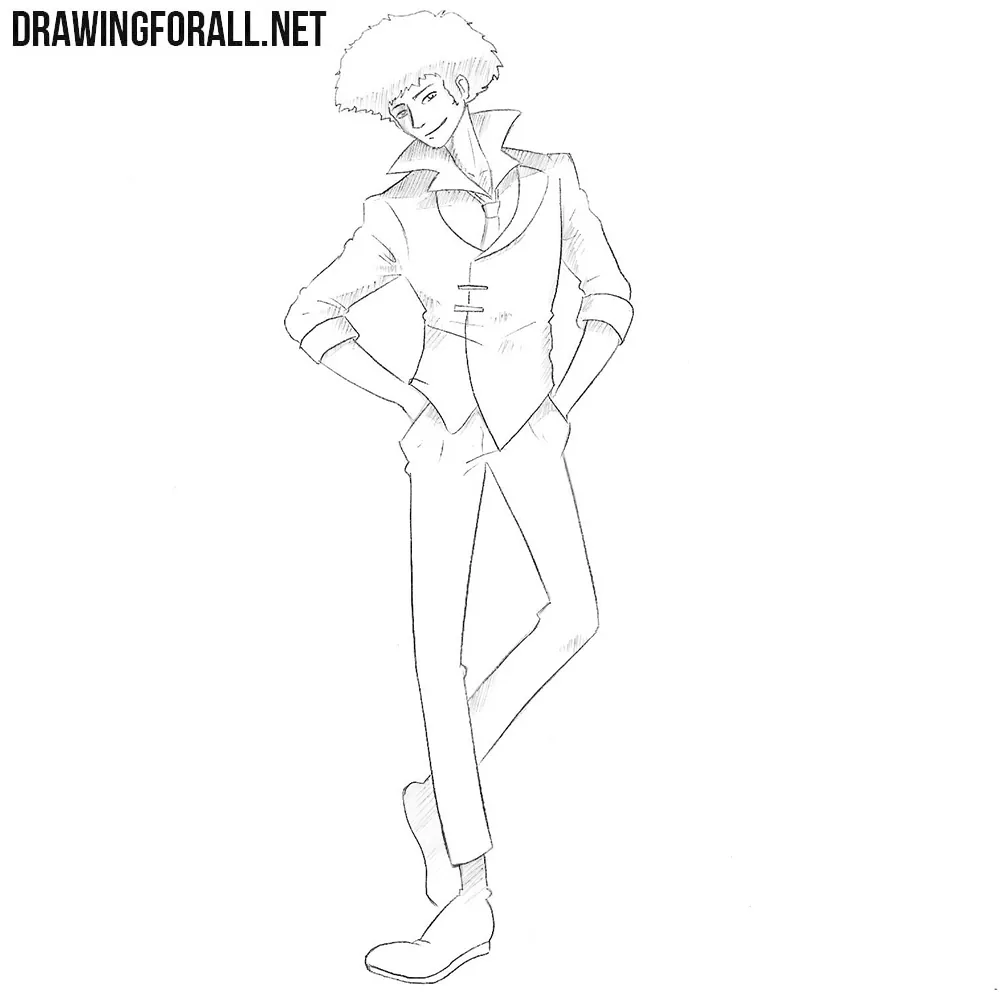
Spike Spiegel is a good example of how much the overall figure matters when drawing a popular anime character.
The same attention to silhouette and pose is useful when drawing an anime character of your own. The head can then be developed separately; our anime head drawing tutorial explains the basic construction and placement of the features in more detail.



I really enjoy drawing your sketches.. Thank you so much!!
Thanks for the kind words. We are pleased that our lessons are not only useful, but also interesting.