

How to Draw a Mirror
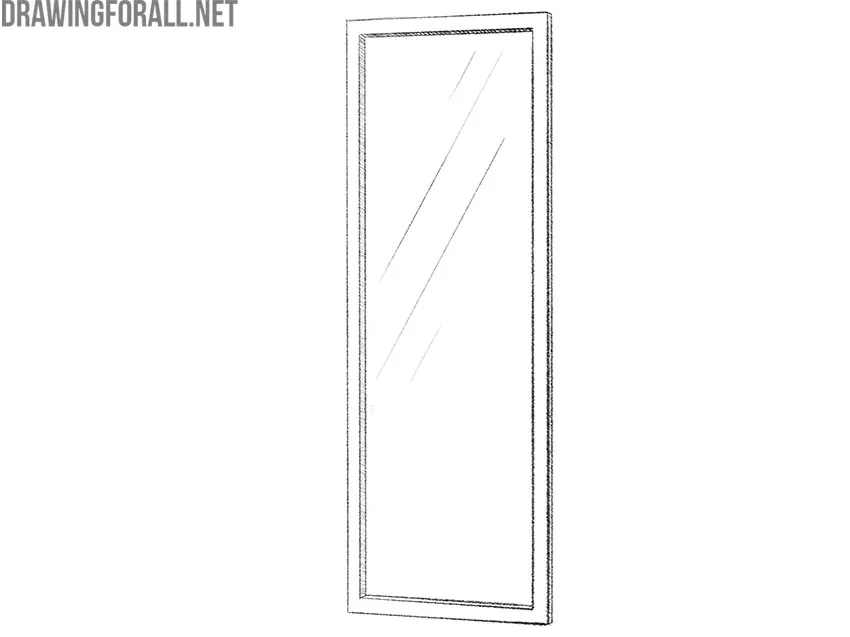
The most difficult part of learning how to draw a mirror is drawing straight, crisp lines and precisely following the rules of perspective.
In this guide, we will show you the best way to do this and how to create a realistic, three-dimensional drawing of a mirror.
A mirror is a rather unusual object to draw. There are many different shapes you can choose from. It can be a round or oval mirror. In our case, we decided to draw a simple rectangular mirror in a thin wooden frame.
So let’s begin this tutorial on how to draw a mirror. It won’t be too easy, especially if you’re not confident drawing straight lines. However, by completing this tutorial, you will definitely improve your skills.
How to draw a mirror step by step
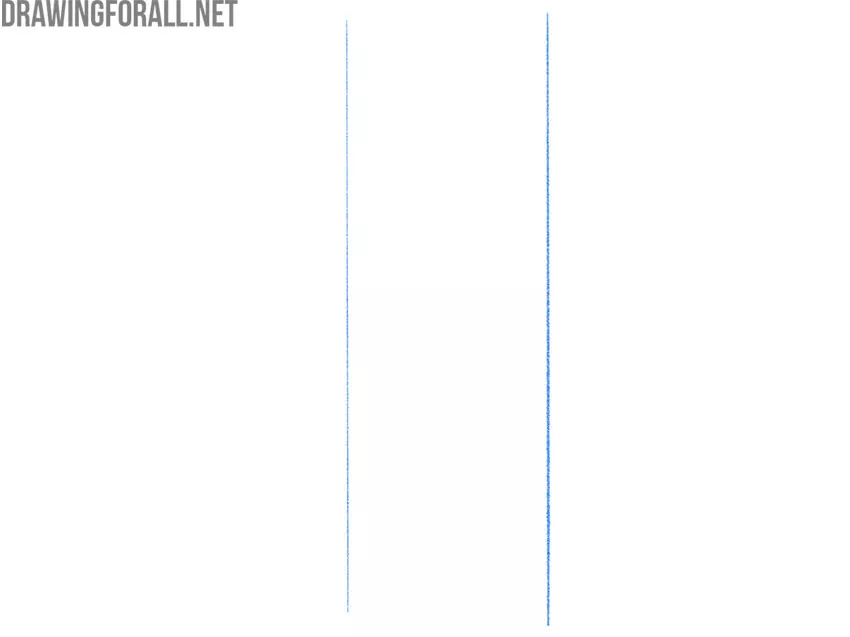
Step 1: Mark the mirror sides
First, draw two parallel vertical lines as shown here. Try not to use any auxiliary tools to create straight lines. These two simple lines define the side edges of the mirror and position it on the paper. To make the mirror look more three-dimensional, draw the line closer to the viewer slightly darker than the one farther away.
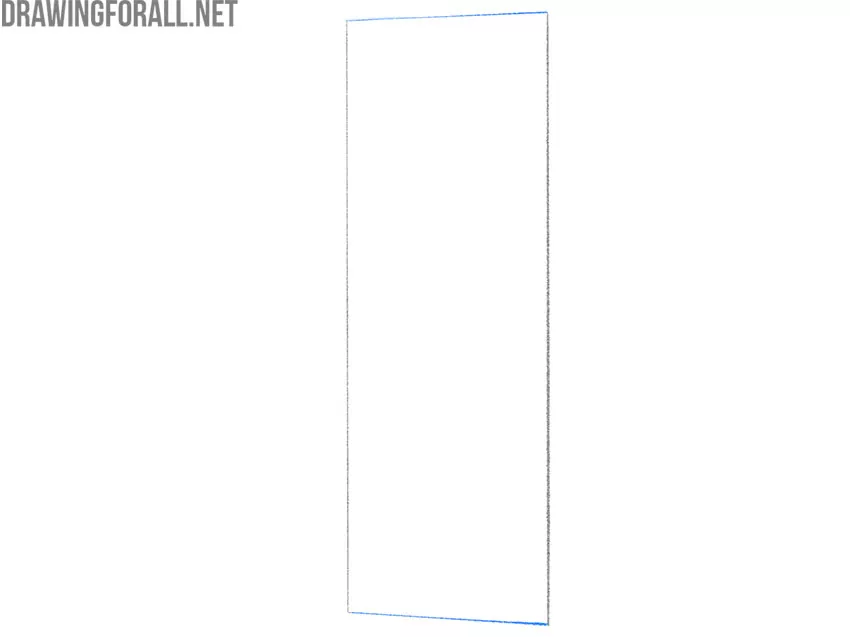
Step 2: Connect the outer edges
Next, connect these vertical lines with two straight lines. The lower line is more slanted than the upper one, although the upper line also sits at a slight angle. Emphasize the nearer parts of the top and bottom edges with slightly darker lines.
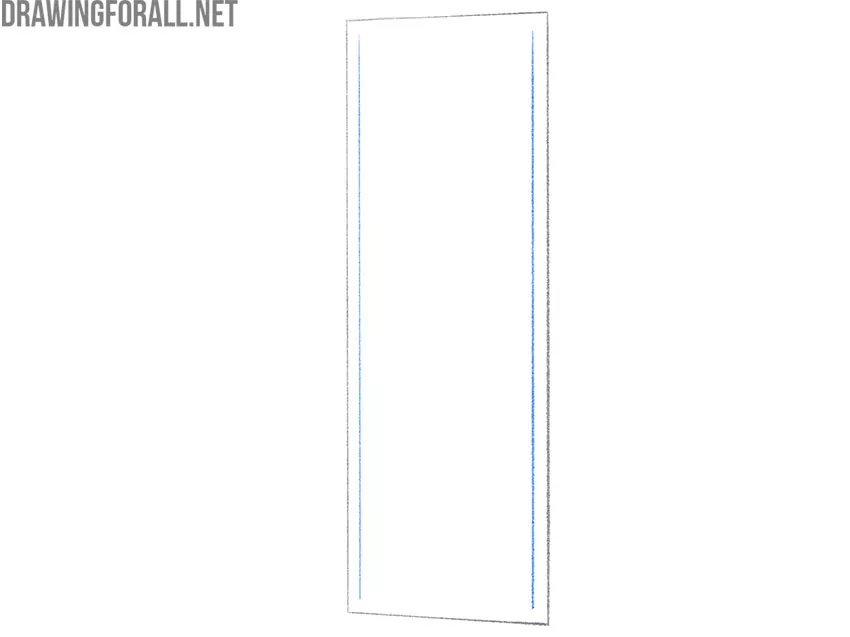
Step 3: Outline the frame sides
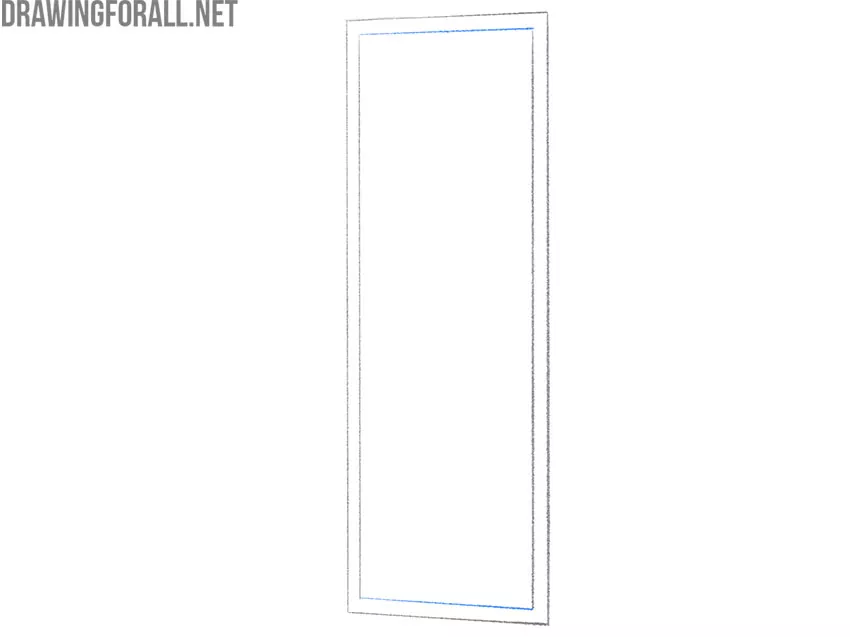
Add two vertical lines parallel to the lines from the first step. Drawing lines without a ruler will greatly improve your drawing skills. As before, make the lines closer to the viewer darker than those farther away. Also, make the nearer part of the frame slightly thicker than the farther part.
Step 4: Complete the frame
Now finish the basic outlines of the mirror. Draw two more lines parallel to the ones from the second step. Follow the same principle by making the lines thicker and darker as they approach the viewer. Also, make the top and bottom parts of the frame slightly thicker on the nearer side.
Step 5: Add frame thickness
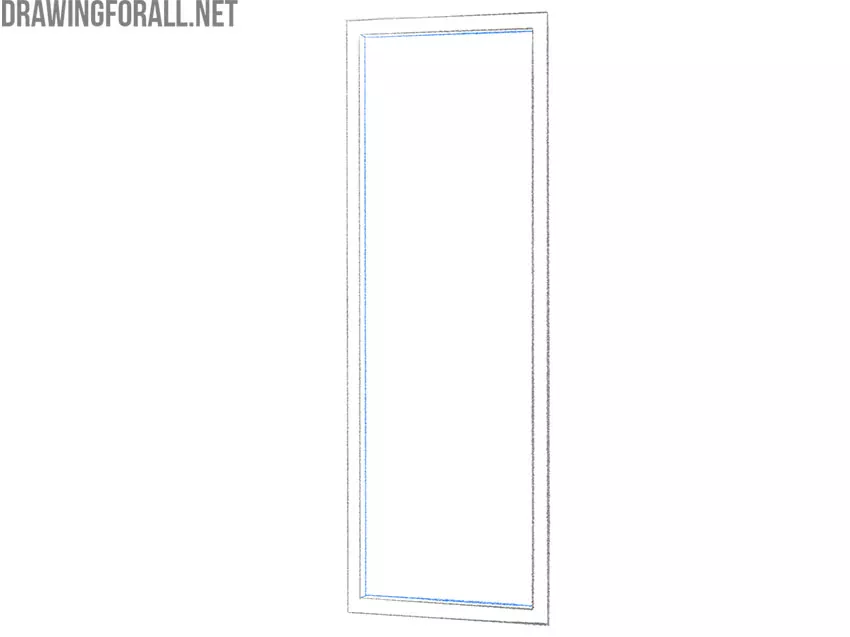
Now work on the details. Add two more horizontal lines and one vertical line to make the frame look three-dimensional. Make sure these lines follow the perspective of the frame. This is how you illustrate the thickness and volume of the mirror frame.
Step 6: Draw the side of the mirror
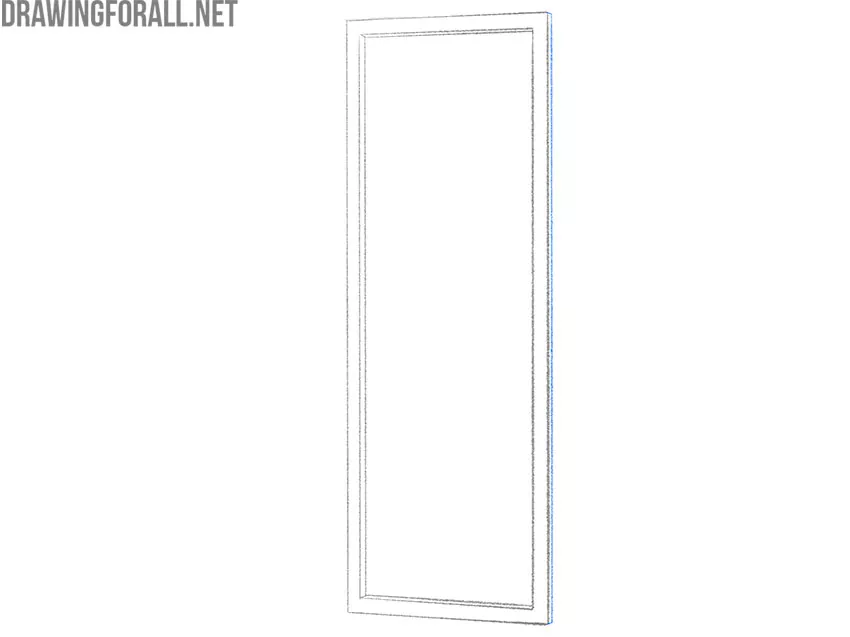
Add another long vertical line and connect it to the main outline with two short strokes. The result should resemble a simple three-dimensional form. In this tutorial, we use the same principles as when drawing a cube. Different edges and faces create the illusion of a three-dimensional object on a flat surface.
Step 7: Add shading and reflections
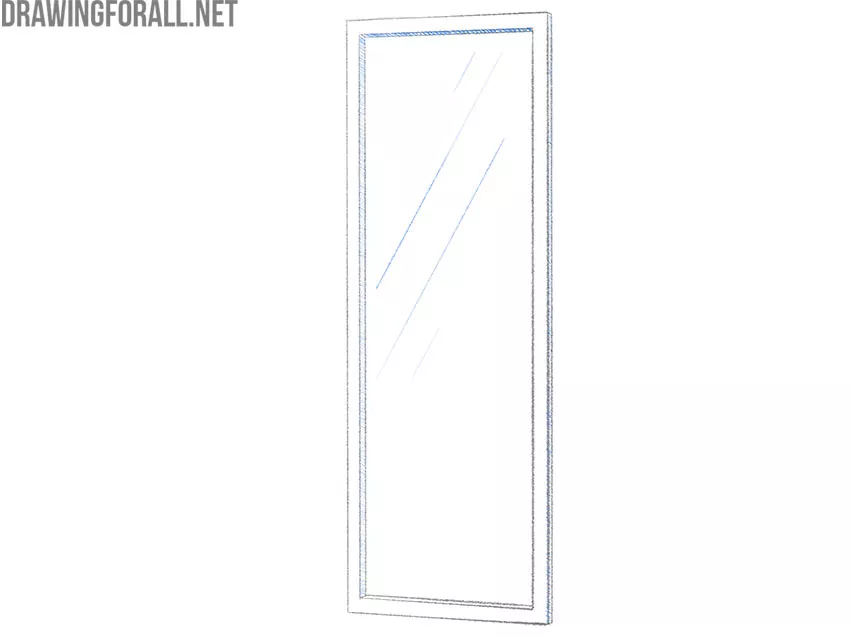
Review the previous steps and check that the corresponding lines follow the same perspective. Correct any inaccuracies if necessary. Then add light shading to the inner frame and a few diagonal strokes across the mirror surface to suggest reflections.
Erase any remaining construction lines and inspect the drawing one more time to make sure all edges are clean and accurate.
Mirrors play a very important role in fine art and often appear in many famous paintings.
In portraits, especially from the Renaissance, a mirror can suggest reflection, identity, or the inner state of a person. In religious and moral paintings, a mirror often symbolizes vanity or excessive self-regard.
For example, in Jan van Eyck’s Arnolfini Portrait, the mirror at the center of the composition reflects the scene behind the figures and may include two witnesses.
In many other paintings, a mirror reflects the artist at work, creating the effect of breaking the fourth wall.
You can study how reflections work in fine art and try creating a more complex composition with a person standing in front of a mirror and looking at their reflection.
Make this drawing more challenging by adding another object inside the mirror. For example, you can draw a face reflected in the glass.
Try drawing the mirror from a different angle. You can also make the composition more challenging by drawing a person sitting in front of the mirror and sketching a detailed face in the reflection.




Thank you for explaining with details to draw it! Now I can draw things in the mirror and it can look 3d!!!!!