

How to Draw a Bell Pepper
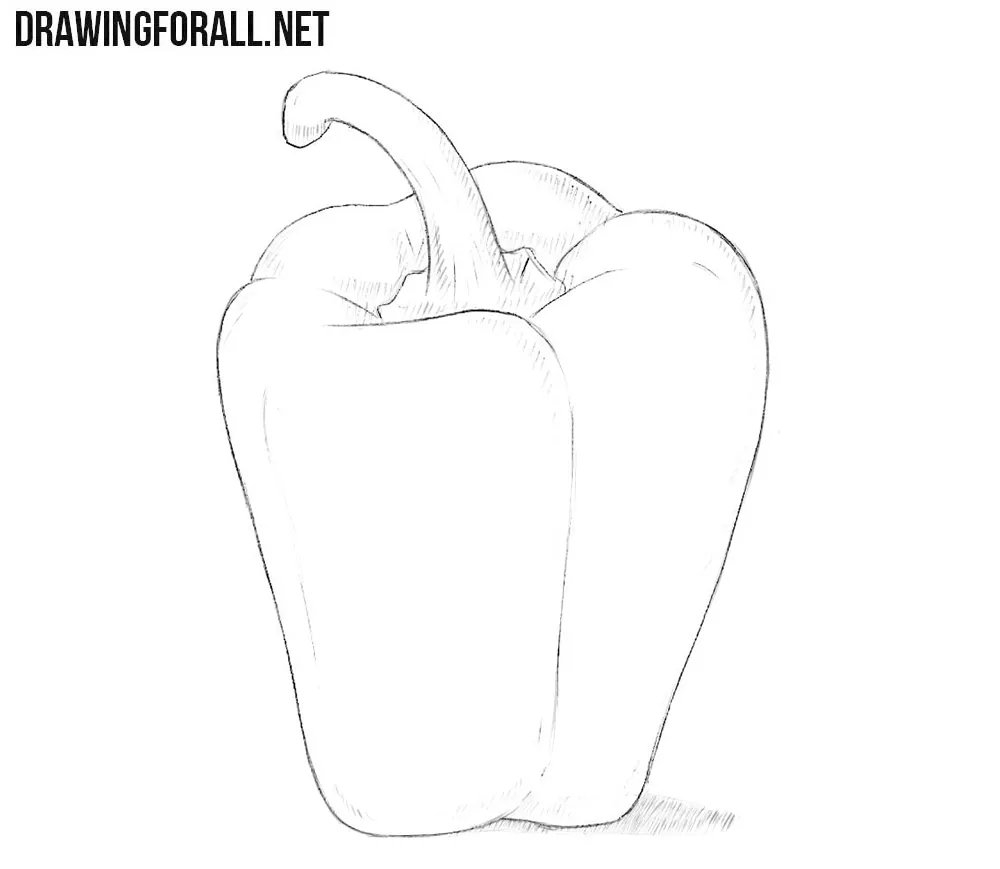
Bell peppers can vary considerably in shape, so there is no need to copy every curve of our example exactly. What matters is how the large sections come together around the stem and form the overall volume of the pepper. Let’s take a closer look at this as we learn how to draw a bell pepper.
How to draw a bell pepper step by step
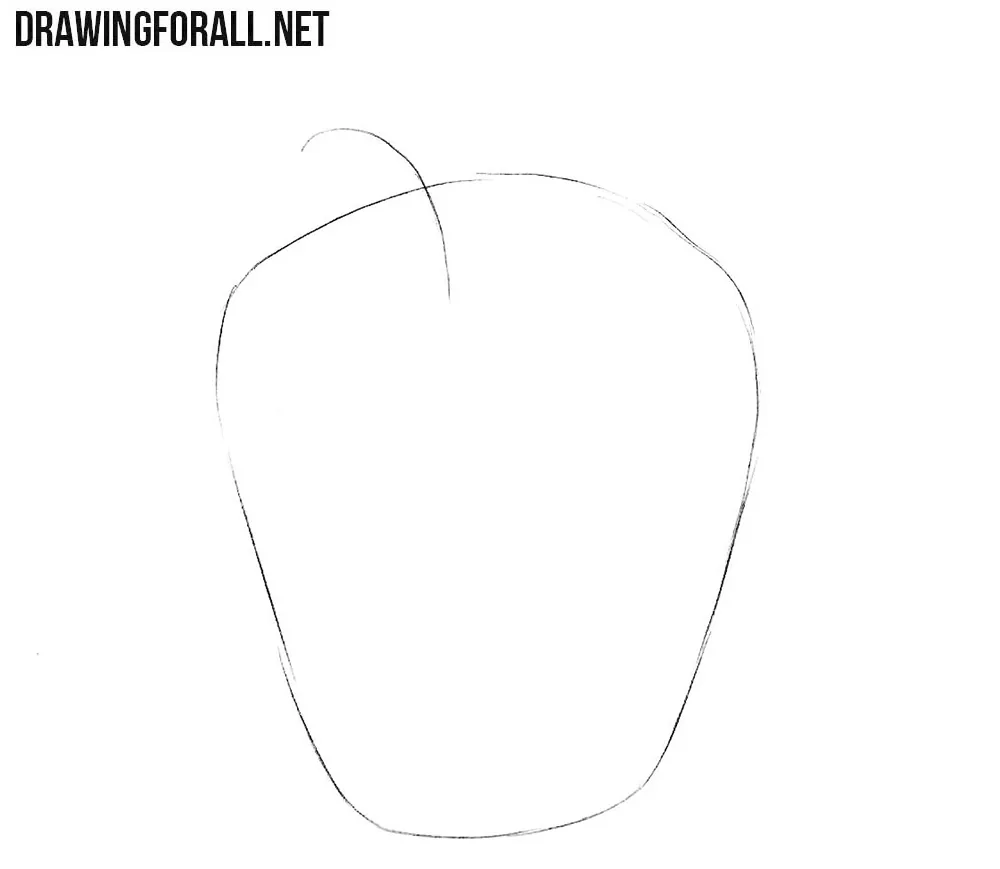
Step 1: Sketch the bell pepper
Block in the outline of the bell pepper and its stem. Do not try to make the outline perfectly smooth. However, be sure to convey its smooth taper from top to bottom. Establish only the general volume of the pepper; its characteristic sections will be added in the following steps.
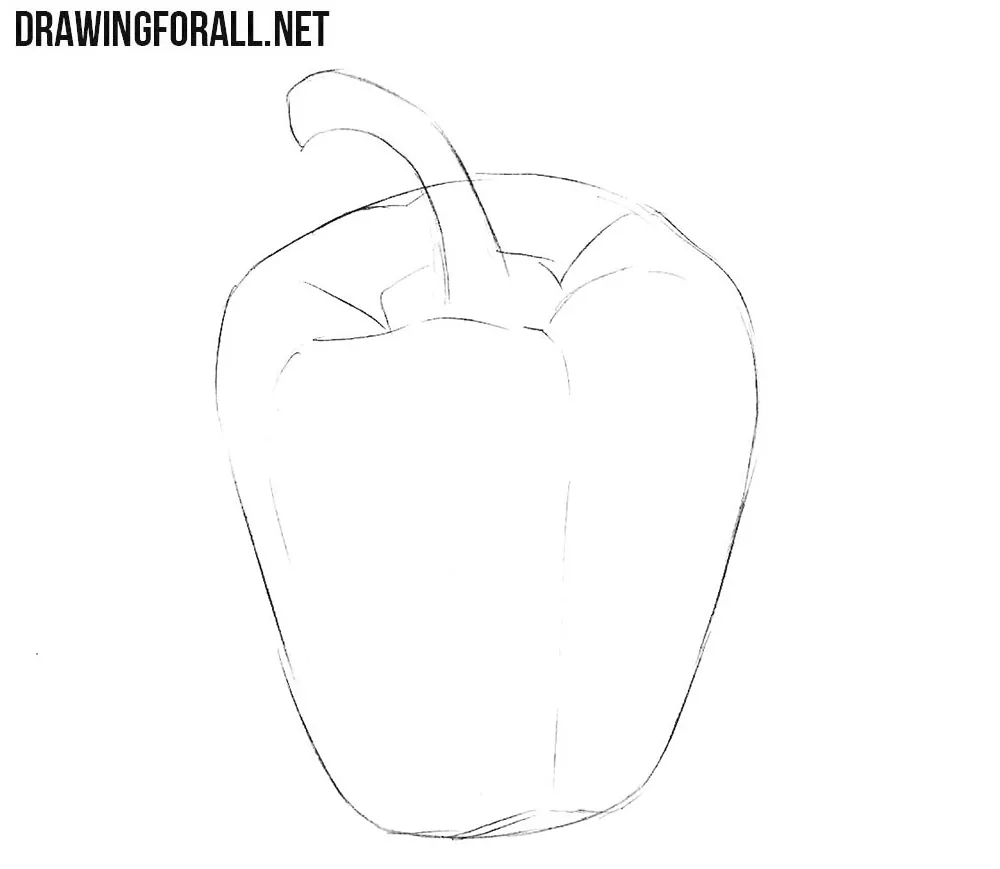
Step 2: Draw the bell pepper stem and sections
In this step, work only with the top of the bell pepper. Using several oblique lines, outline a large indentation in the middle of the upper part of the pepper. These lines also begin to separate the bell pepper into several large three-dimensional sections that converge around the indentation. In the same step, give the stem more volume with additional lines.
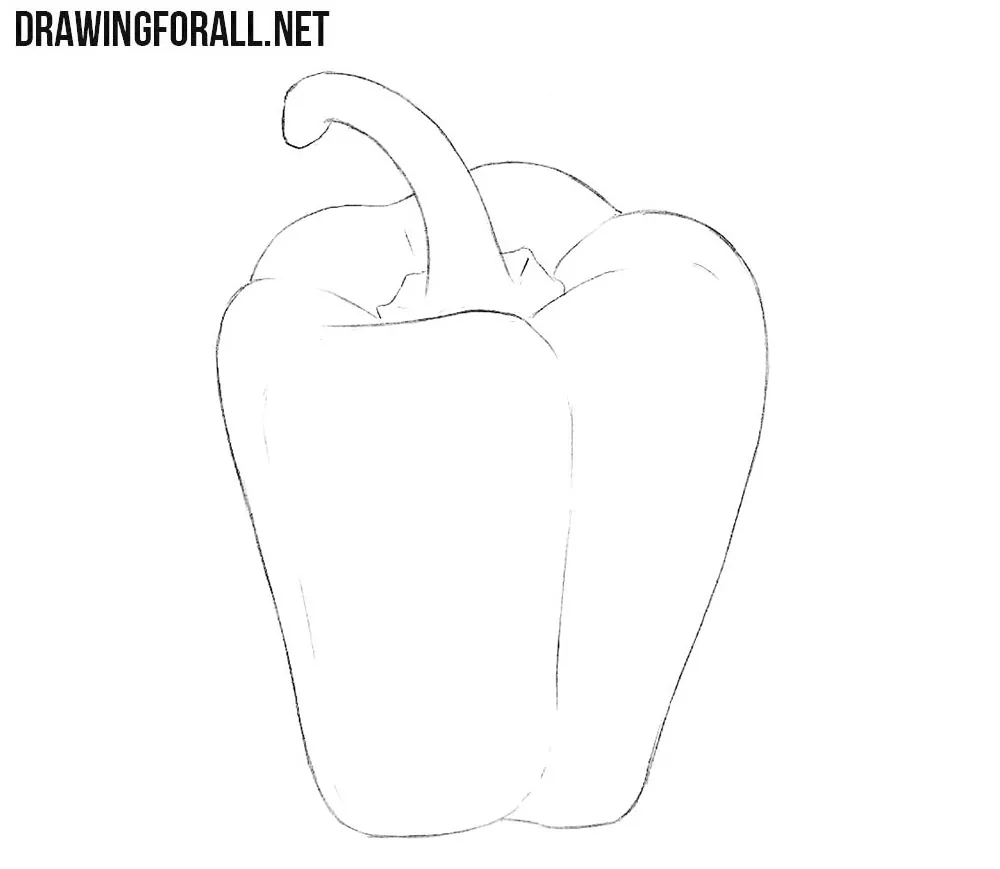
Step 3: Refine the bell pepper
Now erase the extra guidelines from the previous steps. Make the lines that define the central indentation of the bell pepper very smooth. Continue these lines into the body where necessary to better show the separate sections of the pepper. Keep in mind that these are parts of one continuous volume. Their contours should flow smoothly into one another.
Step 4: Add shadows to the pepper
In our example, you can see light, realistic shadows. You can choose a different light source and place the shadows accordingly. We added the shadows near the central indentation and the stem. You can make the shadows slightly darker inside the indentation and between the sections of the bell pepper, where the forms turn away from the light. This will help separate these volumes without outlining them with additional dark lines.
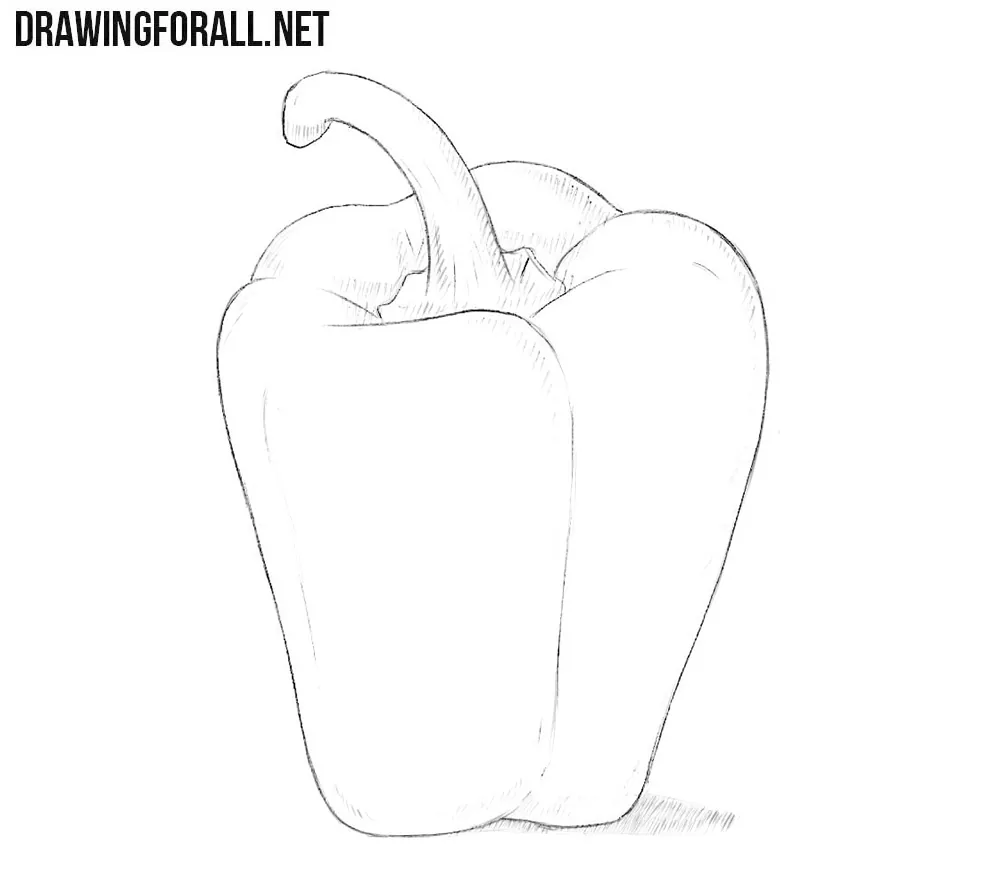
Drawing bell peppers of different shapes
In this drawing tutorial, we showed you how to draw a bell pepper in our classic style. As always, we tried to explain a seemingly difficult subject in the simplest way possible.
Bell peppers come in many different shapes. Some are long and narrow, others are short and wide, and the individual sections can also differ in size.
Despite these differences, the sections meet around the characteristic indentation at the top and form a single volume. This is what gives a bell pepper its characteristic form.
If you draw another bell pepper, try changing its shape and the size of its individual sections.
You can continue this theme by drawing a burger, or constructing a realistic still life composition.


