

How to Draw an Artichoke
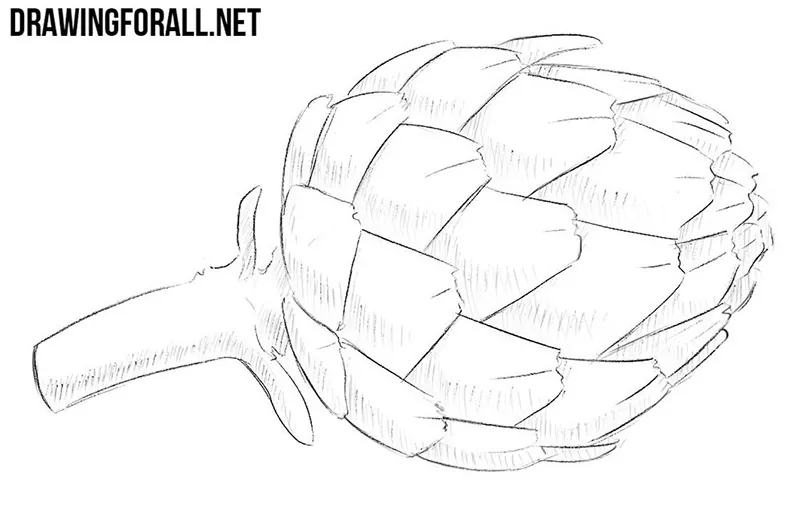
We have a large number of drawing tutorials on very different subjects. As an addition to them, we created this guide on how to draw an artichoke step by step.
The artichoke itself has a fairly simple overall shape, but its many overlapping leaves make the surface much more complicated.
The best way to deal with this is to start with one simple mass and then gradually add the leaves and texture on top of it. This way, you can work on all those small details without losing the main shape of the artichoke.
How to draw an artichoke step by step
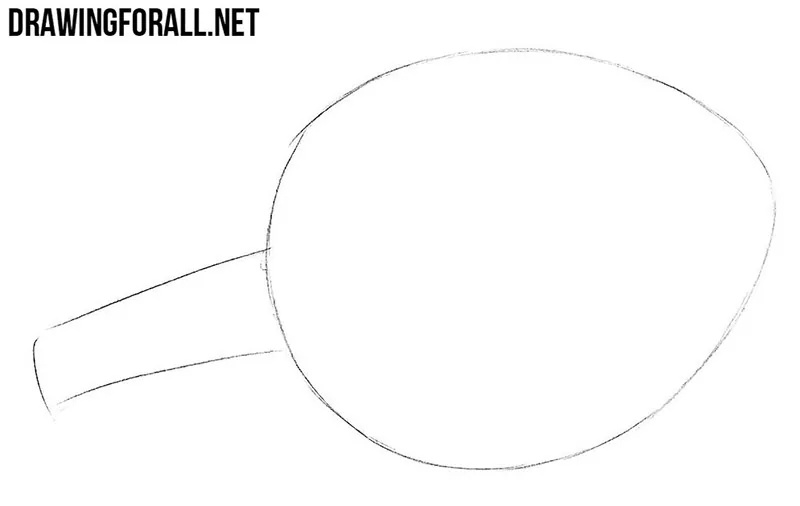
Step 1: Sketch the general artichoke form
Depict the body of the artichoke as an oval, or rather an egg-like shape. Use a large general mass without the individual leaves. Next, outline the stem with a couple of simple lines. At this early stage, keep the pencil pressure light and avoid making the contours too dark.
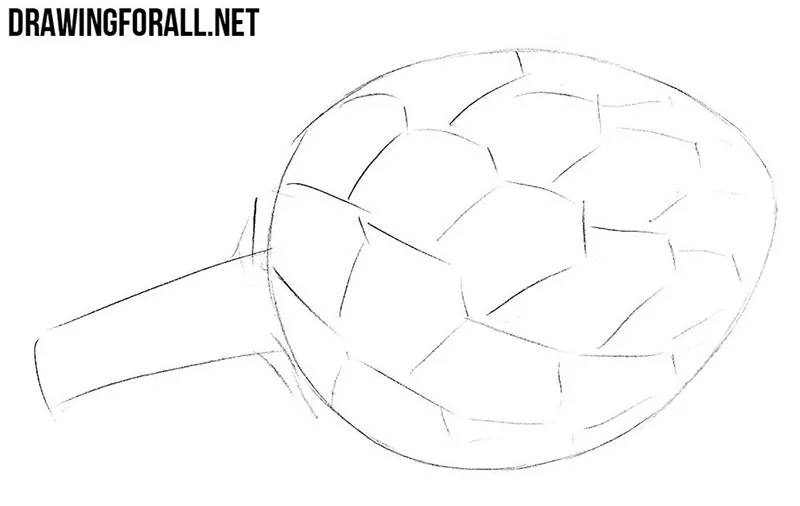
Step 2: Divide the form into overlapping leaves
Now divide the large general form into many smaller overlapping leaves. Outline them using short and very light lines, starting at the lower part and gradually moving upward. The leaves should follow the rounded surface of the artichoke rather than look like a flat pattern.
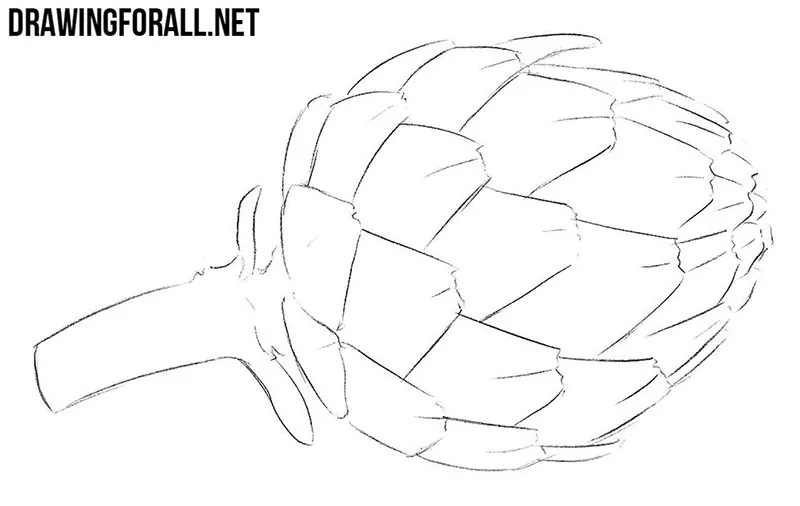
Step 3: Refine the leaves and stem
This is the most painstaking stage of the tutorial. Trace the leaves with clearer and darker lines, refining their shapes and the places where they overlap. Add short lines to their upper parts to show the folds and small surface details. Then refine the contour of the stem and erase all remaining construction lines.
Step 4: Add shadows to the artichoke
Now add shadows to show the volume of the artichoke. Use hatching on the lower parts of the leaves, especially where one leaf overlaps another. These small shadows will help separate the layers. Add hatching to the shadowed side of the stem as well, and use another layer where you need a darker tone.
There are many genres in visual art, and one of the oldest and most famous is still life. This genre often includes food, various vessels, plants, and other objects placed together in one composition.
The artichoke from this tutorial can become part of such a composition. Try drawing it together with other vegetables or simple household objects.
Their different forms and surface textures can make the drawing more interesting. Draw pumpkins, grapes, flowers, and other objects beside the artichoke to create a complete still life.


