How to Draw a Baby Zebra
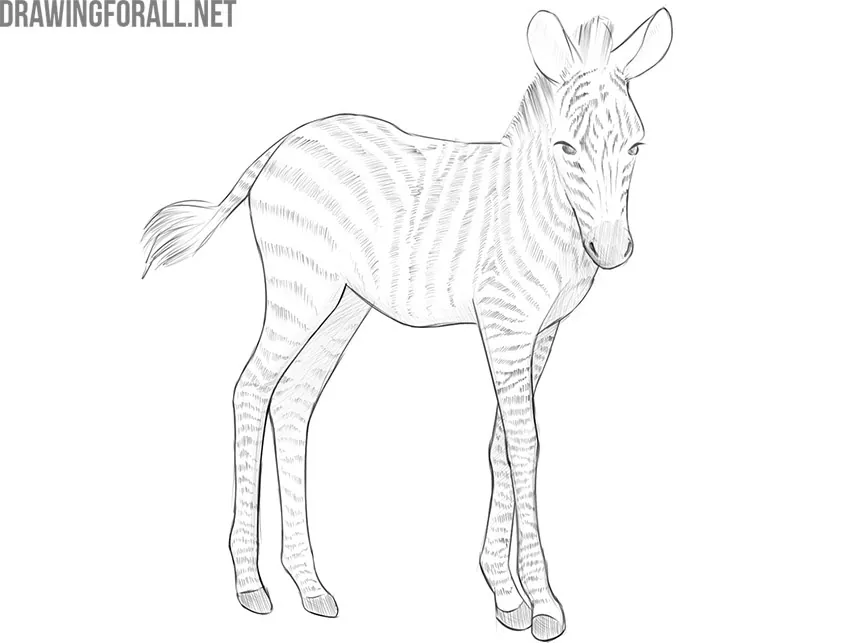
Baby animals are some of the cutest creatures ever. That is why we have created a guide on how to draw a baby zebra.
This baby zebra drawing tutorial is not going to be very difficult, no matter how it looks. Most of the apparent complexity comes from the realistic details, which are not as difficult to draw as they seem.
In fact, the process of sketching a baby zebra, as well as drawing an adult zebra, is very similar to drawing a donkey. The main difference is that, unlike other similar animals, the zebra has its famous striped pattern.
How to draw a baby zebra step by step
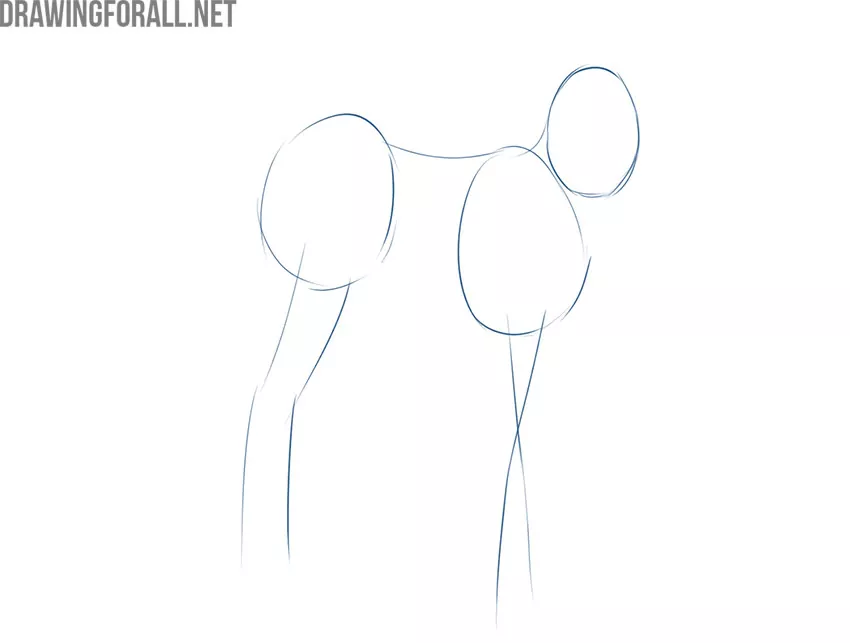
Step 1: Sketch the zebra’s basic forms
First, outline the position of the baby zebra on the paper. We will also mark the animal’s pose. To do this, draw three ovals of different sizes and four elongated lines. Try to arrange these shapes carefully in relation to one another.
Step 2: Draw the zebra’s head
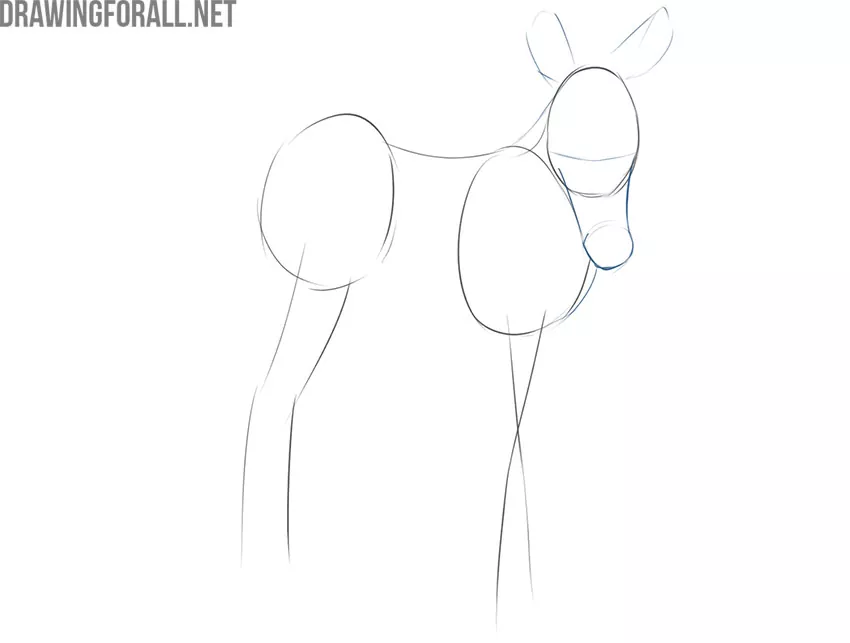
Now start adding the first details to the baby zebra drawing. Begin by drawing the zebra’s head. Sketch long, elongated ears and a long muzzle with a rounded tip. Then add a smooth curved guideline to mark the location of the eyes.
Step 3: Outline the front legs
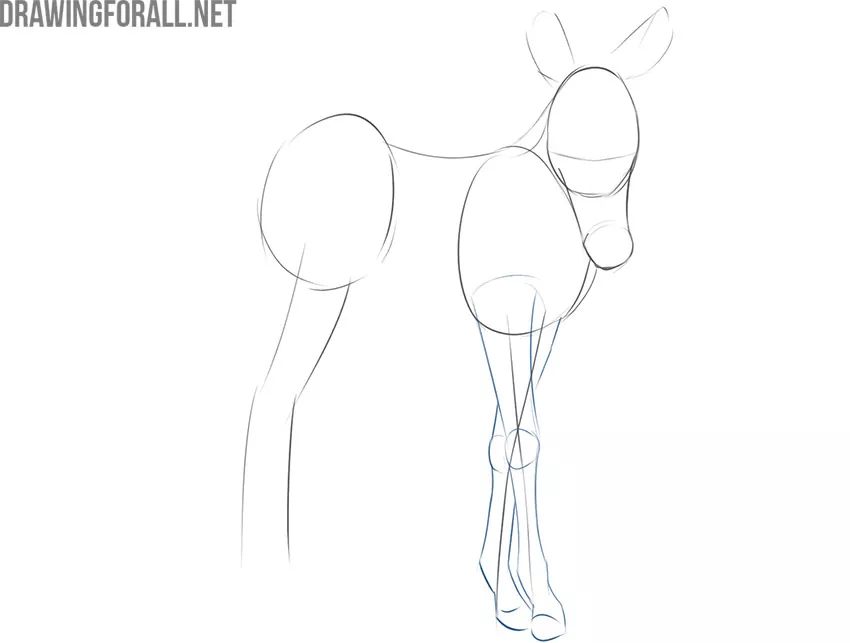
Now sketch the outlines of the baby zebra’s front legs. Use rounded shapes to mark the joints. Sketch the rest of the legs as long, slender forms. Note the uneven curves near the hooves.
Step 4: Add the hind legs
Continue by drawing the back pair of legs. Pay attention to their characteristic curves and compare the size of the legs with the torso. To check your baby zebra drawing, you can also look at it in a mirror.
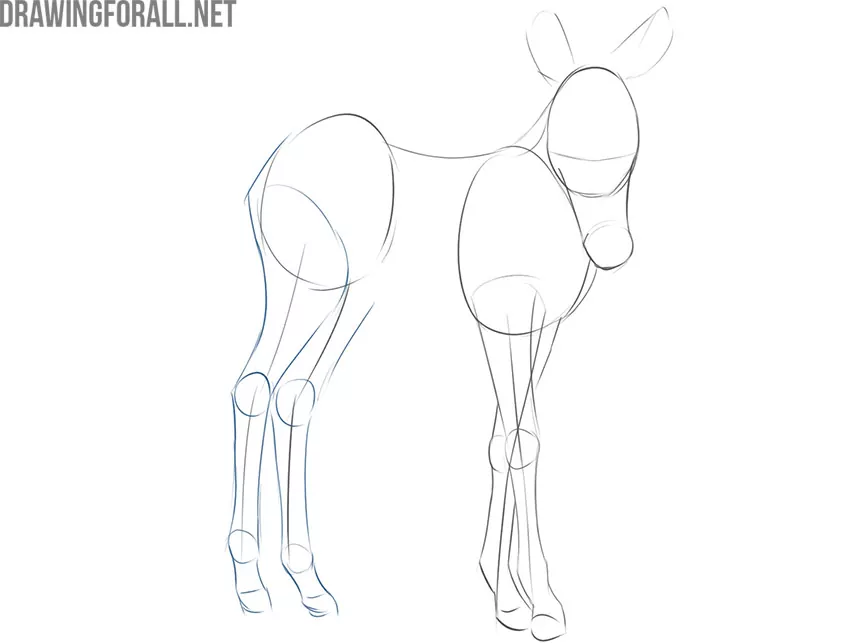
Step 5: Connect the body forms
A few small lines will make an important difference here. Draw smooth lines connecting the front and back of the torso along the top and bottom. Using a vertical line, connect the head and torso of the small animal. Also sketch the rough outline of its short, fluffy tail.
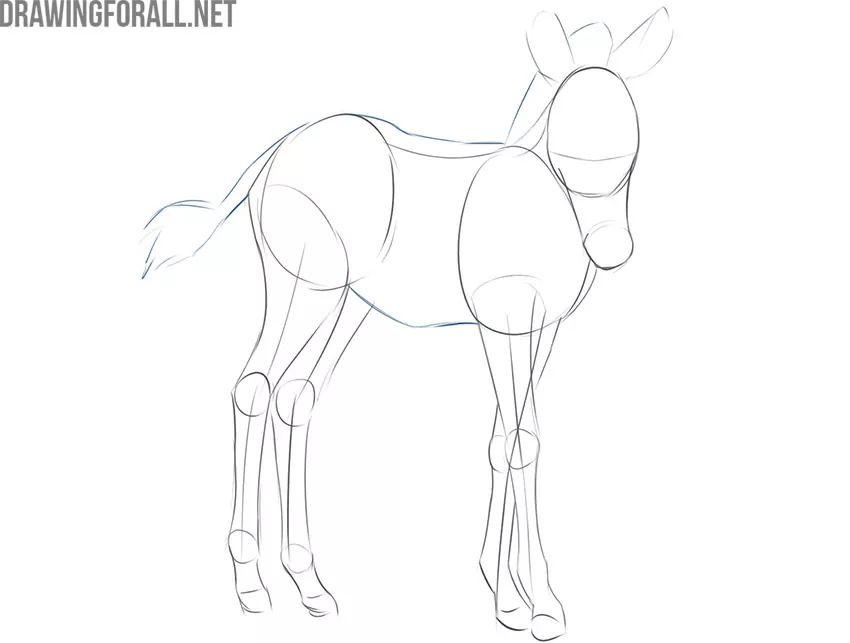
Step 6: Add eyes and mane
Add a few final details that will shape the look of the zebra. Start drawing the zebra’s face in detail, and sketch small almond-shaped eyes. Use the guideline from the second step. After that, draw a short, thick mane. Don’t forget to add the inner parts of the zebra’s ears.
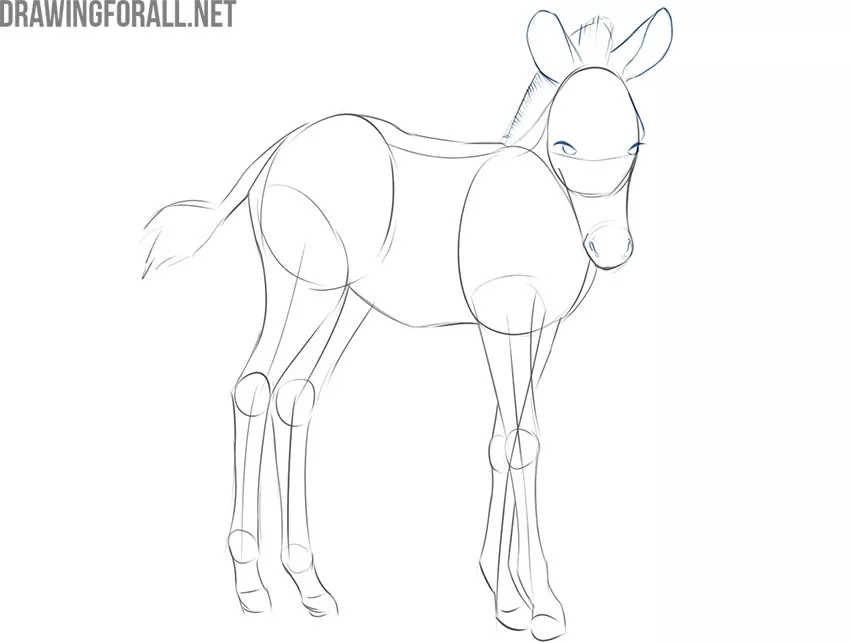
Step 7: Erase the construction lines
Here, we will not draw anything new. Erase the extra construction lines and evaluate the whole drawing. This is an important stage because mistakes that remain now will be much harder to correct after adding the stripes.
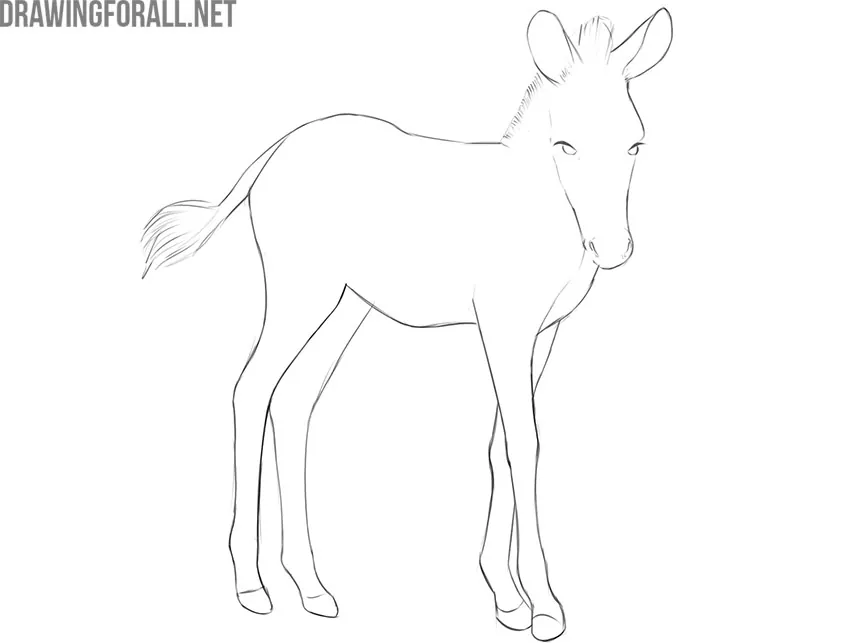
Step 8: Draw the zebra stripes
Probably everyone knows what a zebra looks like because of its famous stripes. Sketch the dark stripes using short, fairly dense hatching. Make the shading especially dense around the hooves.
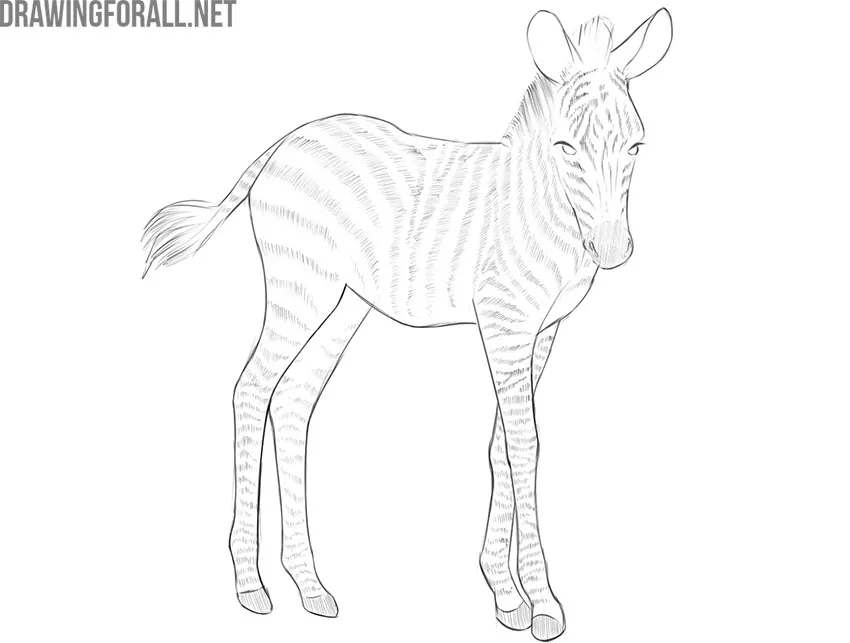
Step 9: Refine the finished zebra
Now the baby zebra drawing is complete. Check the whole drawing once more and correct any remaining mistakes if necessary.
You can also practice drawing not only this animal at different ages, but related animals as well. For example, you can draw a plains zebra by following a similar sequence of steps while creating a very different final appearance.
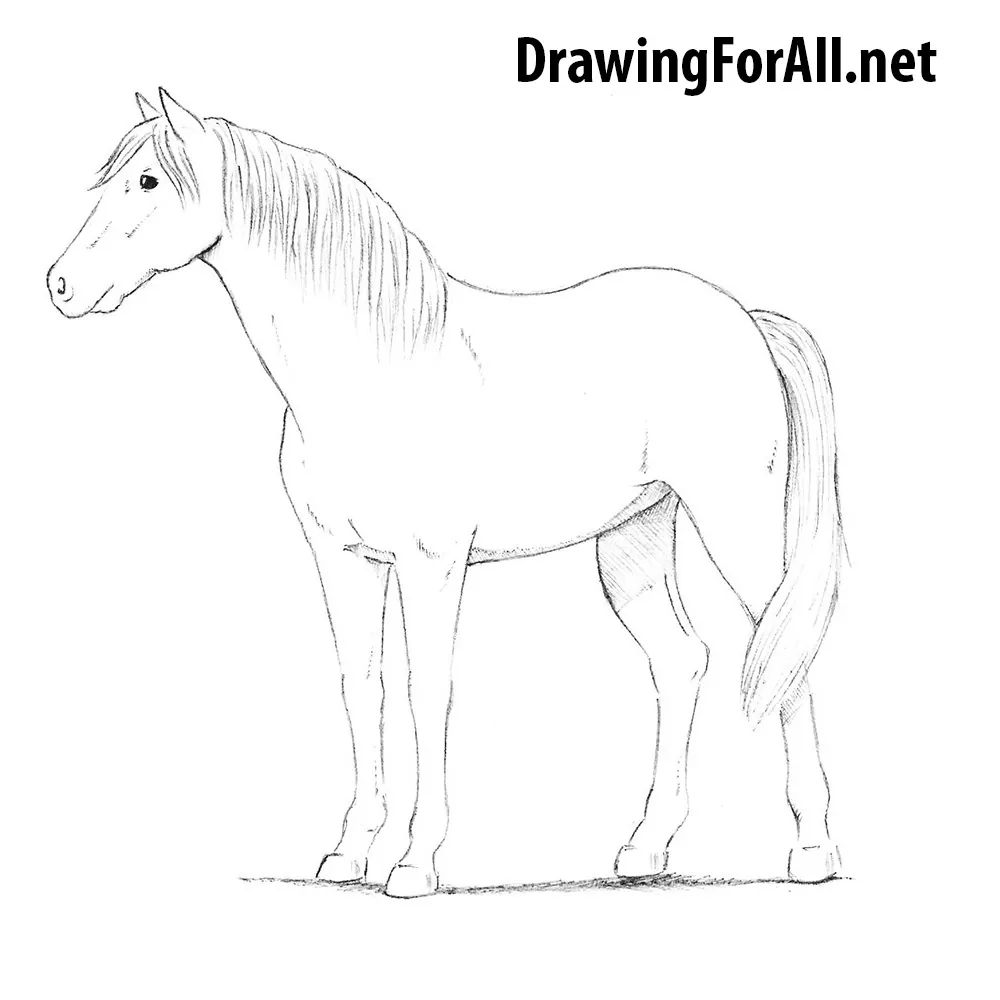
As mentioned earlier, zebras are similar in build to donkeys and horses, so the drawing process is also similar.
To make your practice more varied, try our horse drawing tutorial, where you will see a similar sequence of steps but without the zebra’s characteristic pattern.