

Proportions
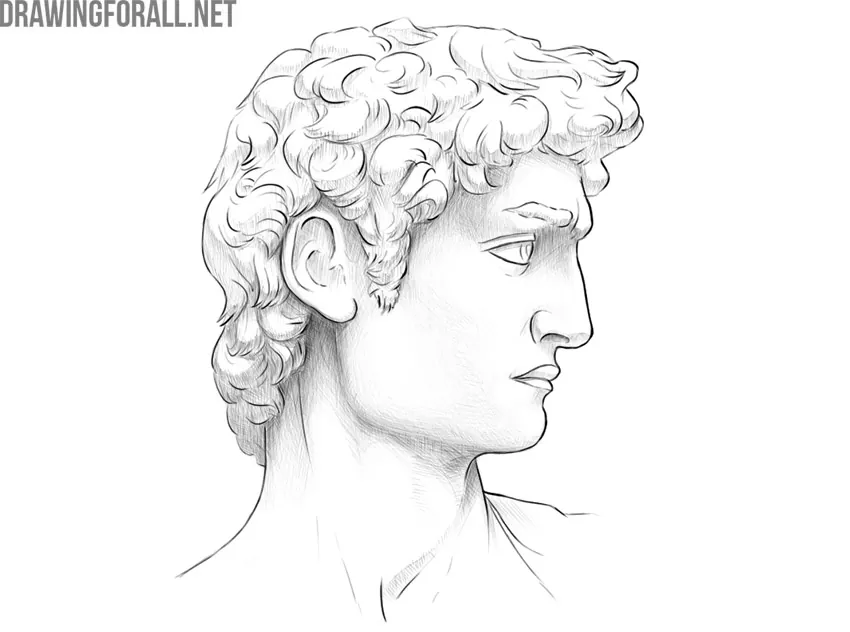
Knowledge of proportions is one of the most important foundations of fine art. That is why in this article we will explain the basics of proportion in drawing.
Correct proportions in a drawing help create a convincing resemblance to the depicted object. The more accurately you can observe and transfer these relationships to paper, the more realistic and convincing your drawing will look.
Note that all objects, bodies, and parts of bodies should be measured and compared with one another in order to observe proportions as accurately as possible.
To correctly determine the relationship between parts in a drawing, an artist needs not only knowledge of proportions but also a good eye. This skill can be trained through regular drawing practice.
It should also be noted that the principles of proportion have been known since antiquity. With the help of this knowledge, beautiful buildings were created in ancient Greece, along with famous sculptures such as Doryphoros and the Venus de Milo.
You can check proportions using an ordinary pencil or brush held in an outstretched hand. For greater accuracy, you can close one eye and keep your head in the same position while measuring. Using a pencil, you can also determine the angles of lines and edges, as we discussed in our article about linear perspective.
So, extend your arm with the pencil and measure the part of the subject you need using the distance from the tip of the pencil to your thumb. Then compare this measurement with other parts of the subject, gradually identifying their proportional relationships. In this way, you can determine how the different parts relate to one another and transfer these relationships to the sheet of paper.

For example, align the upper end of the pencil with the upper edge of the subject and mark the lower edge with your thumb. Then, without changing your position or the distance of your hand from your eyes, turn the pencil horizontally. This allows you to compare the height with the width and determine how many times one measurement fits into the other.

Note that the pencil should remain in a plane parallel to your face while you measure.
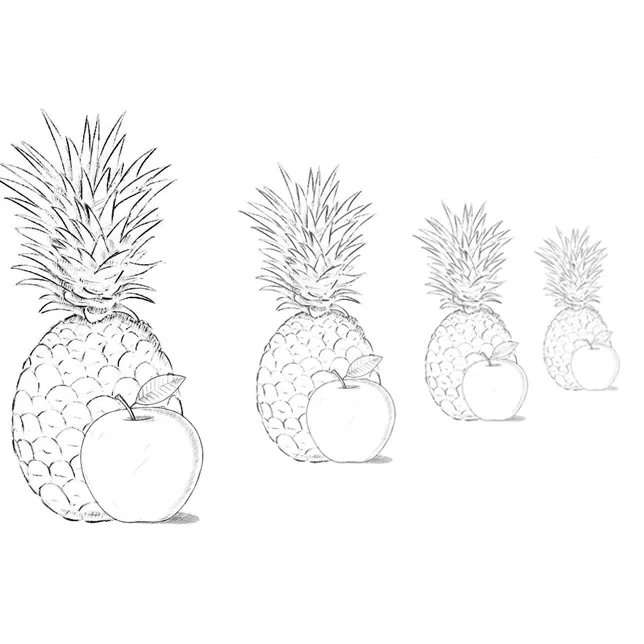
When we draw, we need to transfer the proportions to paper as we actually see them. In other words, maintaining proportions means preserving the relationships between the sizes of all parts of the subject and the whole within the chosen format of the drawing.




So good. Thank you very much.