How to Draw a BMW X5
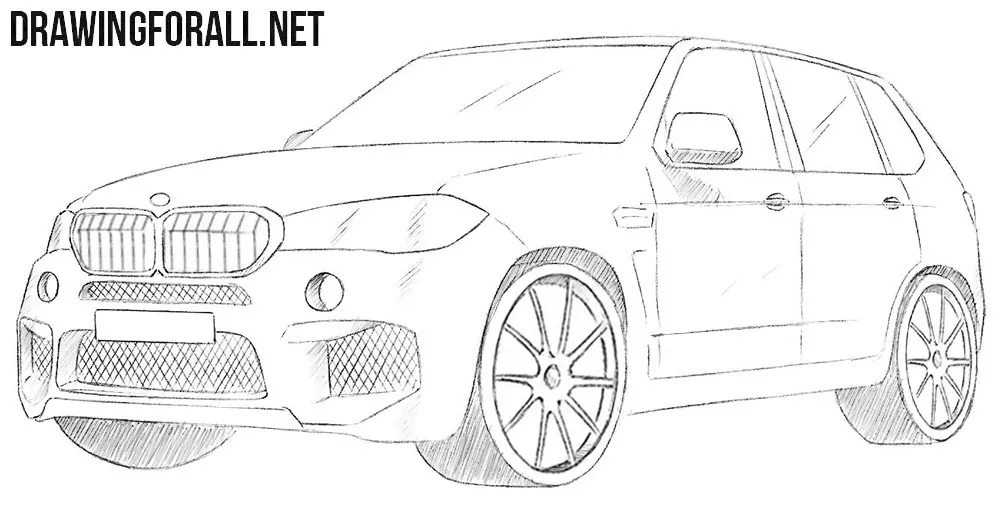
The BMW X5 has a very powerful-looking body with characteristic features. Here we will show you how to draw a BMW X5, convey these features on paper, and create volume in your composition.
We will apply all the basic principles of drawing a car, from constructing its form to applying fundamental drawing principles to vehicles.
How to draw a BMW X5 step by step
Step 1: Sketch the SUV’s boxy body
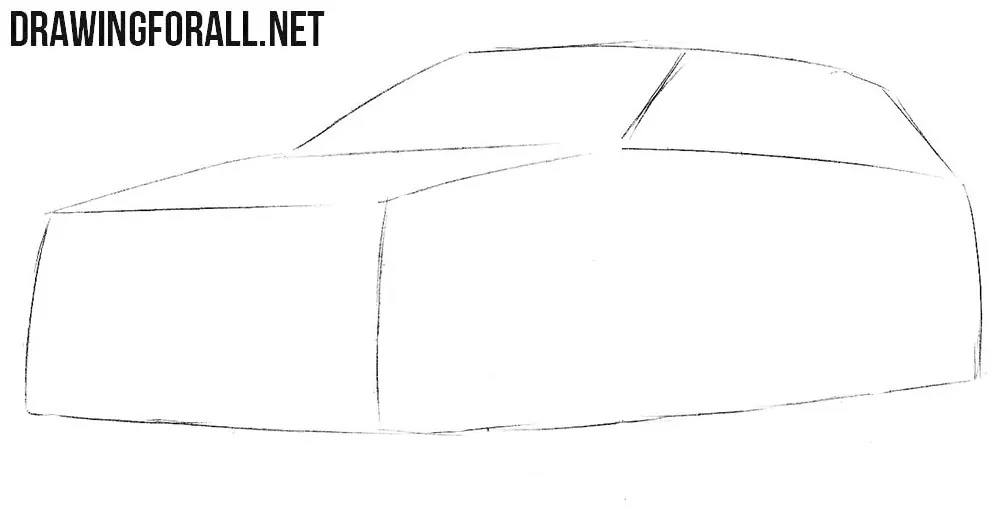
We always begin our car drawings with the main outlines. Use straight, very light lines to sketch the boxy body of the BMW X5. Mark the near front corner to separate the front and side planes. Above them, outline the hood and the tall cabin with its sloping windshield and nearly level roof. Try not to press too hard on the pencil, because you’ll need to erase these construction lines later.
Step 2: Mark the main vehicle details
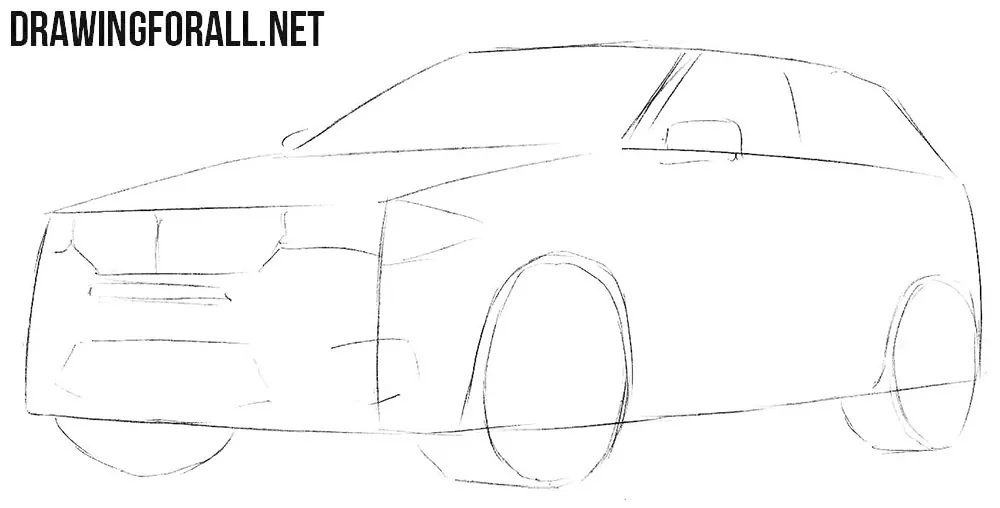
Now let’s add the main details to the body of the BMW X5. Start at the front and sketch the headlights and the familiar radiator grille. Mark the grille’s central division and the bumper openings below it. After that, outline the windows and side mirror. Finish by marking the wheels and wheel arches.
Step 3: Refine the BMW kidney grille
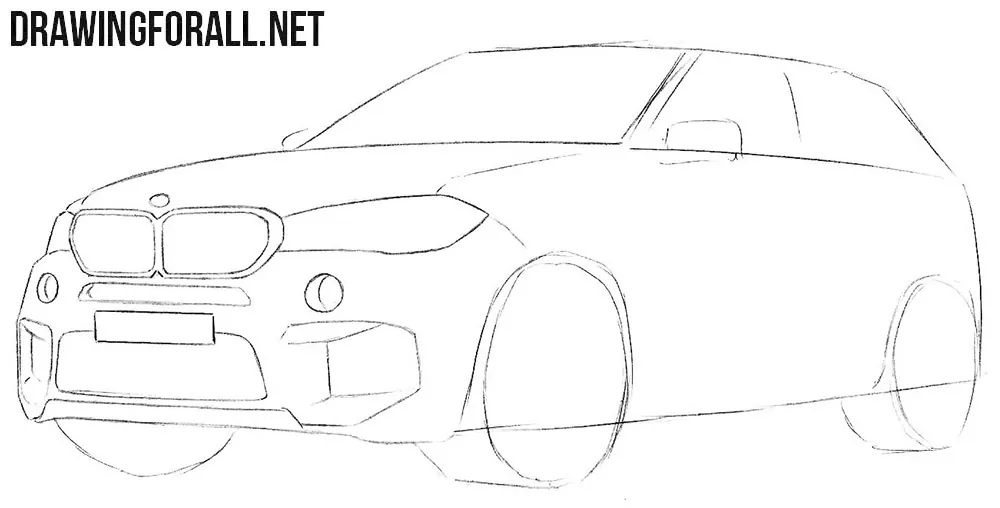
Start refining with the two-part kidney grille, a familiar feature if you’ve tried drawing another BMW. Outline each half with rounded corners and a second contour just inside the border. The half on the left appears narrower in this view. Next, trace the outlines of the headlights and draw the BMW badge at the front of the hood.

Step 4: Draw the bumper and hood
Continue working on the front of the BMW X5. First, draw the bumper with its air intakes and fog lights. Place the rectangular license plate above the large central opening and outline the narrow vent beneath the grille. Add a recessed edge inside each side intake and draw the circular fog lights above them. Then move a little higher and carefully trace the contours of the hood.
Step 5: Trace the roof and windows
Continue upward from the hood and draw the roofline as it curves toward the rear of the SUV. Next, carefully outline the windows and side mirrors. Draw the windshield inside the cabin outline, with a narrow strip of bodywork above it and a thicker pillar on the right. Divide the side glazing with paired lines for the pillars. Don’t forget to remove the unnecessary guidelines from this part of the drawing.
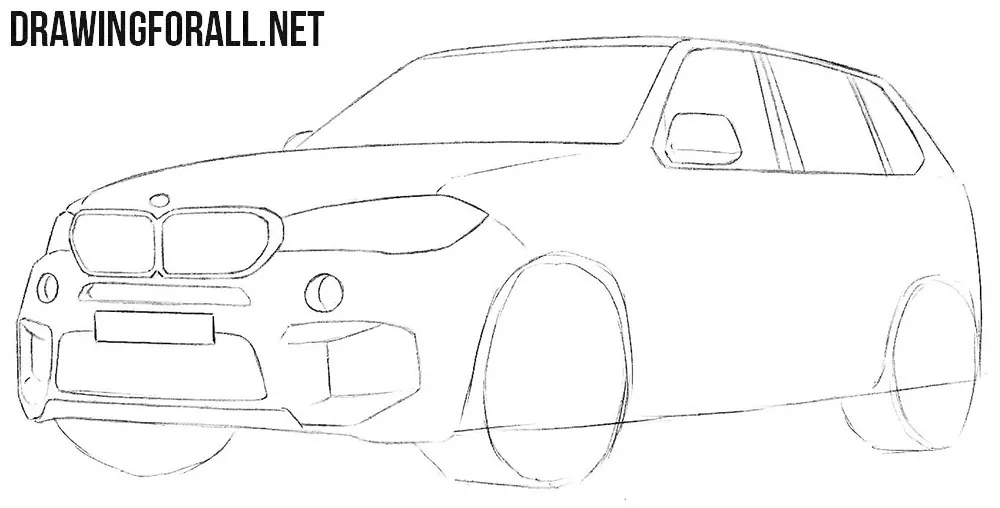
Step 6: Complete the doors and trim
Now finish drawing the body of the BMW X5. Extend the lines down from the windows to outline the doors. Next, add the handles, draw the lower edge of the body, and mark the trim lines along the side. Place both handles on the long crease below the windows. Outline the wide molding across the lower doors, with its edges following the angle of the sill.
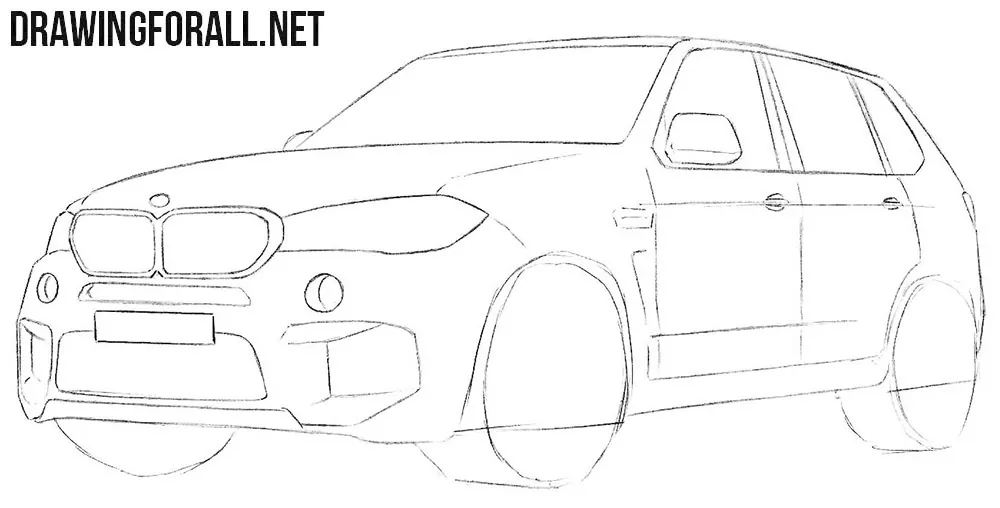
Step 7: Refine the wheels and rims
Carefully trace the outlines of the large wheels. Try to make their curves as smooth as possible. Then draw the rims. Outline a smaller ellipse inside each tire and mark the central hub. Draw the spokes radiating from the hub to the rim, with narrow edges and wider openings between them. Repeat the pattern on the smaller rear wheel. You can use a similar spoke pattern or come up with your own design.

Step 8: Detail the grille and shade
Draw the vertical slats inside the kidney grille and use intersecting lines for the mesh in the bumper openings. Stop the mesh at the opening borders and the license plate. After that, add a few reflection lines to the windows. Use similar slanted marks on the headlight lenses. Finish the BMW X5 drawing with hatched shadows.
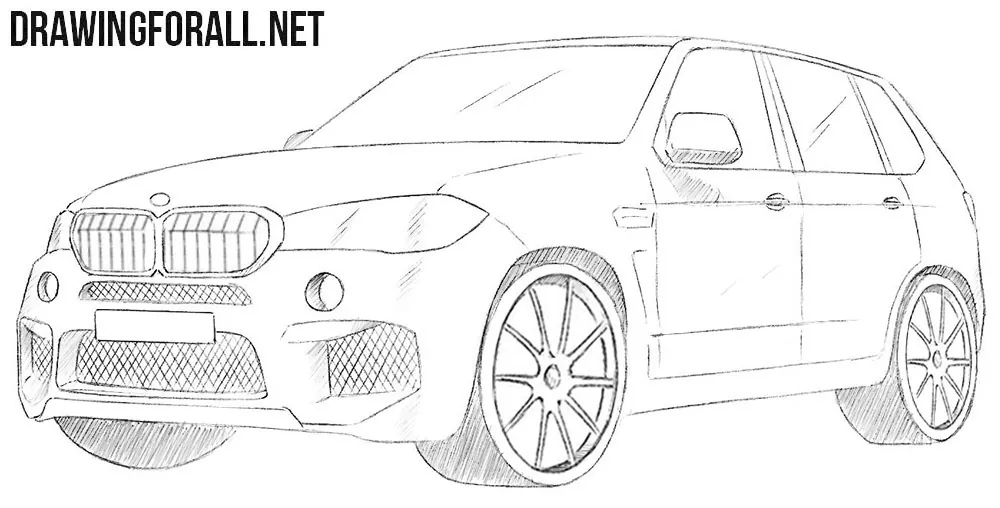
The BMW X5 is one of those cars whose appearance is very distinctive. Although it changes from generation to generation, it remains quite recognizable even to people who are not particularly interested in cars.
The steps of this tutorial showed you how to draw a BMW X5 from one of the earlier generations, but the same methods can be applied to drawing both the very first models and the most modern ones.
The main differences lie in the headlights, grille, and body details. The overall shape and the relationship between the different parts have not changed very much over the years.
By understanding the general principles, you will be able to draw a BMW X6 or any other SUV, changing the forms to match the particular vehicle.