

How to Draw a Watermelon
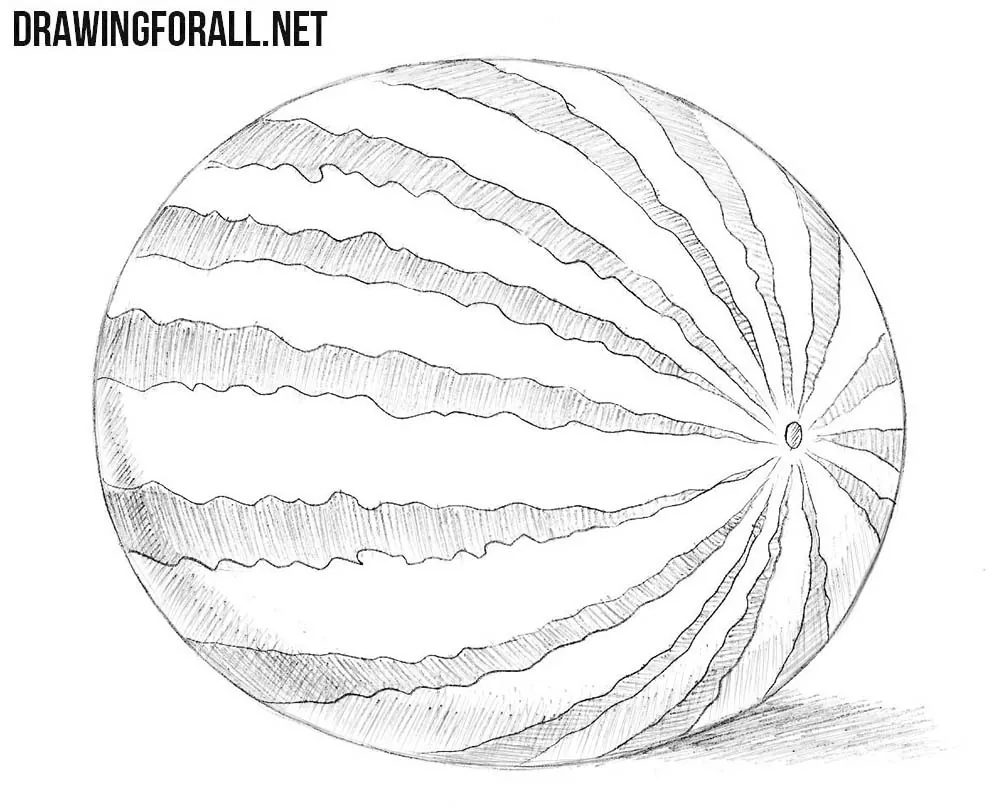
In this tutorial, we will show you how to draw a watermelon. We chose this fruit so you can practice creating simple but realistic drawings.
This tutorial may look very simple, but you need to be careful to get a good result. We chose a slightly angled view for the watermelon, but if this seems too difficult, you can draw it from a straight view instead.
How to draw a watermelon step by step
Step 1: Draw the watermelon shape
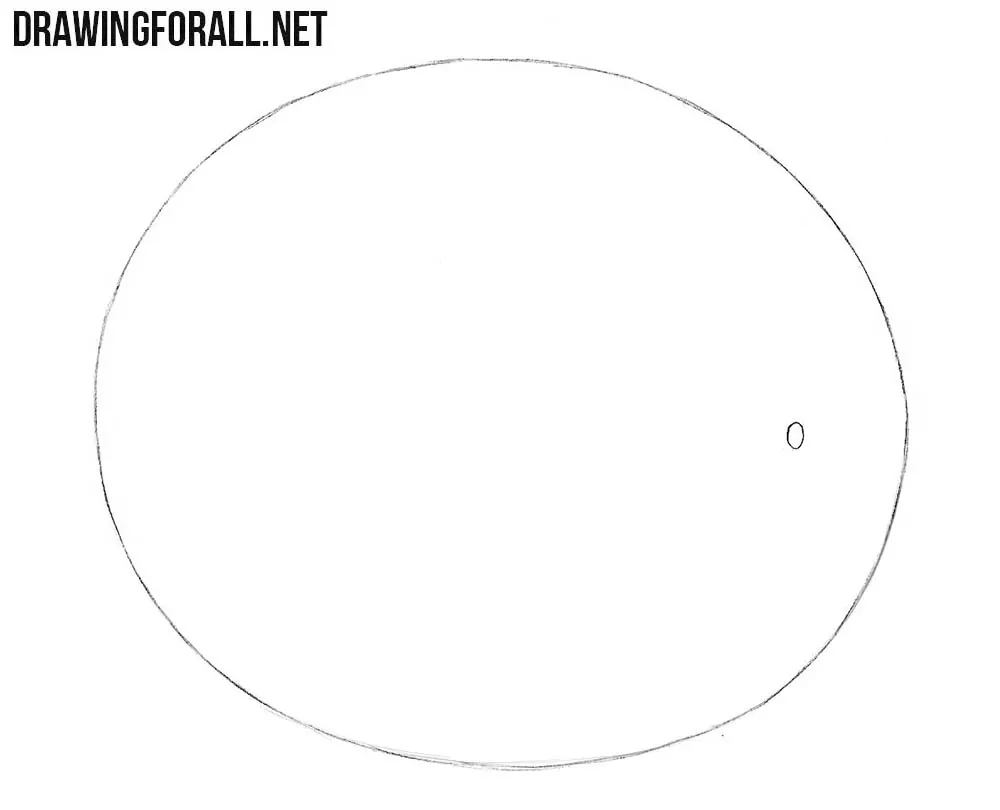
First, draw the outline of the watermelon as a wide oval flattened horizontally. Place this shape near the center of the paper. On the right side, draw a small circle.
Step 2: Add the watermelon stripes
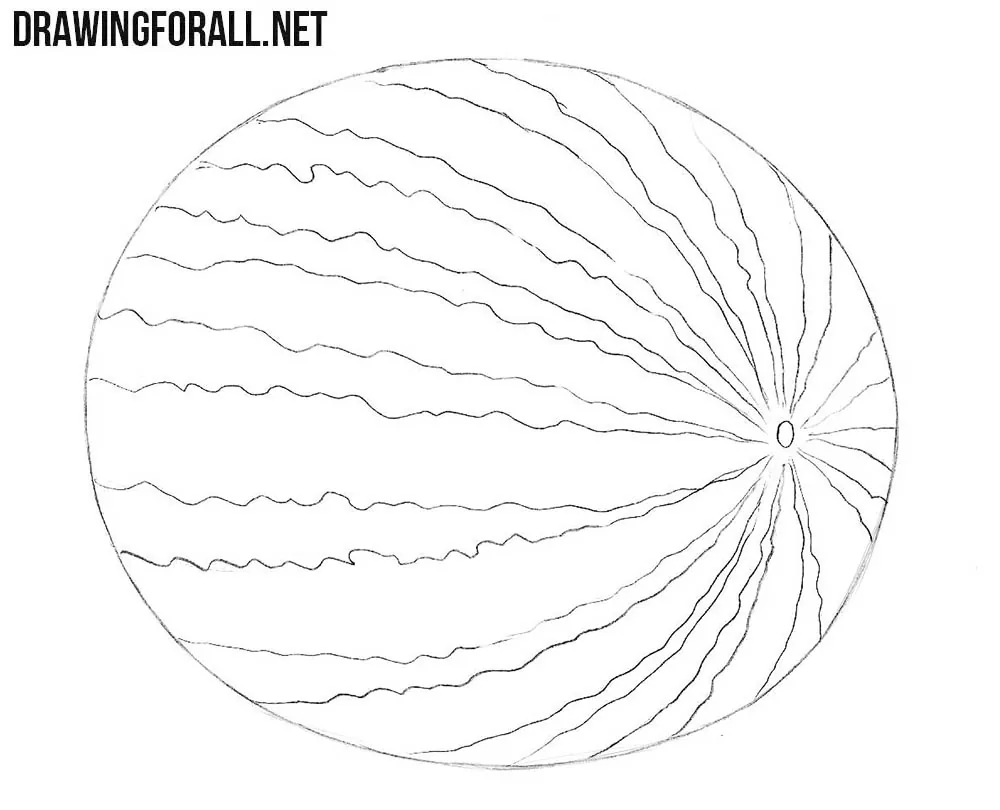
Now draw the jagged stripes characteristic of a watermelon. There are varieties of watermelon without such visible stripes, but here we will draw the familiar striped version. Notice that the stripes become narrower as they approach the small circle from the previous step. The watermelon stripes should follow its rounded form. This is the first important technique that will give the fruit a three-dimensional appearance.
Step 3: Darken the watermelon stripes
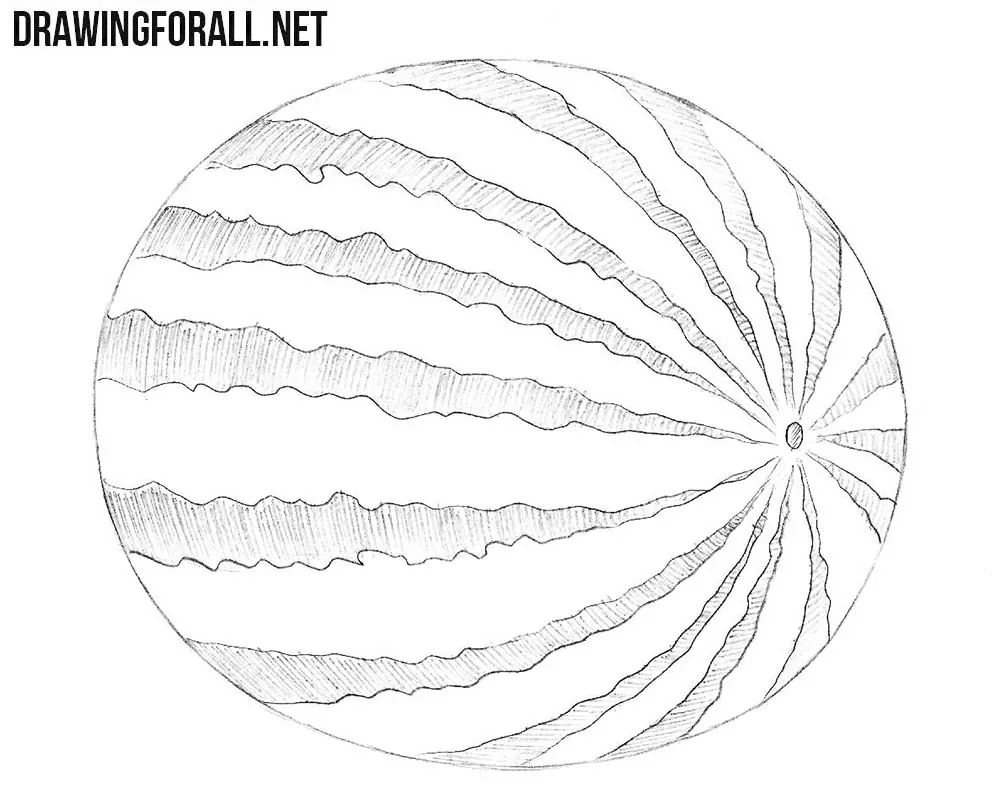
Shade the stripes so they become noticeably darker. Apply the hatching horizontally and try to use the same direction of strokes across all the stripes.
Step 4: Add shadows to the watermelon
Now add shadows to the left and lower parts of the watermelon. Use dense diagonal hatching for these areas. Notice that the direction of this hatching differs from the horizontal strokes used for the stripes. Do not forget to draw a cast shadow beneath the watermelon. Without it, the fruit may appear to be floating above the surface. Correctly placed shadows that follow the rounded form are the second important technique for making the drawing look three-dimensional.
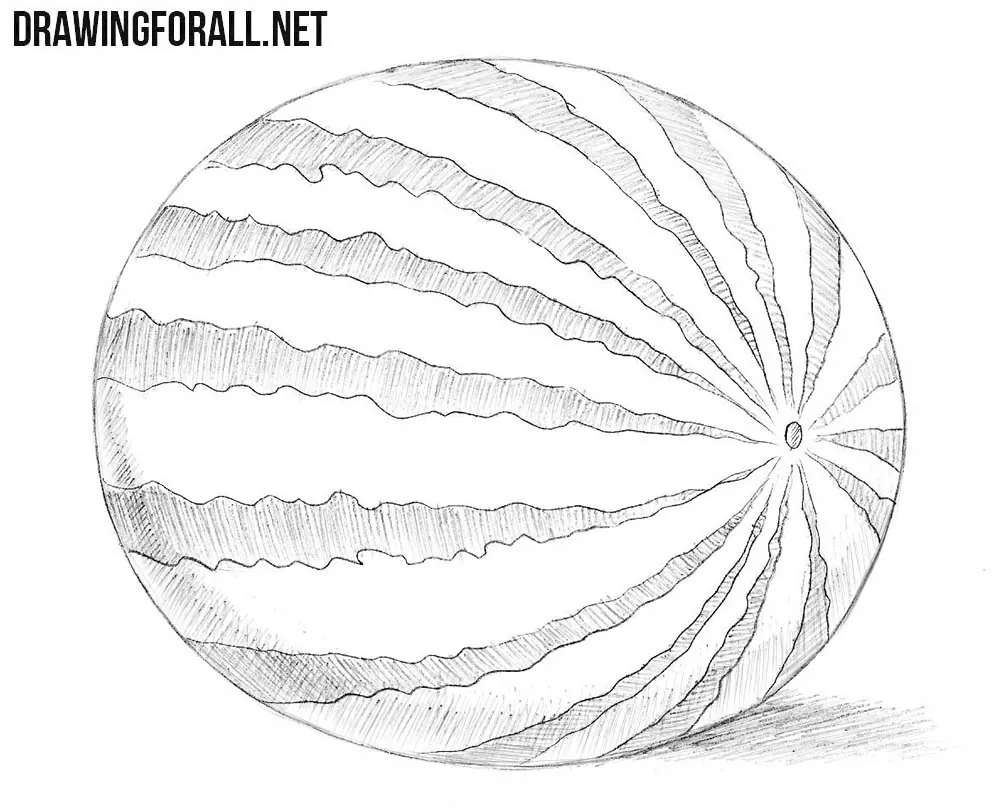
You can draw watermelons with different shapes, stripe patterns, and viewing angles. Try changing these details to create another version of the fruit.
A watermelon has a simple overall form that can be understood as a slightly elongated and flattened sphere. This way of seeing complex objects as simpler geometric forms is one of the basic principles of artistic vision.
Next, you can draw a melon and use the same approach to draw another large fruit with a similar overall form.


this is fun
good!