

How to Draw a Car

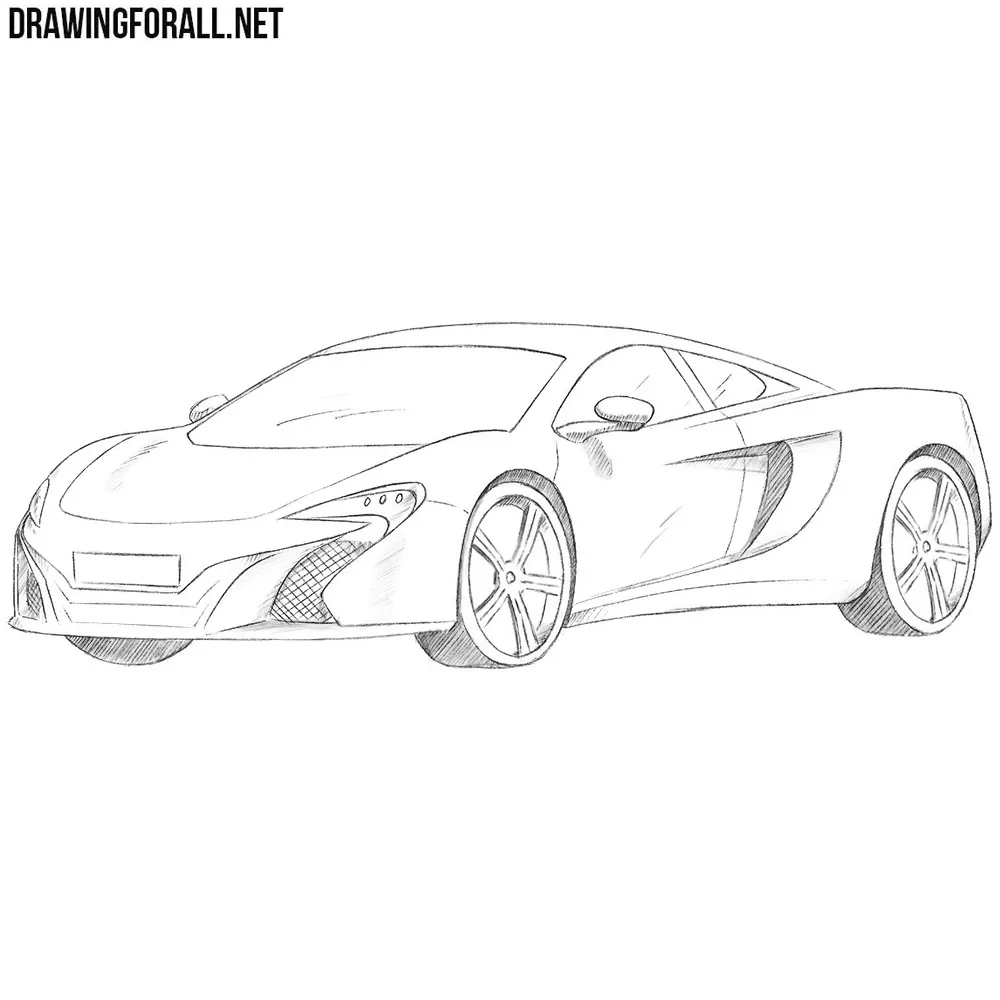
In this detailed tutorial, you will learn how to draw a car and give it a truly three-dimensional and realistic appearance.
Here, we will use a full range of fundamental drawing techniques and principles for creating a sense of volume.
You will learn how to build a car using basic geometric forms, apply both linear perspective and atmospheric perspective, and correctly add shading.
By following all the steps, you will be able to draw a car of any make or model by applying these principles and adjusting the elements and details as needed.
How to draw a car step by step
Step 1: Block in the overall mass of the car
Lightly mark the top, bottom, front, and rear planes of the car, defining its placement on the page. Use rough outlines to indicate the overall mass of the vehicle, showing where the front and rear parts are located. At this stage, you are establishing the basic composition and proportional relationships within the frame.

Step 2: Define the main planes of the vehicle
A car can be simplified into flattened, modified box-like forms. Keep this in mind as you define the front plane, hood, windshield, roof, and the side surface. Apply the principles of artistic vision and try to see the car as a three-dimensional form.

Step 3: Draw the car headlights and grille
In the front section, indicate the headlights and the outline of the grille. Keep symmetry in mind, and remember that parts farther away appear slightly smaller. Work symmetrically, developing both sides step by step. Constant comparison between sides helps avoid proportional distortions.

Step 4: Sketch the lower air intakes
Below the grille, sketch the lower air intakes, maintaining proper proportions and symmetry. Keep these elements in the same plane as the headlights and grille. The elements must belong to the same spatial surface. Misalignment at this stage can break the illusion of solidity.

Step 5: Draw the outlines of the car windows
Move to the cabin and begin by lightly sketching the windshield, giving it a smooth, slightly curved shape. Then define the window frame from the side, dividing it with a central pillar to create the front and rear side windows. Try to convey aerodynamic forms of the car.

Step 6: Sketch the wheel arches and mirrors
On the side surface of the car, lightly mark the wheel arches, placing them so they follow the same perspective as the side plane. Indicate the side mirrors with light lines, keeping the far mirror partially hidden behind the car body.

Step 7: Draw the wheels of the car
Inside the wheel arches, sketch the wheels using simple, rough shapes, keeping them consistent with the perspective of the car. The rear wheel should appear slightly smaller than the front one. Refine the arches so they match the form and perspective of the wheels.

Step 8: Refine and detail the grille
Using the framework you have established, begin adding details, starting with the grille. Carefully refine its outline with clean, smooth lines, then add the central section and the bars extending outward. The front plane is the closest to the viewer, so it should have the strongest contrast and darker values to make the car appear more three-dimensional.

Step 9: Refine the vehicle lights and hood
Refine the headlights with smooth, clean lines. Keep in mind that the far headlight is only partially visible, as it is partly hidden by the front of the car. Outline the hood and add a few structural lines. These structural lines should follow the underlying form.

Step 10: Detail the lower bumper section
Move to the air intakes beneath the grille, first defining their outer shape, then adding the inner horizontal elements. Check the entire front plane, comparing all parts to ensure they align within the same perspective.

Step 11: Outline the automobile roofline
The upper section, or cabin, lies in a different plane. Keeping this in mind, refine its contours with smooth lines. You can also suggest atmospheric perspective here by making more distant parts slightly lighter than those closer to the viewer.

Step 12: Refine the mirrors and window frame
Refine the side mirrors with clean, confident lines. The nearer mirror should be more defined and contrasted than the one farther away. Next, draw the central pillar of the car and lightly define the rear window corner.

Step 13: Draw the car doors and handles
Draw light lines downward from the windows to indicate the doors of the car. Keep them aligned with the perspective of the car and give them a natural shape, remembering that doors are rarely perfectly straight. Draw door handles of the car beneath the windows.

Step 14: Refine the lower body contour
Carefully outline the lower edge of the car from front to rear, including the wheel arches, as well as the visible rear bumper and trunk. Keep in mind that the rear part of the car should appear slightly lighter than the front.

Step 15: Refine the wheels and rims
Refine the wheels with smoother lines, removing unnecessary sketch lines if needed. Outline the rims, placing them correctly in perspective. Note that the rear wheel should appear slightly lighter to reinforce depth.

Step 16: Draw the spokes of the rims
Begin detailing the rims by marking the center hub, then draw the spokes extending outward. Do not make them overly detailed, so they do not distract from the overall form of the car. The rear rim should be even less detailed.

Step 17: Refine the outlines of the vehicle
Erase all remaining construction lines and check proportions, symmetry, and alignment of all parts. Evaluate how well the car sits in perspective and whether the sense of depth is convincing.

Step 18: Draw shading on the car
Start shading by blocking in the darkest areas, such as under the wheel arches, beneath the wheels, and under the front bumper. Then add shading and highlights to the body, following its forms and planes. Add subtle highlights to the windows, darken the pillars slightly, and include a cast shadow from the side mirror.

Step 19: Review and complete the car drawing
Review and unify your entire drawing, identifying any inaccuracies, inconsistencies, or incorrect tonal relationships. Check that both linear and atmospheric perspective are applied correctly, and that all details on the car follow the surfaces they are placed on. At this stage, you can also add additional elements or remove unnecessary ones if needed.

Car drawing fundamentals and practice
Drawing volumetric objects, including a car, primarily depends on how well you can see objects as three-dimensional forms.
The simplest way to do this is to think of them as simple geometric shapes. As mentioned above, a car is a set of modified rectangular forms, and the wheels are shortened cylinders.
This is the foundation on which the entire car is built. All details, including headlights, doors, handles, windows, and so on, are additional elements that must lie on these surfaces.
We covered all of this in detail in the steps of the tutorial, but it is essential to keep it in mind every time you draw a car or any other volumetric object.
With this foundation, you can draw virtually any car from any viewpoint. To develop this skill, consistent practice is necessary.
Draw cars using references from the internet, from real life, and from imagination. Create longer drawings with detailed shading and clear perspective, and also do series of quick sketches, focusing only on the overall outline and forms.
Most importantly, draw while analyzing what you are doing – not just copying general shapes and contours by repeating lines on paper, but clearly understanding volume, feeling the forms, and not simply depicting a car, but fully constructing it.

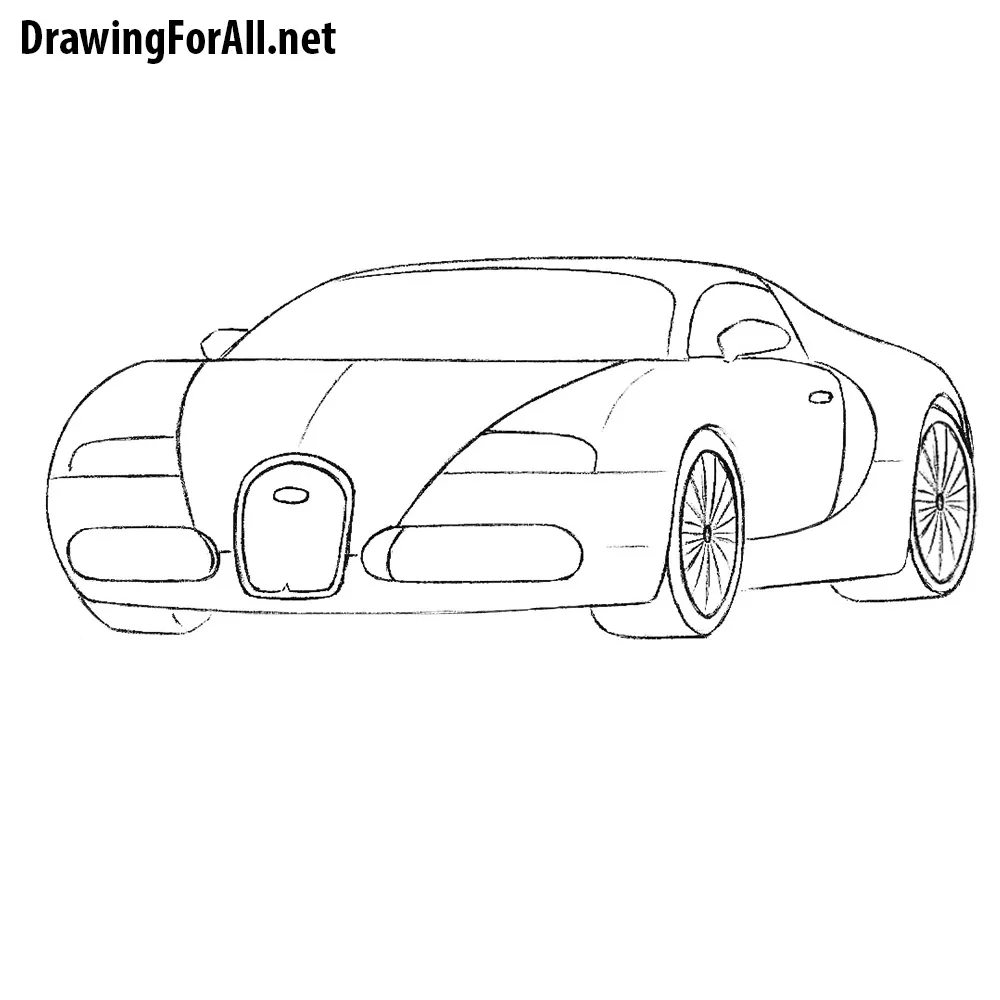
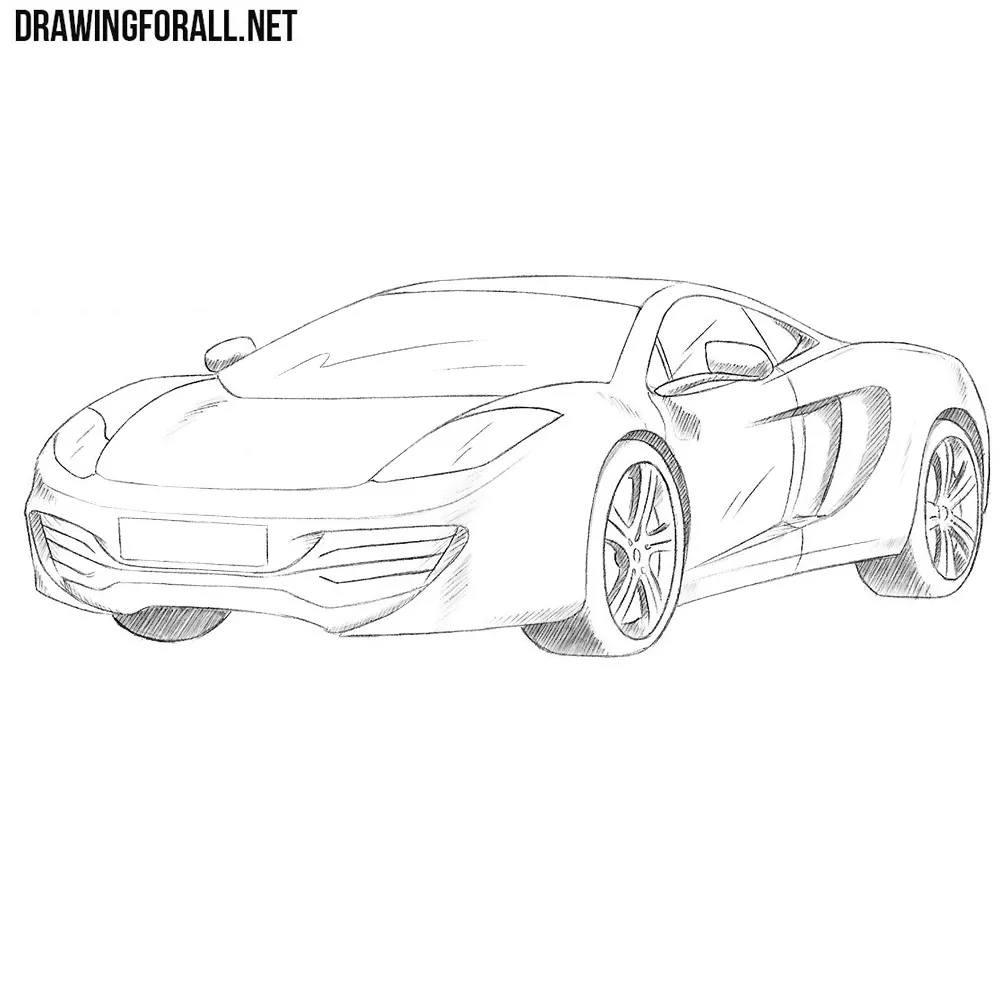
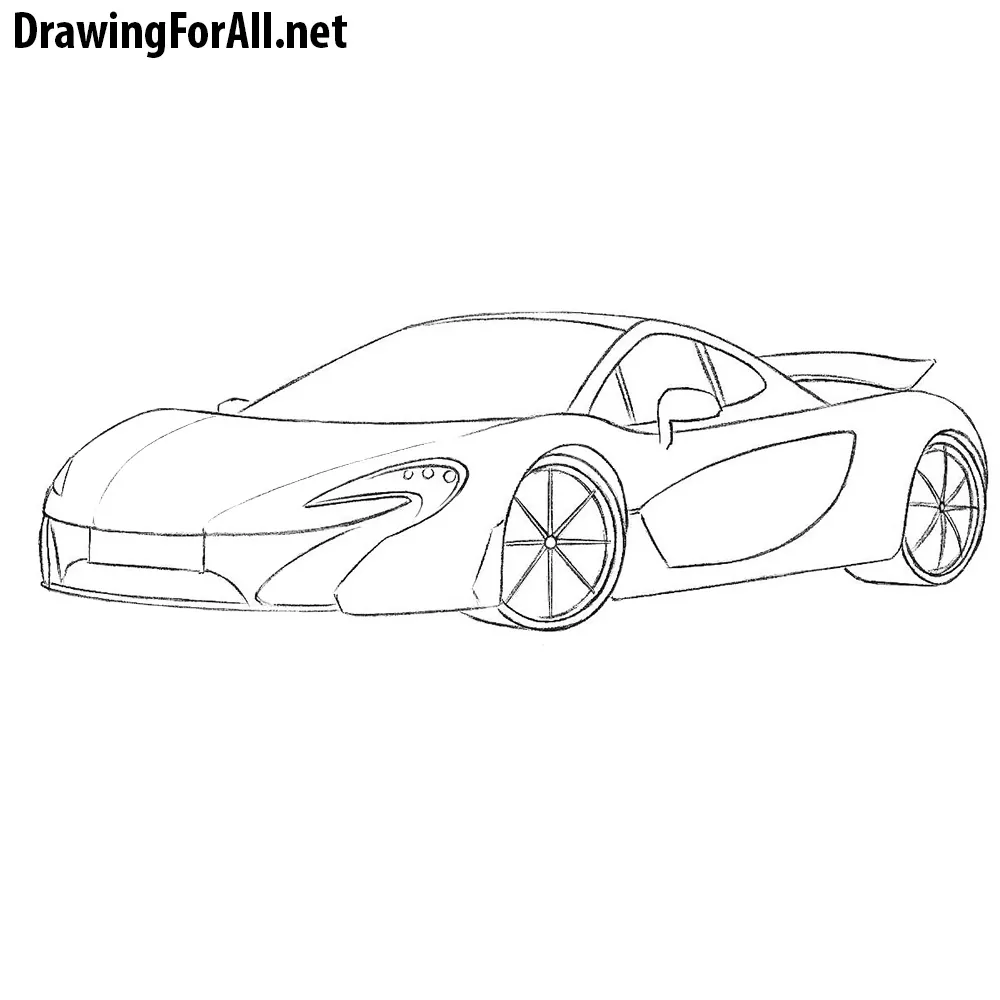
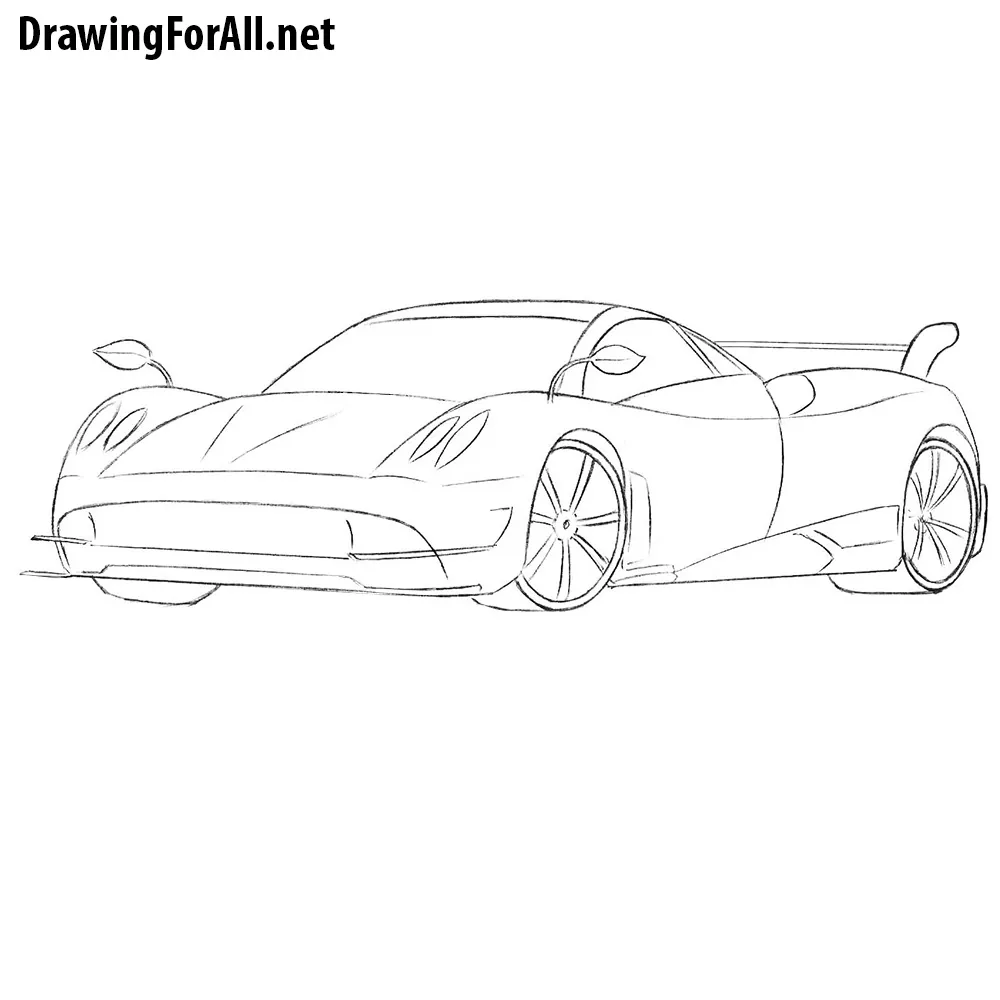
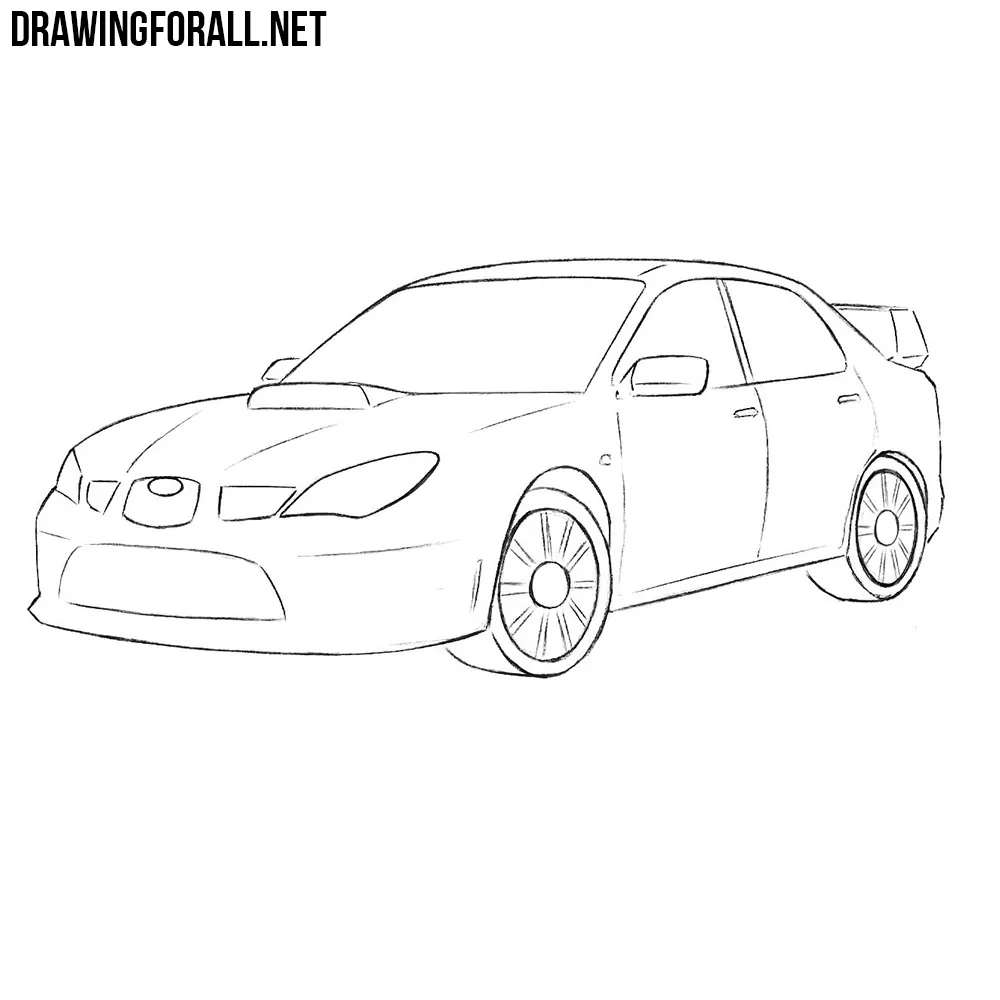
i love this drawing! so much but it took it lesst 56 menuts! what is it a bmw?
hahahahahahhaahahahahahahahahahahhaahhahahahahaha
Yes, it’s an old 90s BMW.
thanks it helped me draw a car for my pupils in a drawing lesson
thanks again
Thanks a lot it helped my daughter to draw a car in her exam
It seem a bit diffult to learn
yeah you’re right
HI MY NAME IS ABHI IT IS SO AMAZING
Thank you
thank you but i hate cars but i can draw then with no help
Bruh
How dare u hate cars!!
yep says 1234
Leave a comment…I want to learn how to draw a superhero. please help
draw some JDM
wow,the kids +10 years can draw.thanks
I like drawing but nobody can get a drawing book please 🙏🙏 who are helping me
i would love to see a coloured version
Thank you for detailed and easy to understand drawing instructions
soooooooooooooooo good
Thanks, Avyaan!