How to Draw Magus from Marvel
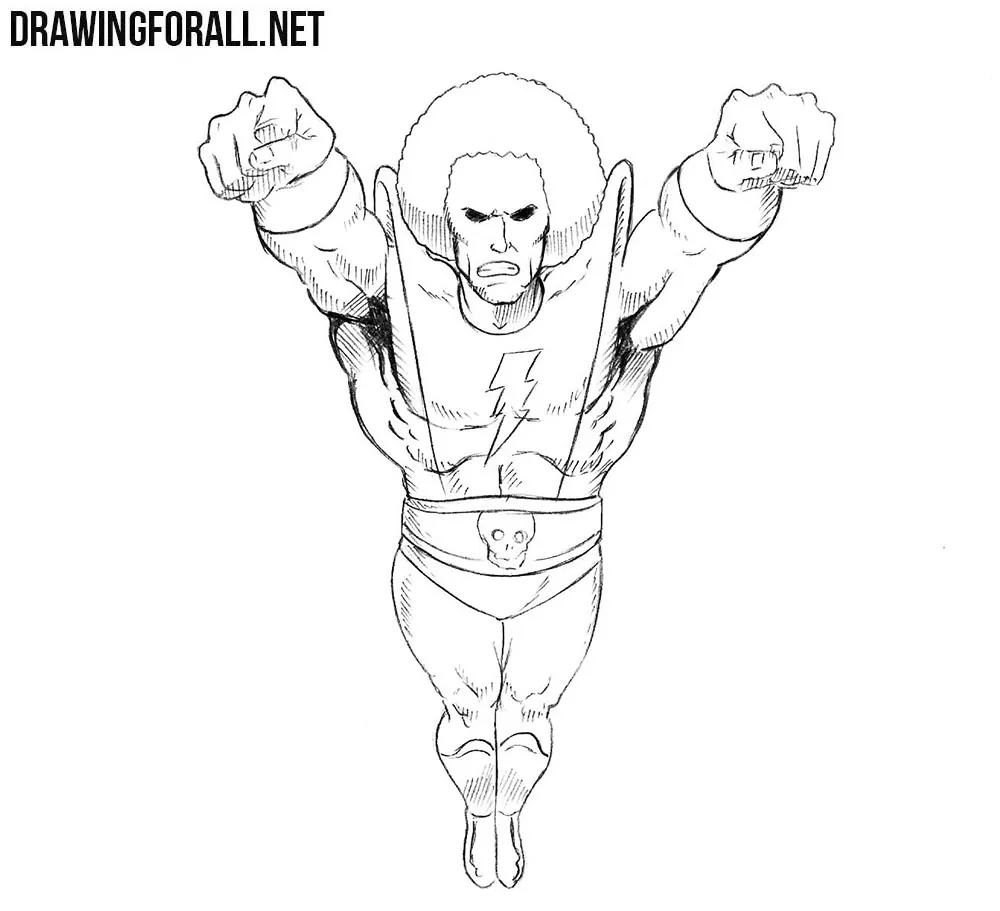
Magus is one of the classic Marvel characters with a very comic-book-style costume. Here we will show you how to draw Magus in a flying pose, moving directly toward us, in a classic comic-book style. We will use clear, contrasting outlines and shadows.
One of the main features of this tutorial is its unusual perspective. By recreating it and analyzing it as you draw, you will be able to create dynamic comic-book poses in your own drawings.
How to draw Magus step by step
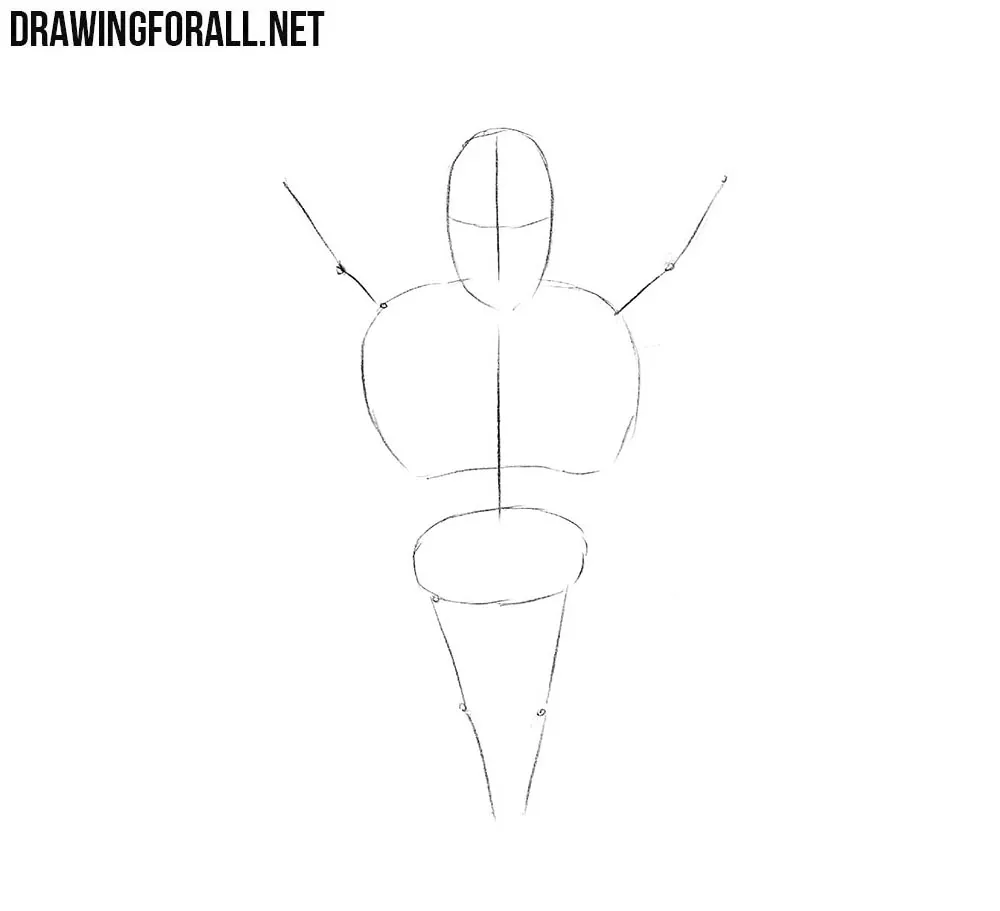
Step 1: Sketch the basic proportions of Magus
Sketch the head in the form of an oval. After that, outline the neck and spine. Sketch the chest and pelvis along the spine. The proportions here are greatly distorted due to unusual foreshortening. The head, arms, and chest are much closer to us, which is why they appear so large. The pelvis and legs, on the other hand, should look very small. Don’t forget to draw two intersecting lines across the face.
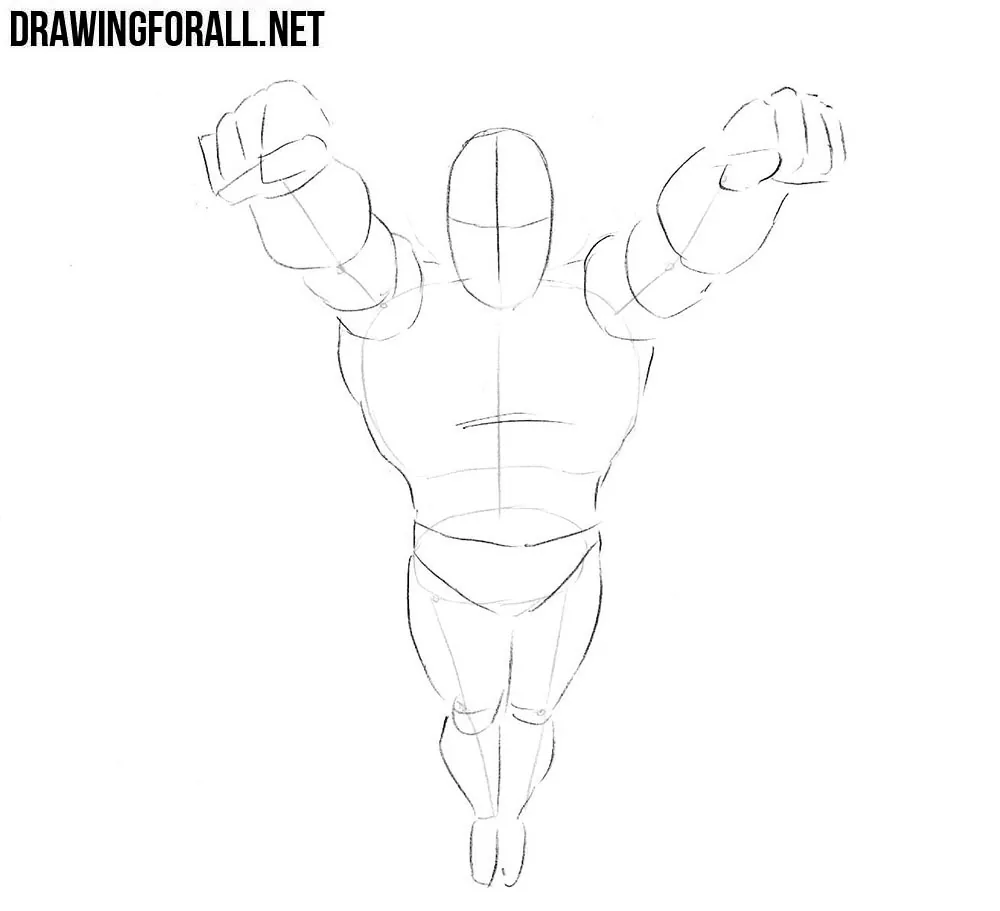
Step 2: Add volume to the figure
Sketch the torso, which widens at the shoulders and narrows toward the waist. Using very light lines and simple geometric shapes, give volume to the arms and legs. Outline the large forearms and fists. Here we can again see the effect of the unusual perspective. The forearms and fists appear larger than the head, while the pelvis and legs look much shorter than the upper body.
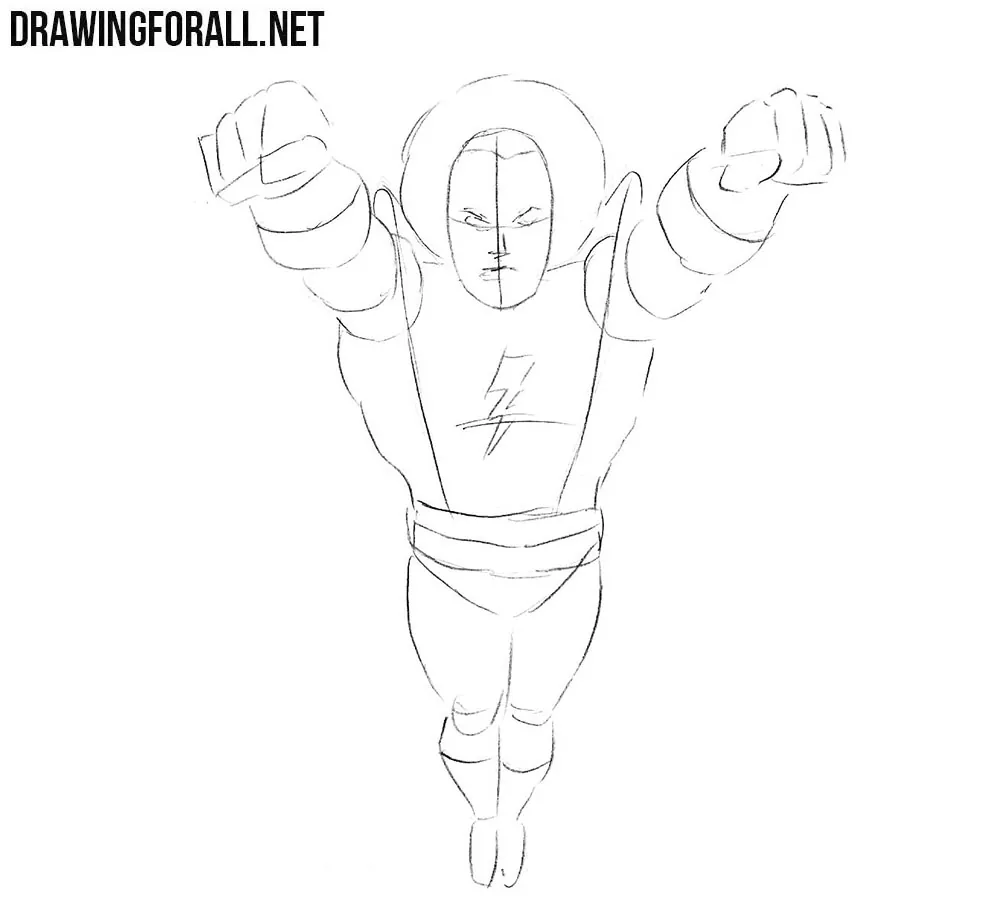
Step 3: Sketch the hair and facial features
Let’s work on the basic details of Magus. First, sketch the rounded shape of his hair, which rises above the head. After that, outline the eyes, nose, and mouth. Use the facial guidelines from the first step to position these features correctly. At this stage, keep the lines light because we will refine the face in the next step.
Step 4: Refine the face and hair
Carefully refine the contours of the face and hair, giving the facial features clearer outlines. Note that you do not need to draw pupils. After finishing the facial details, erase the unnecessary guidelines from the head.
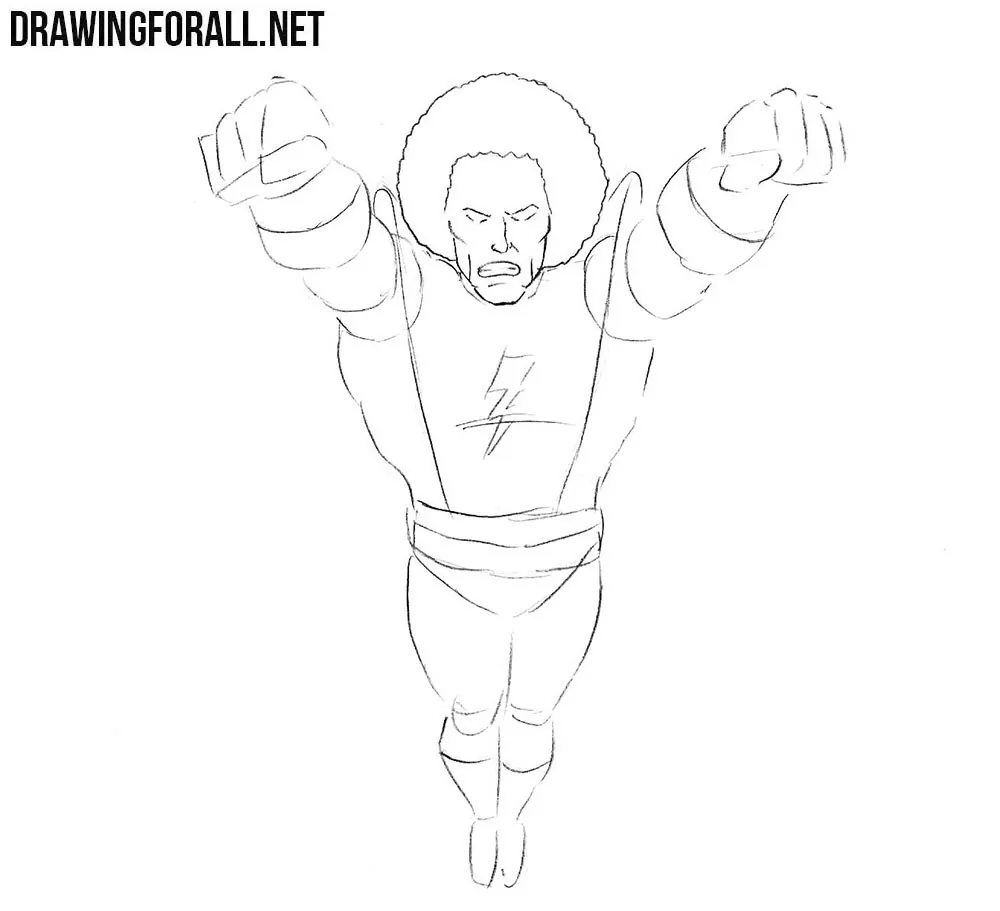
Step 5: Draw the torso and chest emblem
Let’s move on to the body. Carefully draw the developed pectoral muscles, abdominal muscles, and contours of the torso. The chest should look broad and powerful. The body should narrow noticeably toward the pelvis. Draw the chest emblem, following the shape of the pectoral muscles beneath it. Finally, erase the unnecessary construction lines from the torso.
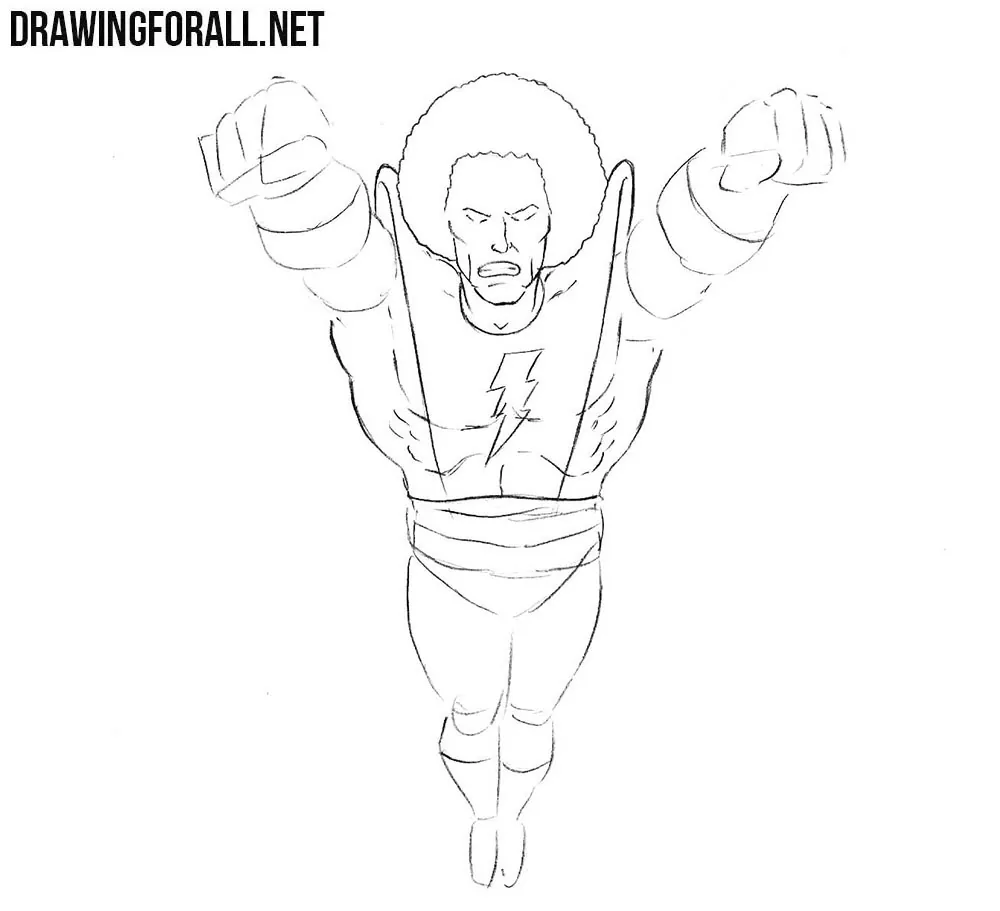
Step 6: Refine the muscular arms and fists
Draw the contours of the arms with clear lines, paying attention to the shapes of the shoulders, biceps, and forearm muscles. The arms are strongly foreshortened, so the muscles overlap and the fists appear unusually large. Carefully draw the hands, using the knuckles to show the shape of each fist.
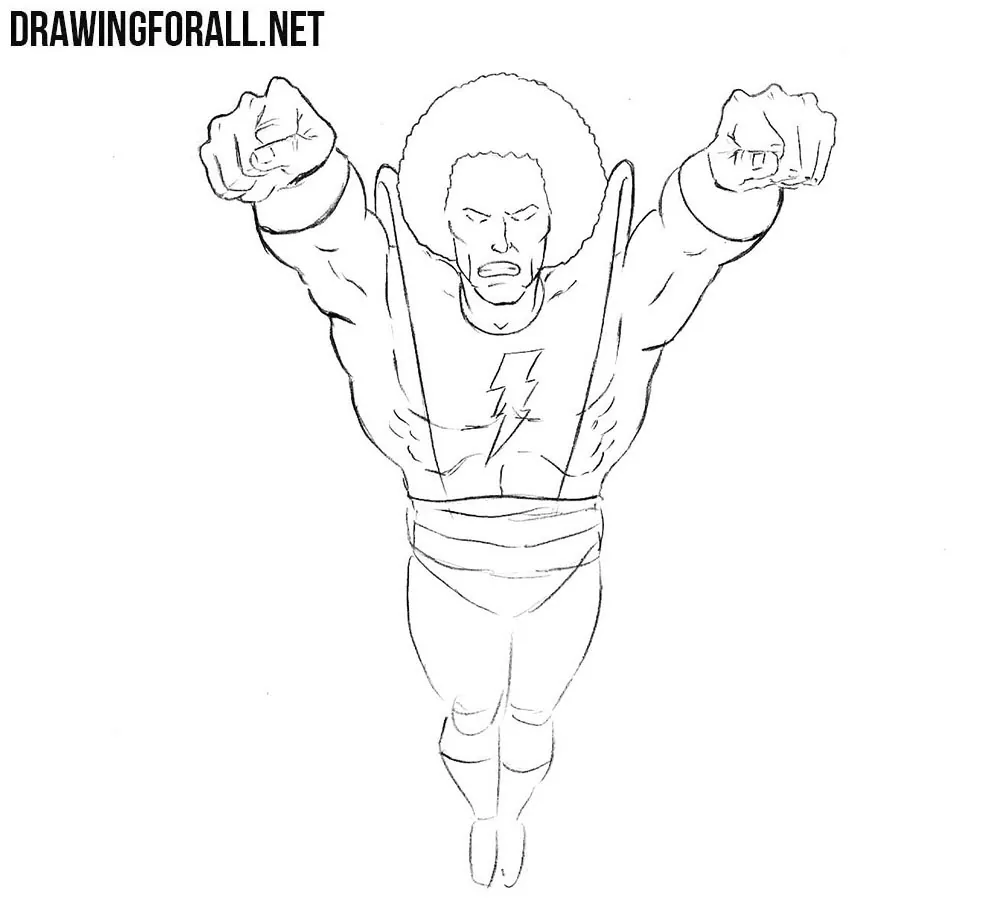
Step 7: Draw the legs and belt skull
Carefully refine the contours of the legs, taking into account the muscles and joints. Remember that the legs are greatly reduced by perspective, so they should remain much smaller than the arms and torso. Draw the skull-shaped ornament on the belt, then outline the boots. After that, erase the remaining guidelines from the previous steps.
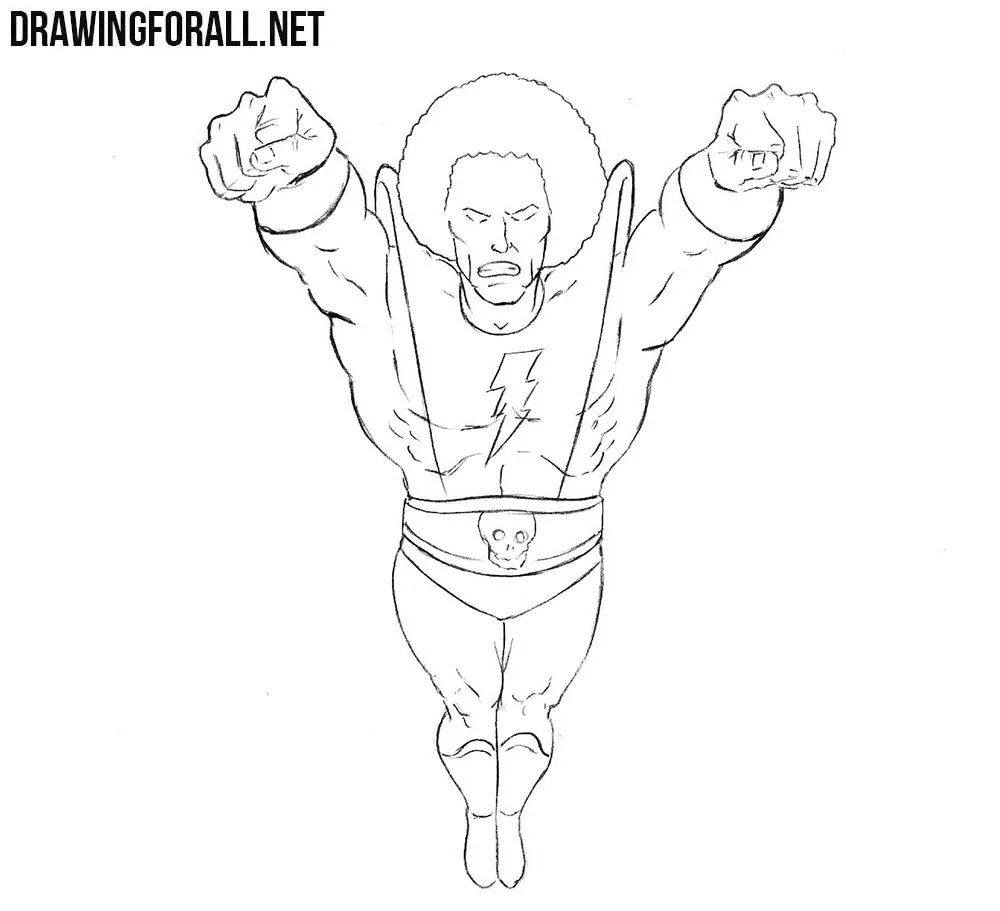
Step 8: Add comic book shadows
In this final step, draw the shadows. We will use two types of shading, as comic book artists often do. Fill the darkest areas with solid black, creating clear boundaries between light and shadow. Use dense hatching for the lighter shadows, especially where the muscles curve away from the light. This combination of black areas and hatching will make the figure look more three-dimensional.
Here we chose a fairly difficult pose for drawing Magus. He is flying toward us with his fists extended forward.
His entire body is foreshortened in linear perspective, making his fists appear much larger than his feet. Drawing characters in such poses is an excellent way to practice your ability to create perspective and dynamics in a drawing.
This kind of dynamic depiction of characters is especially important if you want to draw comics.
We used similar techniques in our Cyclops drawing tutorial, where the character is running toward us with his limbs also strongly foreshortened and exaggerated by perspective.
Try to practice drawing characters in such dynamic poses as often as possible, using the step-by-step methods we show in our tutorials.